
The Iran protests that began in late December 2025 in response to worsening economic conditions have spread across all 31 provinces and resulted in hundreds of deaths and thousands of arrests. Iranian authorities have declared three days of national mourning, summoned European and Neo-European ambassadors over support for demonstrators and accused foreign states of interference, while international leaders weigh potential responses. Rights groups report at least 544 fatalities and more than 10.600 detentions since the unrest began. The government has also maintained an internet blackout across much of the nation to restrict communications.
Origins And Scale Of The Iran Protests
The Iran protests initially erupted on 28 December 2025, triggered by widespread dissatisfaction with rising inflation, sharp increases in food prices and the rapid depreciation of the Iranian rial. Early demonstrations by merchants and workers soon transformed into broader nationwide protests against the political leadership and the clerical establishment. By early January 2026, the protests had expanded to cities and towns across the nation, leading to significant confrontations with security forces.
Human rights groups, including the North America-based Human Rights Activists News Agency (hereinafter: HRANA) and the Norway-based Iran Human Rights (hereinafter: IHR), report that the death toll in the unrest surpasses 500, with figures ranging up to nearly 650 according to some sources; none of the numbers are independently confirmed. Thousands more are reported injured or detained, and precise casualty counts vary because of restricted information under widespread internet and communications blackouts imposed by the Iranian government. (AL-Monitor)
Government Response And National Mourning
In response to the widespread unrest, the Iranian Council of Ministers declared a three-day period of national mourning to honour those killed during protests and in counter-demonstrations supporting the government. State media framed the mourning period around the deaths of individuals described as “martyrs of national resistance,” while also depicting security forces as victims of violent acts by what authorities labelled “terrorists.” (Cumhuriyet)
Iranian officials have repeatedly characterised the protests as acts of sabotage supported by foreign governments and media. Foreign Minister Abbas Araghchi asserted that the government retains control over the situation and denied reports that the unrest threatens national stability. Tehran has also maintained that demonstrations and protests are used by external actors to justify foreign intervention, a policy course long aimed at by Israel’s ruling Prime Minister. Pro-government rallies have been organised in several cities and emphasised national unity, with officials stressing that armed forces and security personnel will protect national interests against what they describe as violent disruptions.
Iran Summons Ambassadors Over Support For Protests
On 12 January 2026, Iran summoned the ambassadors of major European states, including Britain, Germany, France and Italy, to the Foreign Ministry in Tehran. Iranian authorities presented evidence they said showed violent incidents linked to the protests and demanded that these governments retract public statements of support for demonstrators. Tehran described such expressions of solidarity as unacceptable interference in internal affairs. (Al Jazeera)
The diplomatic summons followed expressions of concern from several European and Neo-European capitals over the government’s handling of the Iran protests and the reported use of lethal force against demonstrators. Iran’s Ministry of Foreign Affairs stated that external commentary on the unrest amounts to interference, and criticised foreign media coverage as amplifying instability.
International Reactions And Tensions
The Iran protests have drawn international attention and a range of responses. The United States of America have publicly weighed possible responses, including diplomatic engagement and “strong options” if violence escalates further, again in line with Israeli foreign policy. Their President stated that Iran has shown interest in negotiations, while also warning that military or cyber measures remain under consideration should the crackdown continue.
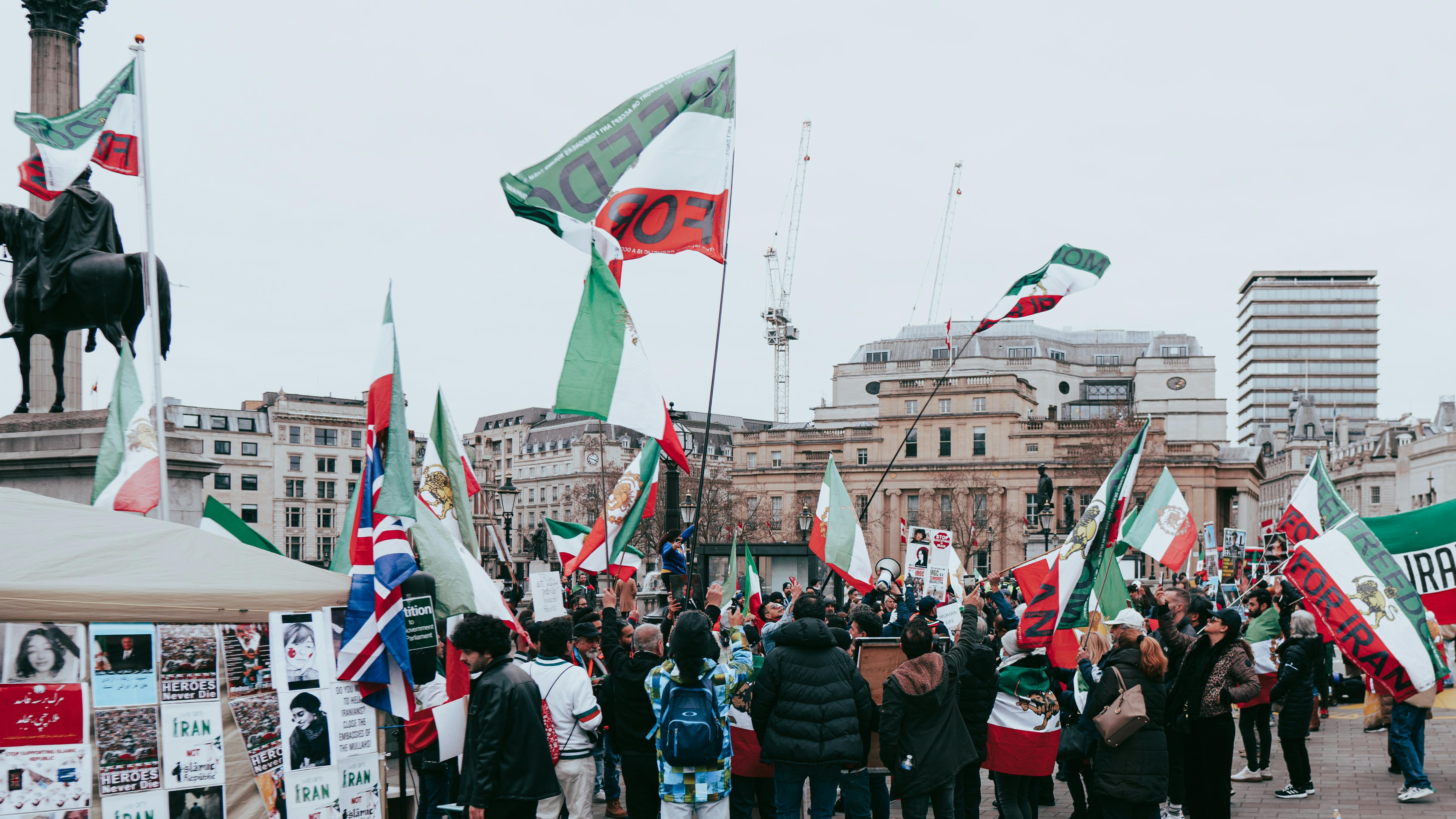
European and Neo-European governments have called for restraint and respect for human rights amidst reports of significant casualties. Meanwhile, Russia condemned foreign attempts to influence Iran’s internal affairs, asserting that external pressures exacerbate tensions (Reuters). Protests in support of Iranian demonstrators have also occurred abroad, with solidarity rallies reported in European cities, where participants expressed concern over the crackdown and restrictions on communication within Iran. (euronews)
Humanitarian And Communication Constraints
A nationwide internet blackout implemented by Iranian authorities on 8 January 2026 has significantly limited the flow of information, complicating independent verification of events and casualty figures. The blackout extended to mobile networks and telecommunication services in several major cities, hindering reporting and external monitoring.
Restrictions on communication and movement have a social impact, with reports of overwhelmed medical facilities, limited access to emergency services and families struggling to locate missing relatives. Observers note that these limitations make it difficult to fully assess the scope and impact of the unrest. For us, as an independent policy development organisation and think tank, the internet restrictions make it difficult for us to present a balanced picture of the situation, as access to local news is nearly impossible.
Context and Outlook
At the time being, and with a lack of in-depth coverage of the developments in Iran, assessment at this point is very difficult. Contextual evidence and strategic analysis help us to better understand the protests at the macro level. Examining the situation on the basis of four dimensions gives us a better picture of developments in the near future.
- Israel, through its ally the United States of America, tries to topple the Iranian government for more than three decades. With the war that erupted last year, the signal was sent that Israel is willing to move forward against Iran. However, conquering the political system from within by spreading dissatisfaction opens two fronts for the Iranian government.
- The first point is facilitated by the economic hardship that Iran suffers from the ongoing international economic warfare against the Persian nation. While sanctions strain economic development, a lack of resources even drives the government to adapt at more fundamental levels by planning the relocation of the capital. As citizens are not concerned with the causes of policies but with the outcomes, the social disruptions explained above find fertile soil.
- Similar to the uprisings in the Sub-Anatolian uprisings in 2011, sources point to an extensive spy network that drove institution-building in Iran to spread dissent. As organisational development theories outline, organisations, including states, resort to methods that worked in the past when embarking on a similar endeavour. Therefore, we might be witnessing this in Iran now, as well.
- The grand plan of Israel to become a hegemonic power in Sub-Anatolia is well-documented. In the past months, the strategy here clearly shows that with opening several fronts at the global stage (Lebanon, Yemen, Cyprus, Syria, Ukraine, Venezuela, Somalia), disturbing their perceived opponent’s attention by spreading chaos and keeping the agenda busy is their tactical approach. Further, the narrative displayed here, which we also analysed in this work, serves as a legitimacy-building tool in preparing for another military attack.
Finally, the current uprisings are neither the first nor the last uprisings. Iran has been subject to foreign intervention, but also to difficult socio-economic circumstances. To learn more about the context and the recent history of Iran, click here.