Economics is a highly interrelated scientific field, and though it is a quantitative discipline, the interactions with other scientific branches add some layers of uncertainty and complexity to it. In order to make predictions on, and often just to understand, economic developments, theoretical models are used. At the most fundamental level, we can think about the different explanations of the demand-supply equilibrium. But also, more general theories are often used to make sense of economic subject matters. Capitalism, for example, is an economic theory, just like demand-side economics. In this article, a theoretical account is brought forward that aims to explain why successful free-market economies have a high internal risk of systemic failure. The so-called “Rolex Theory” posits that when economies reach developmental levels that enable virtually all economic actors access to luxury goods, the economy must enter a contraction as the initial aim of free-market capitalism has been reached and the discrepancy in the temporal dimension between economic re-invention from a societal perspective and market reactions is too big. This theoretical account is informed by political philosophy, sociology and demand-regime literature.
Free-Market Capitalism
The guiding principle behind capitalism is that societies need to achieve ever-increasing expansion of material standards. Informed is this notion by the overarching philosophy that comfort brings happiness and that achieving happiness is the purpose of most of our actions. Surely, the attentive reader will quickly ask why it would not be sufficient to just achieve a high level of material standards compared to the capitalist requirement of ever-increasing wealth. This is because the guiding notion about happiness is rather a subjective perception than an objective truth, which can be uncovered when we think about a situation of excessive material wealth, which we can reasonably say would trigger boredom at some point if no new material stimuli are generated. In other words, it is believed that happiness is an end in itself and that we can achieve it (at least partially) by achieving wealth. Of course, the true purpose of our being is completely different, but because, for one, there is no general awareness or acceptance of this true purpose as set out in Devlet, and second, the false perception of the reality is often enough to reinforce the capitalist premise and shape reality, the economic systems continued to develop into this direction. What is subconsciously known, however, is that it is rather the change in wealth that brings about happiness. Thus, capitalism is not set out to achieve wealth as such but to provide a framework of continued dynamic change in wealth.
Free-market capitalism is an operationalised variety of the capitalist idea that is designed to achieve such continued change by relying on the subconscious of the economic actor who believes in the idea that happiness not only consists of a significant degree of material wealth but is also treated as an end in itself. The free market eliminates legislative intervention as much as socially and politically feasible in the respective economic context. By doing so, market actors seek to realise their subjective ideal within a context of action and reaction, demand and supply and a manifold of domestic and international competitors.
Exhaustion of the Market
With the emergence of capitalism, the industrial revolution began. Sudden increases in productivity and mass output were the most significant changes in the economic landscape, but once exhausted, the market needed to move on to the next significant change to satisfy the underlying desire for change. This is the same logic as described above with the difference that the fundamental dynamic is observed at the aggregate level. As productivity levels rose because of the early stages of industrialisation, the marginal return levels sunk. Later, economies were reconfigured to seek to boost return on investments by pushing for innovation. The acceleration of innovation that continued throughout the whole 20th century and the first decade of the 21st century spurred further growth. Due to the vast fields of potential improvement, this phase of capitalism was able to deliver the desired continued change. To illustrate the argument, we can think about the car. Not only did this invention itself trigger a significant change but the innovations around the car, the emergence of motorsports, motor technology and lifestyle are all aspects that continuously stimulated the economic landscape economically. Certainly, other inventions, too, added to that: aeroplanes, credit cards, home appliances, financial instruments, the television and of course the internet. But regardless of the content, the capitalist economy always found a way to create change. This change directed capital to sectors and pushed the developments to exhaustion of the sector throughout all dimensions. A sector can be exhausted in the following dimensions: output volume (due to raw materials or structural circumstances), output efficiency (pace and cost of outputs), output development (innovating the product/service), output monetarisation (how modes of payment improve returns) and environment. The environment is the last dimension that economic actors try to alter to upkeep economic growth and includes the target group, social circumstances, political and legal frameworks and natural environments. If such alteration of the environment is also not sufficient to uphold growth, capital moves away from the exhausted sector. Here, it is argued that it is not solely or necessarily the innovation itself nor its monetary value that keeps the economic expansion within capitalism alive. Rather, it is the full exhaustion of sectors and structural settings within a construct of continuous stimulation of the economy.
The Rolex Theory
The Rolex Theory
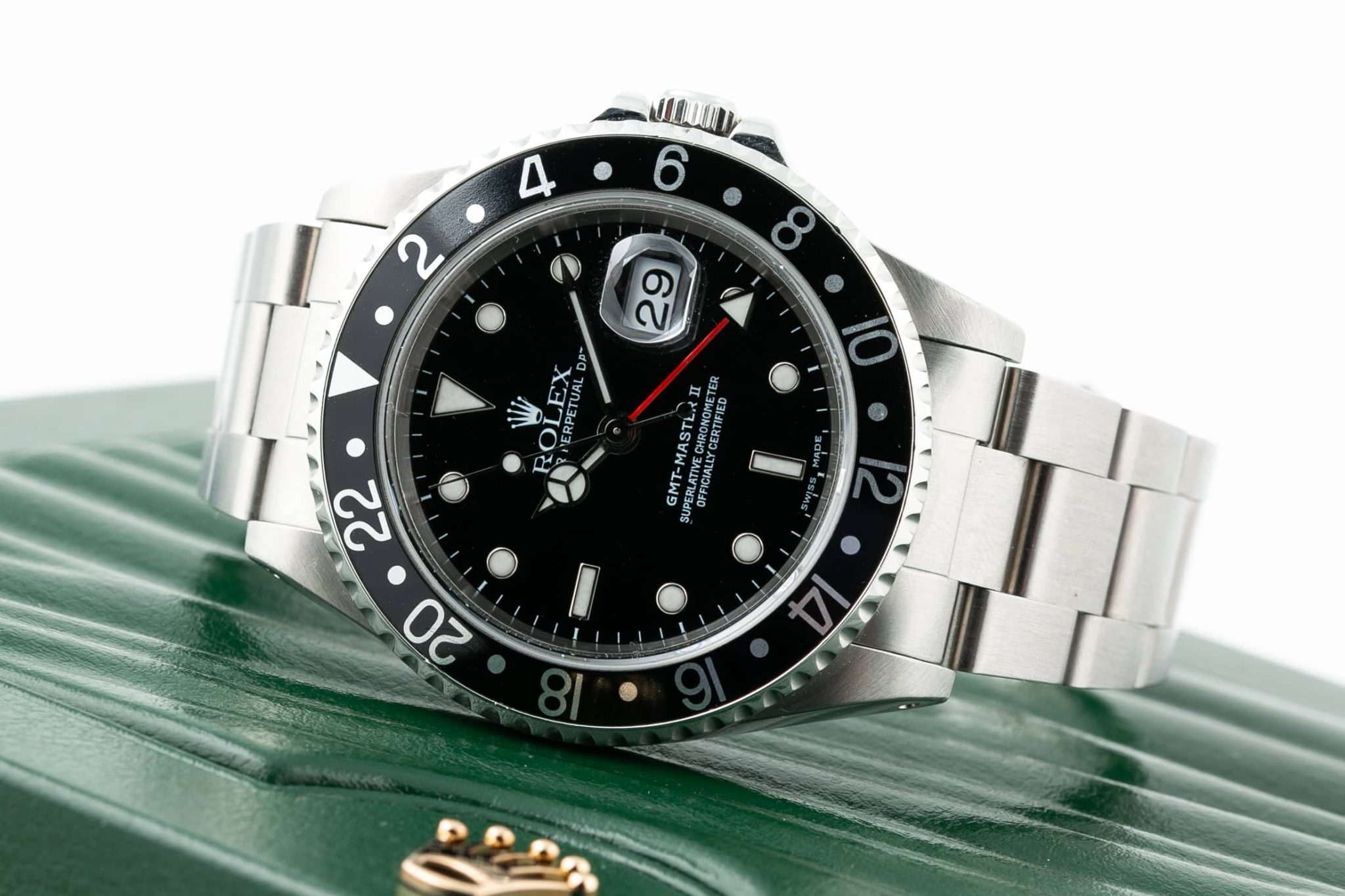
The Rolex Theory describes a situation of economic contraction as a response to missing opportunities for change due to the maximum exhaustion of economic potential. As the most renowned watchmaker, Rolex watches have always been viewed as an unachievable status symbol for the common middle-income earner because of the high prices of their watches. Therefore, Rolex watches are considered luxury goods. What makes those watches special in addition to their price is the use case. In the functions those watches fulfil, they are substitutable with other, more affordable brands. Further, the function itself, telling the time, is of no significant use and is already fulfilled by many other clocks in public, telephones or even stoves. A Rolex’s price is purely a socially valuable one as it signals the social status of its wearer. That being so, the current economic setting, at least in European nations and their descendants, allows for almost all economic actors to obtain such a watch. With consumption levels at all-time highs and poverty levels continuously falling, the purchase of a Rolex watch becomes increasingly a matter of time as capital needs to be saved. This is not to say that European and neo-European nations are becoming wealthier because the share of low-income households in those economies is still increasing. It is more the change in the socio-economic behaviour that makes the purchase of such a watch feasible.
Over the past decades, those economies have pushed a relentless consumption agenda, aided by expansionary monetary policies. Corporations were in the middle of a sea of change opportunities to spur further growth. Innovations were abundant and with the internet, a whole new dimension of innovations set in. However, as capital was gradually more directed towards financial investments and short-term innovations, such as entertainment, the investment volumes in research & development and physical investment shrunk. One way to upkeep economic growth, without having to always find new catalysts for the next round of growth, was to build on luxury goods. Luxury goods’ monetary value is artificially constructed through social behaviours. A bracelet can virtually be infinitely expensive and there would at least be potential buyers interested in it. When we think about the Rolex Theory in terms of the purchasing power of luxury goods, we can see that the consumption of branded clothes, jewellery, watches and other status symbols has been more widespread; not necessarily because of rising wealth but because the social structures were altered to such an extend that economically irrational decisions have become more common. Whenever a social or ideological change finds its expression in altered consumption behaviour, we have a very strong indicator for an economic dynamic that is directed towards altering the environment. As we have already above, the exhaustion of sectors or trends always moves on to change the environment last because the other aspects as output volume or output efficiency are easier and more directly realisable.
With the more widespread consumption of luxury goods on a broad societal scale, we have a very strong indication of a structural exhaustion of European and neo-European economies. Those economies had already moved away from industrial and scientific innovation and concentrated on the indiscriminate expansion of consumption. Those economies lacked the capacity to bring about inherently valuable change after the consolidation of the internet and the invention of the smartphone. Since the additional catalysts to keep the system running became more scarce, the turn to consumption proved to be a good method to preserve the cycle of asset price inflation. When the consumption levels of regular goods also became subject to habituation, thus raising the chances of stagnation, the focus turned to luxury goods with their artificially constructed limitless upwards potential. To create more popular demand for such formerly unattainable goods, social structures were influenced through the utilisation of media and financial products. In other words, as the innovations ran thin to trigger renewed growth, the media infrastructures and financial possibilities aided the consumption of luxury goods.
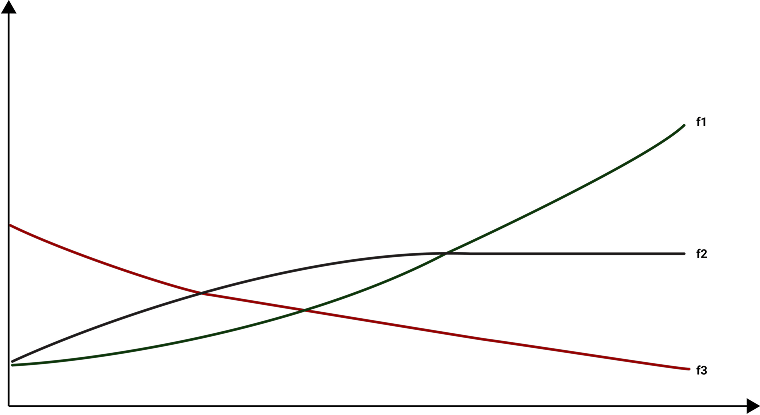
As the economies are now confronted with a rising share of luxury goods consumption and still little innovative output to trigger a new wave of capitalist development, a situation is created that this article describes as the Rolex Theory. With little remaining upside potential, (neo-)European economies must face a heavy recession in the coming years. Once the habituation to luxury goods sets in, the aggregate demand must drop as the market does not offer any exciting changes. Left without emotional or social stimulus, the capitalist economy must reinvent itself quickly, which is why the technology of artificial intelligence was introduced globally earlier this year, or the economies will need to endure a heavy recession to regain an exciting perspective on the already existent product landscape. The Rolex Theory, thus, can serve as an indicator for major structural shifts in economies by pointing to the breadth of luxury goods consumption within an economy.
The Rolex Theory © 2023 by Emre ?entürk is licensed under CC BY-ND 4.0. To view a copy of this license, visit https://creativecommons.org/licenses/by-nd/4.0/
Essydo
Originals