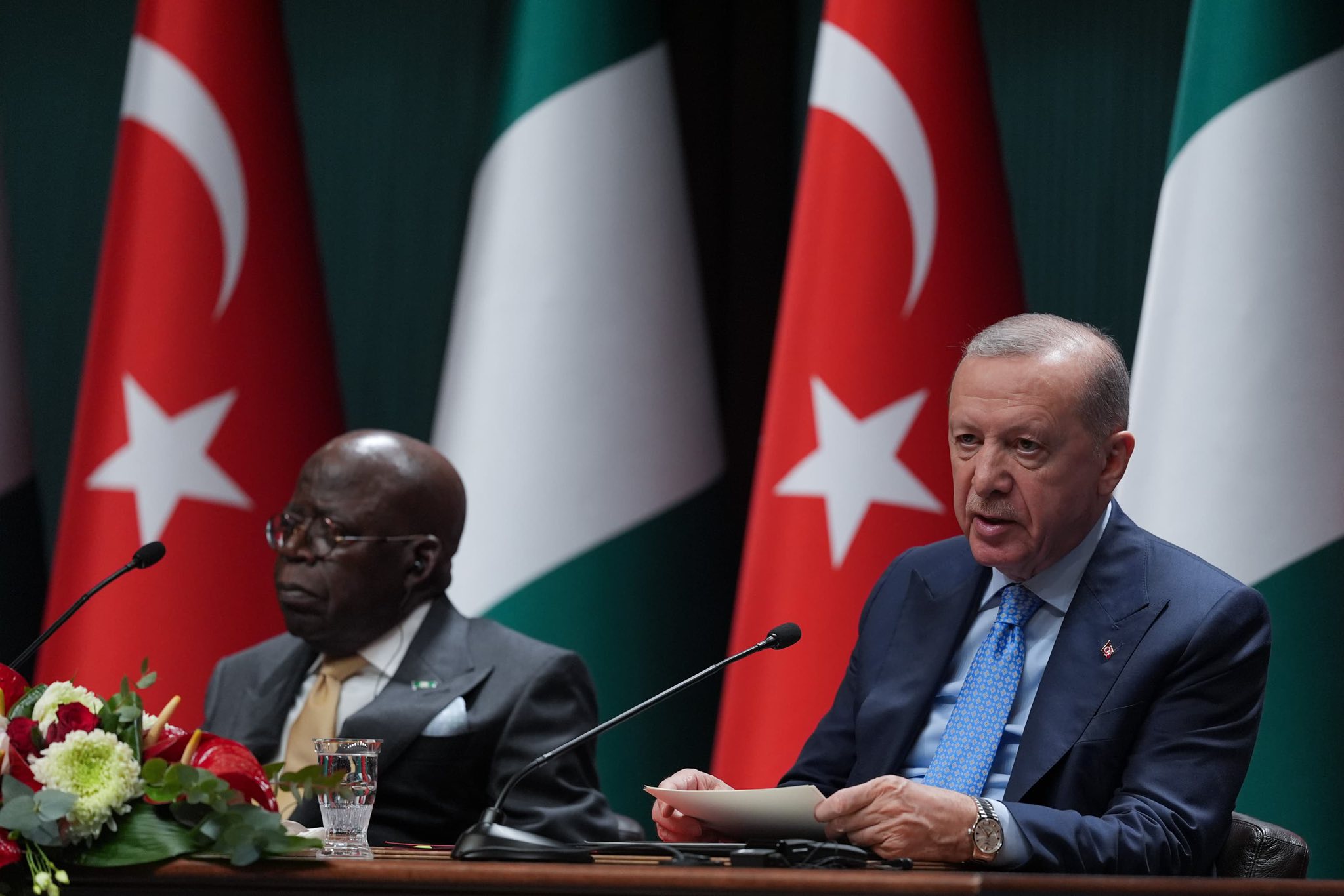

Türkiye and Nigeria have agreed to deepen cooperation across industry, trade, investment, security and defence, setting an ambitious bilateral trade volume target of more than 4€ billion and signing nine framework agreements during Nigerian President Bola Ahmed Tinubu’s state visit to Ankara. The leaders of both nations reaffirmed longstanding diplomatic ties and outlined expanded institutional mechanisms to boost collaboration on economic and security fronts. (Anadolu Ajansı)
Enhanced Trade And Economic Cooperation
Joint Trade Committee And Institutional Framework
Turkish Trade Minister Ömer Bolat announced that both nations signed a joint declaration to establish a Joint Economic and Trade Committee (hereinafter: JETCO), aimed at strengthening institutional cooperation on commerce, investment and industrial collaboration. The committee is intended to coordinate ongoing initiatives to diversify trade, increase investment flows and expand private-sector partnerships between the two nations.
The agreements signed in Ankara also include a Memorandum of Understanding on Halal Quality Infrastructure, which is expected to facilitate trade in halal-certified products and support small and medium enterprises participating in both markets. The signing of nine bilateral pacts occurred in the presence of Presidents Recep Tayyip Erdoğan and Tinubu, reflecting the high level of official commitment to the emerging partnership.
Bilateral Trade Outlook And Sectoral Opportunities
Bilateral trade between the two nations reached approximately 576,37€ million in the first 11 months of 2025, according to official data. When energy transactions are included, Nigeria emerged as Türkiye’s largest trading partner in sub-Saharan Africa last year. Turkish exports to Nigeria include aircraft, helicopters, machinery, iron and steel, and chemical products, while Nigeria supplies crude oil and agricultural produce to the Turkish market.
President Erdoğan highlighted the economic potential during a joint press briefing, noting that momentum is building to realise the 4,17€ billion annual trade volume target. Discussions have already begun on the steps necessary to expand Turkish investments in Nigeria, with active engagement from business communities and sectoral ministries. Industry observers point to Nigeria’s energy reforms and structural adjustments as pivotal in attracting investment. Erdoğan described cooperation between the Turkish Petroleum Corporation and Nigerian energy firms as promising for both nations.
Security And Defence Collaboration
Counter-Terrorism And Military Training
A cornerstone of the Türkiye-Nigeria cooperation agenda is enhanced security collaboration. President Erdoğan stated that Türkiye stands with Nigeria in its fight against terrorism, emphasising readiness to share expertise in counter-terrorism measures, military training and intelligence. Erdoğan specifically pointed to threats from extremist groups destabilising regions of West Africa and the Sahel as a shared concern requiring coordinated action.
The signed agreements include cooperation on defence, reflecting Nigeria’s interest in advancing its security capabilities. Turkish defence industry representatives have held discussions with Nigerian officials during the visit, laying the groundwork for expanded procurement and capacity-building initiatives. Security cooperation also encompasses intelligence exchanges and training programmes that align with Nigeria’s ongoing efforts to address insurgency and violent non-state actors within its borders and across neighbouring regions.
Broader Strategic And Institutional Cooperation
Cultural, Educational And Parliamentary Links
The memorandum suite extends beyond trade and defence, covering areas such as diaspora policy, media and communication, higher education and diplomatic training. These agreements are aimed at strengthening people-to-people ties and institutional linkages that support long-term collaboration. Erdoğan noted the significance of educational exchanges, including the growing number of Nigerian students studying in Türkiye and initiatives to further institutionalise academic cooperation.
Energy And Infrastructure Dialogue
Energy cooperation was also a subject of discussion, with Erdoğan welcoming Nigeria’s reforms in its energy sector and indicating potential collaborative opportunities between Turkish and Nigerian energy firms, including in oil and gas development. These dialogues could underpin joint investments and infrastructure initiatives that support broader economic integration.
Leadership Statements And Diplomatic Significance
Erdoğan’s Position
President Erdoğan described the expanded partnership with Nigeria as grounded in trust and long-term strategic cooperation, with the trade volume target and institutional mechanisms reflecting shared economic ambitions. He also emphasised the mutual benefit of stronger security cooperation in addressing regional instability.
Tinubu’s Commitment
President Tinubu pledged to work closely with Türkiye on both security and economic fronts, underscoring shared values of democracy, freedom and prosperity. In his statements, Tinubu emphasised the importance of creating an inclusive economy that engages various segments of society and supports stability and growth in Nigeria. Tinubu’s first official visit to Ankara remains symbolic of Nigeria’s expanding diplomatic engagements and its efforts to foster robust international partnerships that can drive development and regional influence.
Outlook: Implementation And Broader Impact
The Türkiye Nigeria cooperation framework sets a multi-sectoral agenda with near- and medium-term implications:
- Economic Integration: Operationalising the Joint Economic and Trade Committee and related infrastructure agreements will be key to achieving the more than 4€ billion trade volume target and diversifying trade portfolios.
- Security Capability Building: Institutionalised cooperation on counter-terrorism and defence training could enhance Nigeria’s security architecture while supporting regional stability.
- Institutional Linkages: Strengthening educational, cultural and diplomatic ties can contribute to sustainable people-to-people engagement and foster mutual understanding.
The implementation of signed agreements and progress toward the ambitious trade and security goals will remain central to evaluating the deeper strategic partnership between Türkiye and Nigeria in 2026 and beyond. What both nations can expect are more unique ties that create mutually amplifying economic and political effects.