
The Iran water crisis has prompted President Masoud Pezeshkian to formally propose the relocation of the national capital from Tehran. This decision represents a pragmatic acknowledgement of the acute water insecurity facing the nation. This critical situation is defined by resource utilisation rates that have structurally exceeded the natural recharge capacity of water systems, resulting in a state of resource bankruptcy. Driven by decades of development policies neglecting ecological equilibrium and compounded by climate change and urbanisation, this water deficit now presents a fundamental challenge to societal stability and institutional operations across major population centres.
Presidential Assessment of Water Deficit
On 2 October 2025, President Masoud Pezeshkian, during a visit to Hormozgan province, issued a comprehensive warning regarding the nation’s accelerating resource depletion and proposed a strategic national response. The President asserted that the state has no alternative but to relocate its capital from Tehran. He cited the city’s significant over-expansion, insufficient water availability and the escalating threat posed by ground subsidence as the core rationales for the proposed shift. This relocation proposal was previously raised by President Pezeshkian with the Supreme Leader, Ayatollah Ali Khamenei, last year.
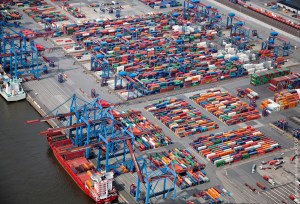
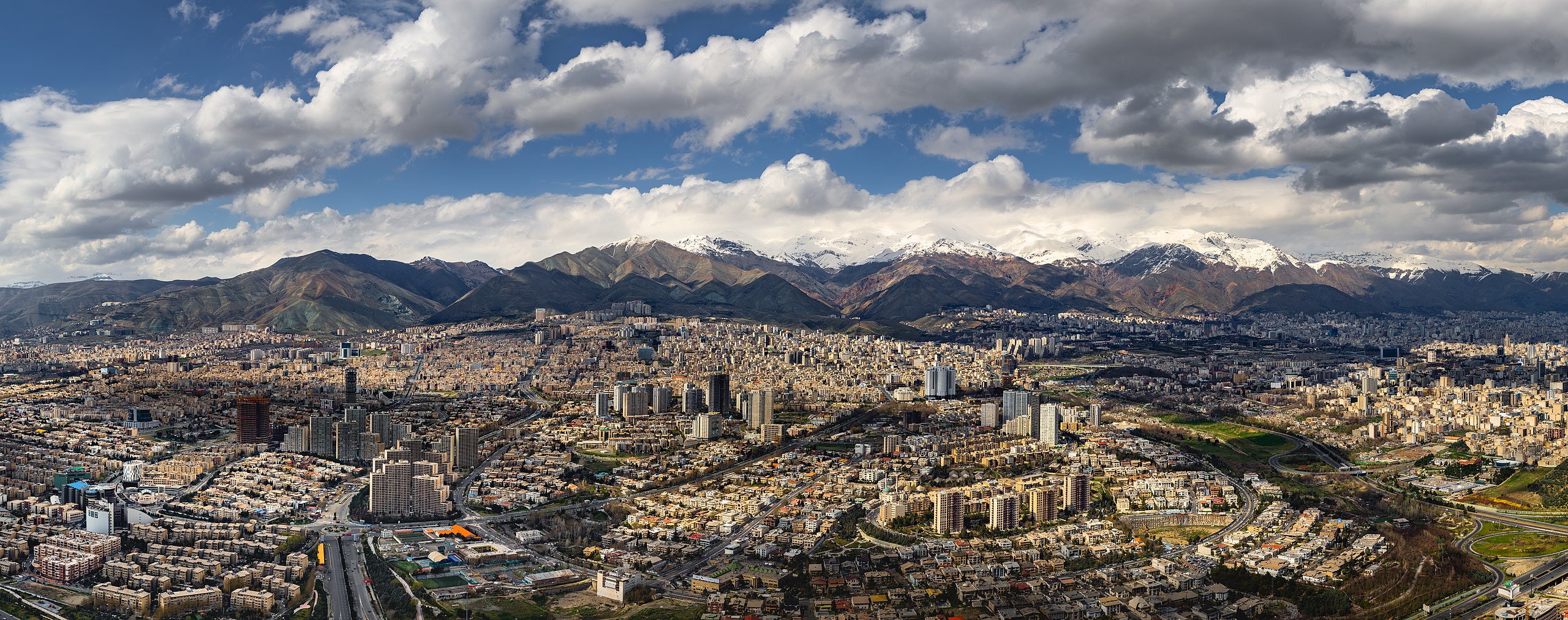
The President suggested that the crises confronting the state necessitate shifting the path of national development toward the Persian Gulf. Specifically, he mentioned Hormozgan province as a potential centre for this developmental focus, noting its direct access to open waters and its capacities for trade and economic expansion. Pezeshkian stated that the cities of Tehran, Karaj and Qazvin are currently grappling with a water crisis that cannot be resolved easily. Tehran, a major metropolitan centre inhabited by more than 10 million people, consumes nearly one quarter of the nation’s total water supplies.
In detailing the environmental severity of the deficit, President Pezeshkian noted that last year’s rainfall measured 140mm, which is substantially below the standard of 260mm, reflecting a decline of approximately 50 to 60 per cent. Estimates for the current year, 2025, suggest rainfall figures are just below 100mm. Pezeshkian also highlighted the reduction in water reserves behind hydraulic dams, the drying of wells and the high expenses associated with transporting water from distant areas. The cost of transporting one cubic metre of water to Tehran was estimated at up to 4€. Historically, Tehran’s water supply relied 70 per cent on dams and 30 per cent on underground resources; however, low rainfall and increased evaporation have subsequently intensified the pressure upon groundwater assets.
Subsidence and Resource Bankruptcy
The depletion of groundwater has resulted in significant physical consequences, including land subsidence, which the President described as a disaster. This phenomenon, occurring at rates up to 30cm per year in some regions, indicates the exhaustion of underlying water reserves.
According to TIME, the nation is currently facing “water bankruptcy,” defined as a situation where demand significantly exceeds the available supply. This predicament is attributed to more than just climate-driven drought, with the collapse of water security rooted in decades of strategic planning that included a high volume of infrastructural megaprojects—such as dam building, deep well drilling and water transfer schemes—that reportedly neglected the principles of hydrology and ecological equilibrium. The traditional water systems, known as qanats (underground aqueducts), are collapsing alongside aquifers. The failure of these groundwater sources has led to the abandonment of historically settled areas in regions such as Yazd, Kerman and Khorasan.
Historical Development and Institutional Roles
The current water security crisis has been shaped by historic policy decisions. In the 1950s and 1960s, the United States of America provided technical assistance and technology, including deep well drilling equipment. This technology enabled the population to extract water from aquifers at an unsustainable rate. Furthermore, the Shah of Iran, Mohammad Reza Pahlavi, placed water-intensive industries in arid central provinces like Isfahan and Fars, necessitating diversions from other basins. The land reforms of 1963 contributed to the move away from traditional systems, as many farmers began using motorised wells instead of qanats. The subsequent economic failure of these farms generated internal migration, which contributed to the social dynamics preceding the 1979 revolution.
After the revolution, the Islamic Republic prioritised self-sufficiency, which resulted in the immediate doubling of the number of wells. Following the Iran-Iraq war, development efforts intensified, resulting in aggressive dam construction and water-intensive agriculture, despite warnings from scientific experts. This period saw the strengthening of key state institutions, including the Iran Water and Power Resources Development Company (hereinafter: I.W.P.C.O.) and the engineering arm of the Islamic Revolutionary Guard Corps (hereinafter: IRGC), the Khatam al-Anbiya Construction Headquarters. These entities, along with the consulting firm Mahab Ghodss, facilitated the commissioning and execution of numerous dam projects, often without adequate environmental safeguards.
A direct consequence of this construction was the reduction of Lake Urmia, once the largest lake in Sub-Anatolia, to a salt-crusted basin by the 2010s. Data shows that agriculture currently accounts for approximately 90 per cent of national water consumption, including the withdrawal of non-renewable water reserves. By the summer of 2024, the broader water crisis was affecting 27.000 villages, with more than 10.000 villages lacking reliable access to drinking water. Additionally, the capital, Tehran, is estimated to lose nearly one-third of its water supply due to infrastructural problems, such as broken pipes.
Concluding Forecast
The current political challenge for Iran must be viewed as a critical juncture in environmental politics, where resource scarcity directly impacts state stability. The institutional inability to enforce sustainable water consumption practices – especially within the agricultural sector, which accounts for approximately 90 per cent of usage – demonstrates a clear failure of internal governance. This domestic policy weakness, which reportedly favours high-cost megaprojects by affiliated entities over ecologically balanced solutions, suggests that a top-down, centralised reform may be structurally blocked unless genuine institutional separation from these powerful economic actors is achieved. Furthermore, this deepening water deficit carries significant implications for regional security. The risk of escalating disputes with states like Iraq and Afghanistan over shared river basins increases as internal resources diminish. Therefore, the path forward requires not only domestic institutional reform, but also the immediate prioritisation of water security as a diplomatic issue, where conservation must be balanced with the need to avoid the securitisation of resources in the Sub-Anatolian region.