
The Strait of Hormuz has become the focal point of an escalating public confrontation between Washington and Tehran, after the President of the United States of America (hereinafter: USA) vowed to declare the strategic waterway North American territory and Iran responded with categorical rejections from its foreign ministry, military and judiciary.
The conflict has intensified as the strait has remained under disrupted conditions since the outbreak of the war against Iran on 28 February 2026, with vessels required to obtain Iranian permission and pay transit fees before passage (Euronews). A technical shipping-route agreement between Iran and Oman, reached after three months of negotiations, has offered a partial diplomatic opening, though Tehran has made full commercial restoration conditional on Washington’s withdrawal of its military presence from the region.
Trump’s Territorial Claim And Distrust Of Tehran
Speaking in New York on Friday 15 August 2026, the USA’s President, Donald Trump, made his most direct statement yet on the waterway’s status. He told his audience, with what reporters described as a chuckle, that he intended to formalise Washington’s position over the chokepoint (Euronews).
Trump also asserted that Washington holds decisive control over the waterway and openly questioned the possibility of trusting Tehran, framing the declaration as a consequence of what he described as Iran’s defeat in the ongoing conflict (Yeni Şafak). He urged North Americans to accept higher fuel prices in the near term, linking the economic disruption directly to the standoff over the strait. The remarks followed a period in which continued disruption around the waterway has raised sustained concerns over energy supplies and international shipping, given that the Strait of Hormuz carries a substantial share of the world’s seaborne oil exports.
Iran’s Multi-Voice Rejection
Foreign Ministry: Authority Cannot Be Seized By Tweet
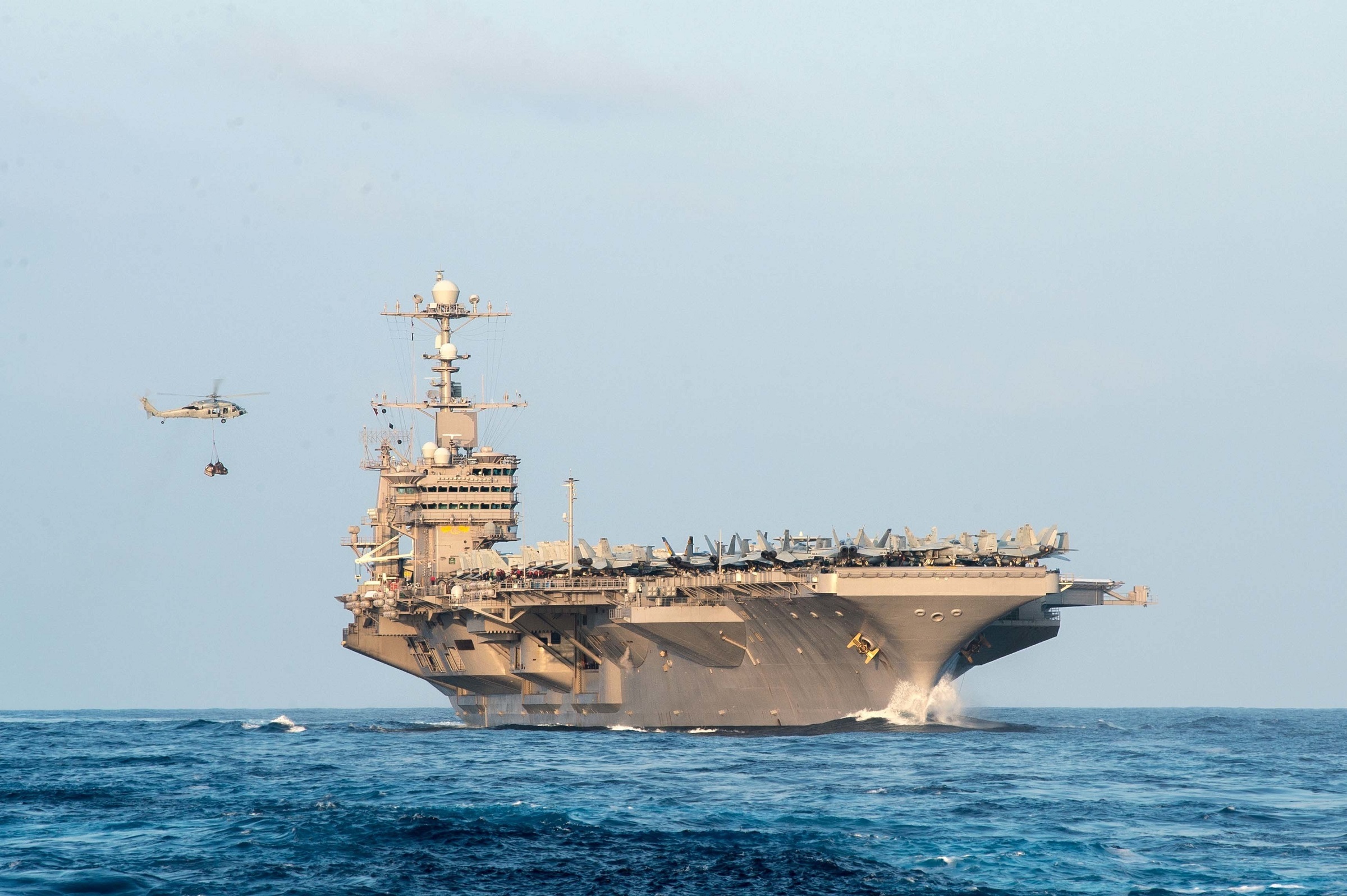
Iran’s Deputy Foreign Minister for Legal and International Affairs, Kazem Gharibabadi, issued a direct rebuttal, stressing that the Strait of Hormuz can only be opened or closed by Iran’s command and calling on the USA to accept defeat (IRNA). A senior Iranian diplomat elaborated that threats and shows of force cannot alter the reality of Iran’s position in the Gulf, with the formulation that the waterway cannot be seized by a tweet, an aircraft carrier or an election speech.
A separate Foreign Ministry official stated that Iran’s authority in managing the strait has disrupted the USA’s strategic calculations, and that Washington’s claims about controlling the waterway reflect a reaction to Iran’s own initiatives rather than an accurate description of conditions on the ground.
Military And Judiciary Reinforce Sovereignty Position
Iran’s military characterised Trump’s assertions as lies, with TRT World and Euronews both reporting that Iranian armed forces officials dismissed the claim of USA control as baseless fabrications. Iran’s Judiciary Chief, Gholamhossein Mohseni-Ejei, added institutional weight to the rejection, stating that the owner and ruler of the strait is the Islamic Republic of Iran and that no foreign declaration changes that legal or physical reality (IRNA).
The convergence of statements from the foreign ministry, military command and judiciary signals a coordinated effort by Tehran to present a unified position across branches of the Iranian state. Iranian state media further described Trump’s ambitions regarding the waterway as fanciful delusions, arguing that the strait cannot be claimed through political statements or naval deployments (RT).
Shipping Disruption Since February 2026
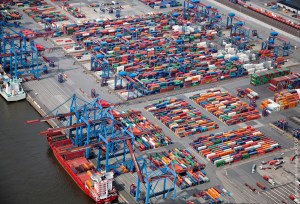
The Strait of Hormuz has operated under significantly altered conditions since the conflict began on 28 February 2026 (Asia Times). Under the government of Iran, commercial vessels seeking to transit the waterway have been required to obtain prior permission from Iranian authorities and to pay transit fees; a system that has introduced delays, increased costs and uncertainty for shipping companies and energy importers dependent on Gulf crude exports. USA and Israeli vessels have been barred from passage entirely, according to Iranian officials.
The disruption has contributed to broader pressure on global energy markets, with higher fuel prices already registering in the USA, a development the President acknowledged when urging his nationals to absorb the costs. The waterway is a critical conduit for oil exports from Saudi Arabia, the United Arab Emirates, Iraq, Kuwait and Iran itself, making its operational status a matter of direct concern for energy-importing states across Asia and Europe.
Iran-Oman Agreement On Navigation Routes
Against this backdrop, Iranian Foreign Ministry spokesman Esmaeil Baghaei announced on Saturday 16 August 2026 that Tehran and Muscat have finalised a technical agreement on navigation routes through the Strait of Hormuz following three months of negotiations (Yeni Şafak). The agreement establishes a defined shipping-route map intended to provide clearer guidance for commercial vessels transiting the waterway. Baghaei noted, however, that the two sides were still discussing the precise wording of a joint statement, and that full restoration of security and commercial shipping in the waterway remains contingent on the North American ending their military threats and naval blockade (TRT World).
Oman, which maintains diplomatic relations with both Tehran and Washington and has historically served as a back-channel between the two states, is positioned as a facilitating party in the arrangement. The technical deal represents the most concrete diplomatic development regarding the strait since the conflict began, though its practical effect on shipping conditions depends on broader political resolution.
Wider Conflict Context: Lebanon And Stalled Diplomacy
The Hormuz dispute is unfolding within a broader regional conflict that has not been confined to the Gulf. On 16 August 2026, Israeli strikes killed eleven people in Lebanon in what was reported as the deadliest attack on Lebanese territory since a June truce, as Iran and Oman continued their talks on the strait (Al Jazeera).
Diplomacy between Washington and Tehran over the waterway and the wider conflict has remained stalled, with Tehran insisting that attacks on shipping are continuing and that no substantive progress has been made in negotiations with the USA. Iran’s position, as stated by multiple officials, is that any resolution of the Hormuz situation must be preceded by concrete USA actions rather than declarations, a condition Washington has not publicly accepted.
Concluding Outlook
What can be observed over the past weeks is that the credibility of both nations has rapidly declined. As there are daily news reports about allegedly final solutions to the conflict, without hard-fact-backed agreements, the world is attaching less weight to the diplomatic narratives of both sides. This can be seen as a deliberate move by the USA.
By dragging the conflict over the Strait of Hormuz and undermining the resolution and reopening efforts, global actors quickly adapt by seeking ways to circumvent this logistical chokepoint. For example, the Development Road Project, connecting the Persian Gulf to Europe via land through Iraq and Türkiye, has gained pace in the past two months. This tactical approach reduces the economic importance of this trade route in the long run.
Accordingly, Iran will seek to end this stalemate soon, which requires more intensive operations against the North American fleet. If that happens, the USA will turn the narrative in a way that supports its victimisation, effectively self-legitimising another round of extensive attacks on Iran. Another route would be for Iran to push for further lifting and circumvention of sanctions, so that the USA perceive that a new flank is opened for them to counteract Iran’s development, which is an outspoken policy goal of the USA.