
Prime ministers of the Eurasian Economic Union (hereinafter: EAEU) member states convened at Lake Issyk-Kul in Kyrgyzstan for the EAEU summit in Kyrgyzstan, bringing together senior officials to review trade, investment and integration priorities. The session of the Eurasian Intergovernmental Council ran in a narrow format, meaning only heads of delegation and a restricted number of advisers participated in the core discussions. On the sidelines, a dedicated Kyrgyz-Russian Economic Forum attracted more than 150 participants and produced signed agreements valued at $545,1 million (Akipress).
EAEU Summit Format And Attendance
The Eurasian Intergovernmental Council held its narrow-format session at the Issyk-Kul venue, a structure that limits floor access to principal negotiators and reduces the number of delegations present during substantive exchanges (Akipress). The EAEU groups Armenia, Belarus, Kazakhstan, Kyrgyzstan and Russia under a common economic space with coordinated customs and trade rules. Heads of government from the member states gathered to discuss the current state of economic ties and pending integration measures, according to reporting by Anadolu Agency. The narrow format is a standard procedural choice for sessions where member states aim to advance specific agenda items without the broader consultative layer of a full plenary.
Iran’s Minister of Industry, Mine and Trade travelled to Kyrgyzstan to attend the summit as part of Tehran’s engagement with the EAEU, Iran Press reported (Iran Press). Iran signed a free trade agreement with the EAEU that entered into force in 2023, granting it preferential access to the bloc’s market and creating a framework for expanded industrial and commercial cooperation. The minister’s presence at Issyk-Kul reflects the operational phase of that arrangement, with bilateral and multilateral trade discussions forming part of the summit agenda. Iran’s attendance at an intergovernmental council session at this level signals continued institutional engagement rather than a one-off diplomatic visit.
Kyrgyz-Russian Economic Forum And Signed Agreements
Running in parallel with the intergovernmental council session, the Kyrgyz-Russian Economic Forum convened at the same Issyk-Kul location and drew over 150 participants from business, government and institutional circles (Akipress). The forum provided a platform for direct engagement between Kyrgyz and Russian economic actors, covering sectors including trade, logistics, agriculture and investment. Agreements signed during the forum reached a combined value of $545,1 million, though the sources do not itemise the individual contracts or the sectors they cover in full detail. The scale of the figure indicates that the forum served as a substantive deal-making event rather than a purely consultative gathering.
Kyrgyzstan and Russia maintain close economic ties within the EAEU framework, with Russia representing one of Kyrgyzstan’s principal trading partners and a major source of remittances through the Kyrgyz labour diaspora. The forum at Issyk-Kul appears designed to deepen that bilateral dimension alongside the broader multilateral agenda of the intergovernmental council. Hosting both events simultaneously at the same venue allowed delegations to move between the EAEU plenary track and the bilateral forum without logistical disruption, maximising the diplomatic and commercial output of the gathering.
Economic Integration Priorities Under Discussion
The EAEU prime ministers’ agenda at the Issyk-Kul summit centred on economic ties among member states, a broad category that in recent EAEU sessions has included transport corridor development, digital trade facilitation, energy pricing arrangements and the harmonisation of technical regulations. The sources do not specify which items reached a decision stage at this session, but the narrow format typically precedes or follows a broader council meeting where formal decisions are adopted. The presence of Iran’s industry minister alongside the EAEU heads of government adds a dimension of external partnership review to the summit’s scope.
The EAEU has been expanding its external trade partnerships over recent years, with agreements or negotiations involving states across South Asia, South America and Sub-Anatolia. Iran’s integration into this network, formalised through the 2023 trade agreement, positions it as a significant non-member partner given its geographic location connecting Central Asia to the Persian Gulf and its industrial base in sectors such as petrochemicals, metals and machinery. Discussions at the ministerial level during the Issyk-Kul summit are likely to have addressed the practical implementation of tariff schedules and customs procedures under that agreement, though the sources do not confirm specific outcomes.
Issyk-Kul As A Diplomatic Venue
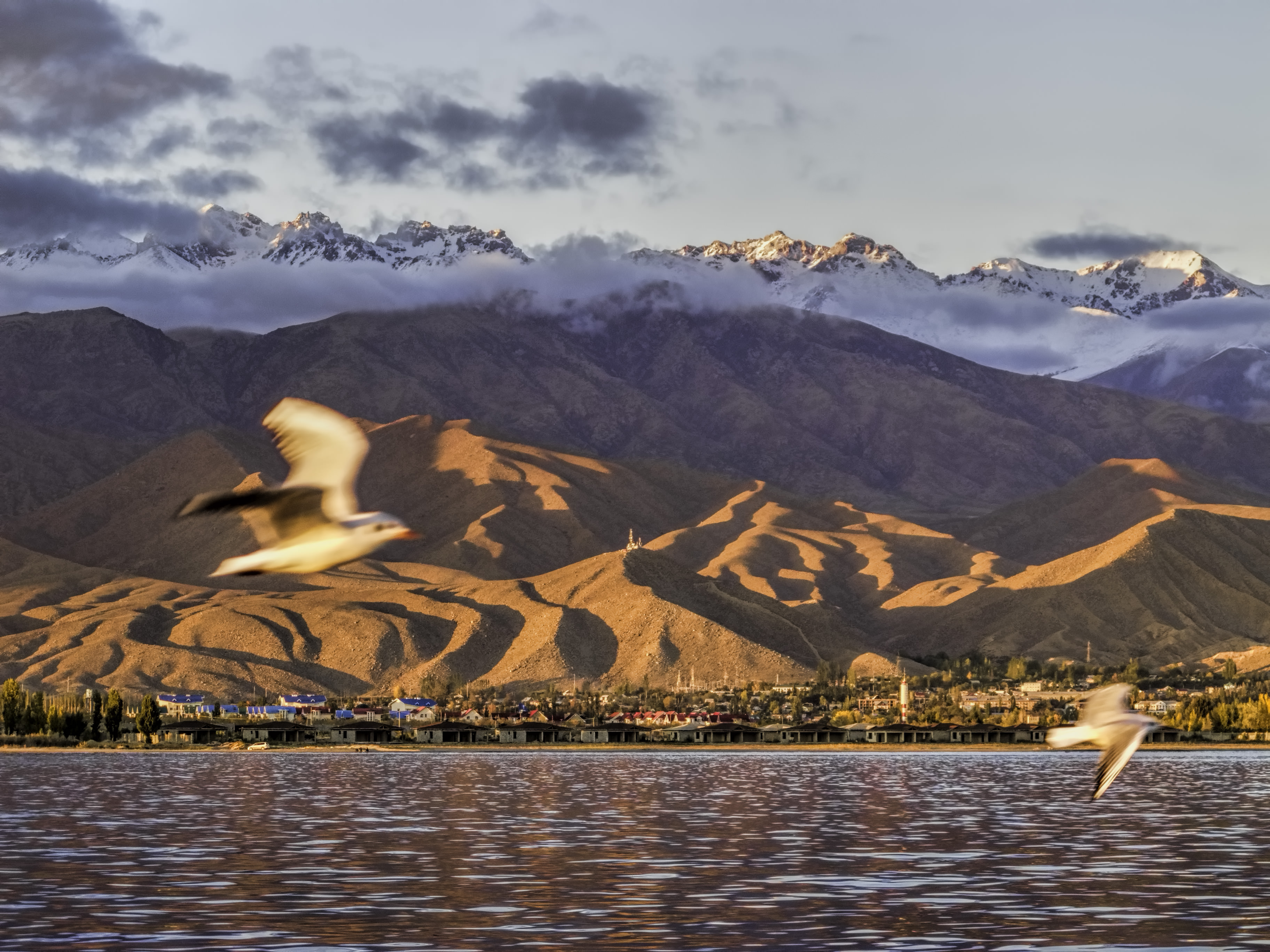
Lake Issyk-Kul, located in north-eastern Kyrgyzstan, has served as a recurring venue for high-level regional meetings, offering a setting that combines accessibility for Central Asian delegations with a degree of remove from capital-city pressures. Kyrgyzstan’s role as host of the current EAEU summit reflects its standing as a full member of the bloc and its interest in using the chairmanship or hosting cycle to advance bilateral economic objectives, as demonstrated by the concurrent Kyrgyz-Russian forum. The choice to hold the narrow-format intergovernmental council session alongside a bilateral business forum is consistent with a pattern of layering diplomatic and commercial tracks at the same event to increase efficiency.
The Forum In Context
Türkistan, and broader Central Asia, is in an accelerated growth and development phase in its meso-cycle of socio-political development. In the past few years, the region has achieved political stability, which was then quickly turned into economic consolidation, especially in Kyrgyzstan. Last year, in particular, Turkic nations finalised some international agreements, boosting foreign direct investments in the region (for more information, click here). The most recent forum underlines the regional efforts to grow through cooperation. The Türkistan region has displayed a remarkable commitment to close cooperation with the C5 group, and the resulting agreements of the past years show that the region presents itself as an almost unified actor in the international sphere.
As deals with a North American nation and Germany were signed last year, it is all the more interesting that the Turkic and Central Asian states are now also increasing cooperation with Iran and Russia. Historically, Russia has interfered in the Turkic affairs for more than two centuries, but had to slow down due to other foreign policy preferences. Apparently, this did not lead the states from this year’s forum at Issyk-Kul to abandon relations, but rather remodel them according to Turkic interests.