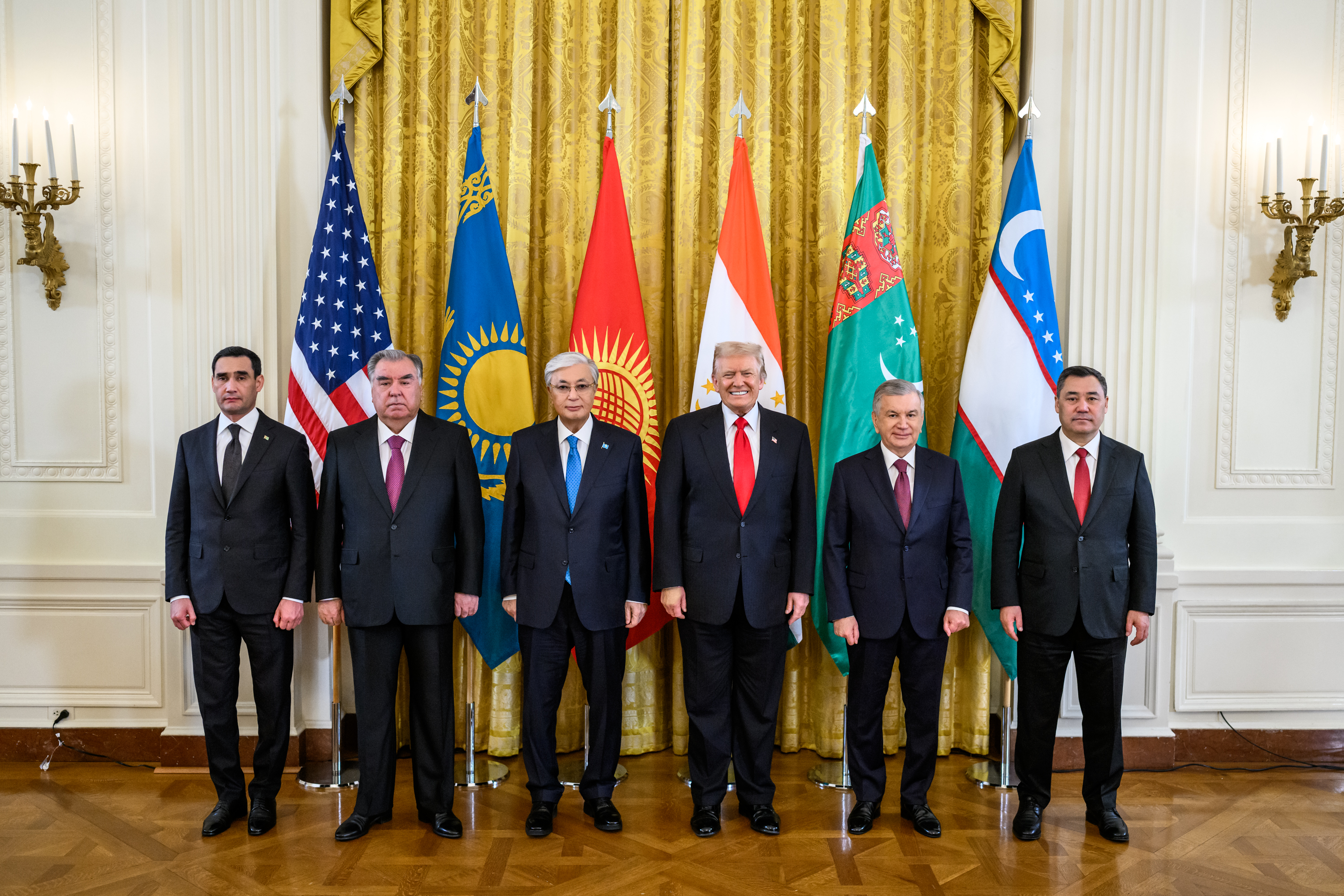

The relations between the Turkic Central Asian nations and the United States of America (hereinafter: USA) are undergoing a significant expansion, marked by a series of high-level strategic and economic agreements. Recent developments include major investment pacts with Uzbekistan, new diplomatic and resource-focused alignments with Kazakhstan and broader regional engagement through established multilateral frameworks like the C5+1. The agreements, formalised during meetings in Washington D.C., signal a deepening of cooperation in critical sectors such as aviation, trade and critical minerals.
The recent developments in this evolving partnership include:
- Strategic deals signed between the USA and Uzbekistan valued at over 100$ billion (ANWZ.TV, Euronews).
- Kazakhstan decides to join the Abraham Accords, a move accompanied by new trade and critical minerals deals with Israel (Euronews).
- A 7$ billion aircraft acquisition by Central Asian airlines, including those in Uzbekistan and Kazakhstan, from Boeing (Simple Flying).
- Uzbekistan’s announcement of visa-free travel for citizens of the USA, effective from January 2026 (The Times of Central Asia).
- A formal statement from Turkmenistan affirming its readiness to expand cooperation in strategic areas within the C5+1 framework (Government of Turkmenistan).
This intensification of relations reflects a stated position within the government of the USA that its commitment to the region is “strong and enduring” (The Times of Central Asia).
Economic and Infrastructure Integration
The most significant component of the new agreements is economic. The deals signal a move beyond theoretical partnership toward deep financial and infrastructural integration. The headline figure is the package of strategic deals between the USA and Uzbekistan, valued at over 100$ billion. This follows meetings where “multi-billion dollar investments” were agreed upon.
This financial commitment is mirrored in physical infrastructure. A 7$ billion agreement for Boeing to supply Central Asian airlines, including those in Uzbekistan and Kazakhstan, with new aircraft is a foundational component of this integration. Modernising the region’s aviation fleet is a prerequisite for functioning as a viable commercial and logistical hub, directly enabling the increased business and tourism traffic that other agreements anticipate.
Complementing the financial and physical integration is the facilitation of human movement. Uzbekistan’s decision to grant visa-free travel to citizens of the USA beginning in January 2026 signals the strategic alignment, designed to lower the barrier for commercial, academic and cultural exchange.
Diplomatic and Strategic Realignments
Parallel to the economic dimension, a significant diplomatic realignment is underway. The most pronounced move is Kazakhstan’s decision to join the Abraham Accords. This step integrates Kazakhstan into a specific, USA-led diplomatic framework, moving its foreign policy beyond traditional regional balancing. This diplomatic step is explicitly linked to geoeconomics, as it is accompanied by new critical minerals and trade deals.
This bilateral alignment is reinforced at the regional level. The established C5+1 dialogue (USA and the five Central Asian states) is being leveraged to solidify this cooperation. The government of Turkmenistan has formally stated its readiness to expand cooperation in “strategically important areas” within this framework. This indicates a broader, regional willingness to engage on substantive issues beyond simple diplomatic pleasantries.
This entire framework is supported by a clear policy perspective from a member of the North American parliament, Steve Daines, who has identified the region as “key to the [USA] strategic and economic future”. This sentiment is echoed by academic experts like professor Paul Kapur, who affirmed that the “United States [of America]’[s] commitment to Central Asia is strong and enduring” (The Times of Central Asia).
Concluding Forecast
With the recent developments, the USA aim to establish themselves in a region that has been of interest to China for a couple of decades. In the context of the Belt and Road Initiative, China is seeking to expand its economic influence globally. Because of their geographic proximity, the Turkic nations are one of the most important actors because expansion to Turkistan also has security implications.
Since the USA and China are in severe economic competition, the move by the USA to invest vastly in Turkistan must be motivated by geostrategic concerns. By doing so, the North Americans move closer to China, while pulling the Central Asian states more towards the influence of the USA and their allies diplomatically and economically.
It is likely that the USA will establish some favourable frameworks for the Turkic nations to build a stronger relationship. Then, political favours and support will be asked by the USA that aim against China. Due to the closer relationship, the Turkic nations will be more inclined to agree or will be threatened by the USA with the discontinuation of the programmes. The USA is known for crafting such dependencies and utilise them against their political enemies. Knowing that, the Turkic nations should already implement structural precautions such as diversification of infrastructural projects.