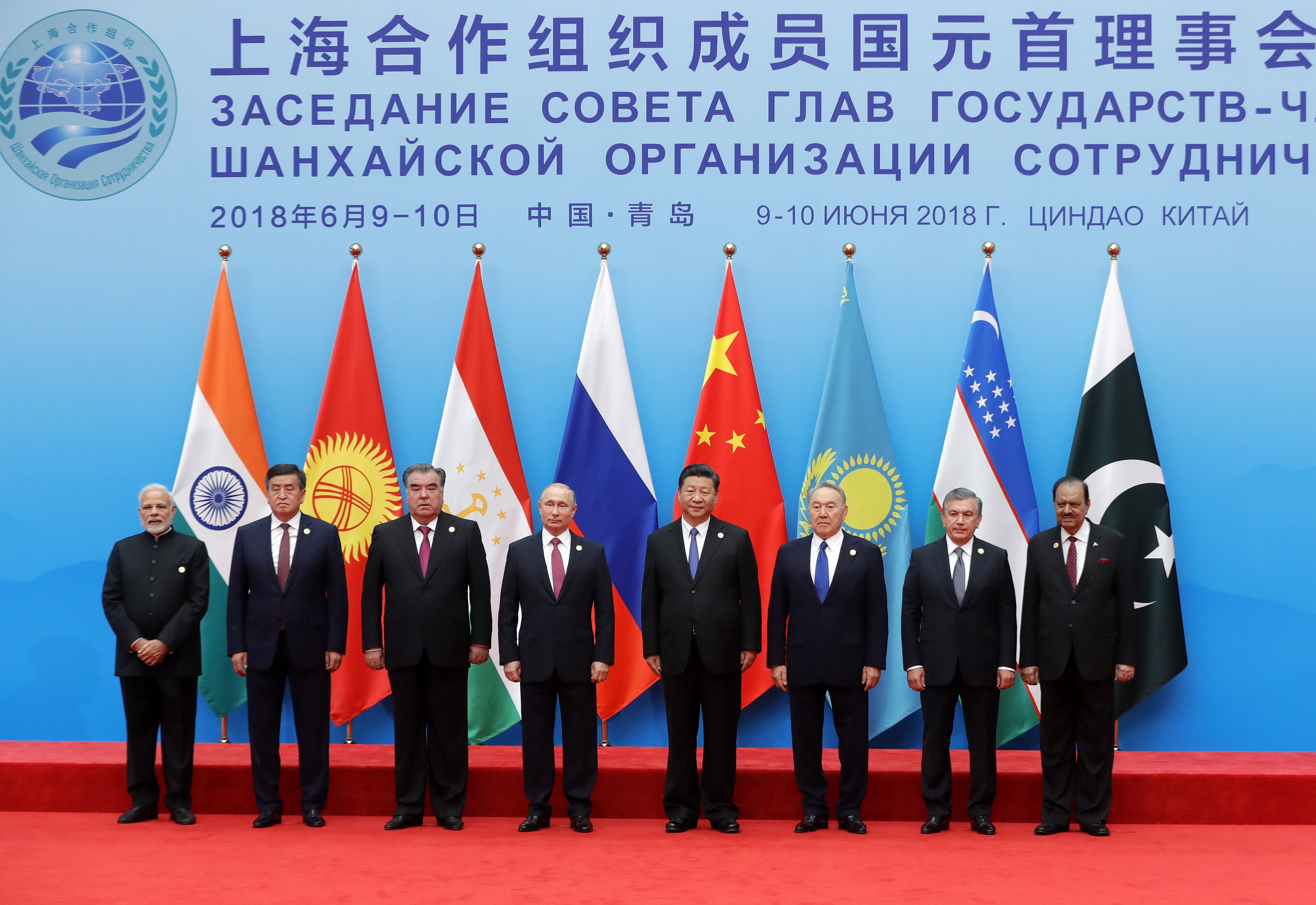

The leaders of China, Russia and India are scheduled to attend the SCO summit Bishkek gathering on 31 August and 1 September, as the Shanghai Cooperation Organisation (hereinafter: SCO) marks the 25th anniversary of its founding. Chinese President Xi Jinping, Russian President Vladimir Putin and Indian Prime Minister Narendra Modi will be among the heads of state and government convening in the Kyrgyz capital for the 26th SCO summit, alongside representatives of the bloc’s other member states (Yeni Şafak).
The SCO currently comprises ten member states and represents approximately 3,4 billion people, with China, Russia, India and Iran among its principal members (The Express Tribune). The summit is expected to address regional security arrangements and efforts to deepen economic integration across Eurasia.
Modi’s Four-Day Central Asia Visit
Prime Minister Modi departed for Central Asia on Saturday, 29 August, beginning a four-day itinerary that takes him first to Uzbekistan before proceeding to Kyrgyzstan. He will hold bilateral talks in Tashkent with Uzbek counterparts, with discussions expected to cover trade, critical minerals and healthcare cooperation between the two states (Times of India). The Uzbekistan leg constitutes a formal two-day state visit before Modi travels onward to Bishkek.
In Bishkek, Modi’s programme includes attendance at the SCO summit and participation in the opening ceremony of the World Nomad Games, a cultural and sporting event hosted by Kyrgyzstan. The visit is framed by Indian officials as an opportunity to strengthen strategic partnerships, trade relations and regional security engagement across Central Asia (LiveMint). India’s engagement with Turkic states has been a consistent element of its foreign policy in recent years, with connectivity, energy and security among the recurring themes.
Modi-Putin Bilateral On The SCO Summit Sidelines
On the sidelines of the Bishkek summit, Prime Minister Modi is expected to hold a bilateral meeting with President Putin, according to reporting by The Hindu, which noted that Putin is among the leaders with whom Modi is scheduled to meet individually (The Hindu). The meeting would mark a direct engagement between the two leaders at a multilateral forum. Deutsche Welle separately confirmed that the Modi-Putin bilateral is planned for the margins of the summit in Bishkek (Deutsche Welle).
President Putin’s schedule places him in Bishkek on 31 August and 1 September for the SCO summit, according to his published programme, which also includes a major address at the Eastern Economic Forum (hereinafter: EEF) (TASS). The Bishkek visit is listed as a separate engagement from the EEF, which is held in Vladivostok. No agenda items for the Modi-Putin meeting have been confirmed in the supplied sources beyond the general framework of the summit.
SCO’s 25th Anniversary And Regional Agenda
The Bishkek summit coincides with the SCO’s 25th anniversary, lending the gathering additional symbolic weight for member states. The bloc was established in 2001 and has since expanded from its original six members to ten, incorporating states across Central Asia, South Asia and the broader Eurasian landmass. Member governments have consistently used SCO summits to advance positions on regional security architecture, counter-terrorism frameworks and economic connectivity, though the organisation’s decision-making operates by consensus.
The presence of Xi Jinping, Putin and Modi at the same summit is notable given the distinct bilateral relationships each pair of states maintains. India and China have managed a complex border relationship, while India and Russia maintain longstanding defence and energy ties. China and Russia have deepened their bilateral engagement across multiple domains in recent years. The SCO format provides a setting in which all three leaders can engage multilaterally and, where scheduled, bilaterally, without the summit itself constituting a negotiating forum for their respective bilateral disputes.
India’s Strategic Interests In Central Asia
India’s engagement with Uzbekistan and Kyrgyzstan reflects broader objectives related to connectivity and market access in a region where China and Russia are the dominant external actors. Trade, critical minerals and healthcare were identified as specific discussion areas for the Tashkent talks, indicating a focus on economic substance alongside the diplomatic dimension of the visit. Central Asia’s mineral resources and its position along overland trade corridors have made it a priority region for multiple states seeking to diversify supply chains and energy partnerships.
India does not share a land border with any Central Asian state, making connectivity infrastructure a persistent structural challenge for its engagement in the region. Multilateral forums such as the SCO provide an institutional channel through which India can sustain dialogue with Turkic governments and signal its interest in regional affairs. The Uzbekistan state visit, conducted separately from the SCO summit, reflects an effort to build bilateral depth beyond the multilateral setting.
Humanitarian Context: Indians Missing In Nepal
Concurrent with the diplomatic visit, Indian authorities have been managing a consular situation in Nepal, where hundreds of Indian nationals remain unaccounted for following flooding. India has stepped up search and assistance efforts in response, according to Deutsche Welle, though the situation remains unresolved as Modi travels abroad (Deutsche Welle). The Nepal floods constitute a separate operational matter from the summit agenda.
Context Of The Bishkek Summit
The Bishkek Summit of the SCO takes place amid increasing focus on the Turkic states on a global scale. With Russia being occupied in the Ukraine war, China’s expansion aspirations within the Belt and Road Initiative, the United States of America’s and Europe’s increased cooperation with the Turkic states and the increasing political and economic stability in the region, the actors involved in the summit face a competitive landscape for further influence. On the other hand, the Turkic states of Central Asia seek financing, cooperation and growth opportunities.
This creates a complex web of interests, risks and opportunities. While the external powers will seek to increase their influence, states like Kyrgyzstan and Uzbekistan will need to balance involvement and autonomy to achieve growth without sovereignty problems in the long term.
Also, the SCO itself continues its integration process, which has become more important as geopolitical pressures and competition, mainly driven by the war against Iran, mount. Future integration and cooperation are heavily dependent on how cooperative influence in Turkic states is agreed upon and how well those states can preserve their sovereignty. This is further complicated by Türkiye’s lessened involvement and currently deepening proximity to the counterpart of the SCO, the North Atlantic Treaty Organisation.