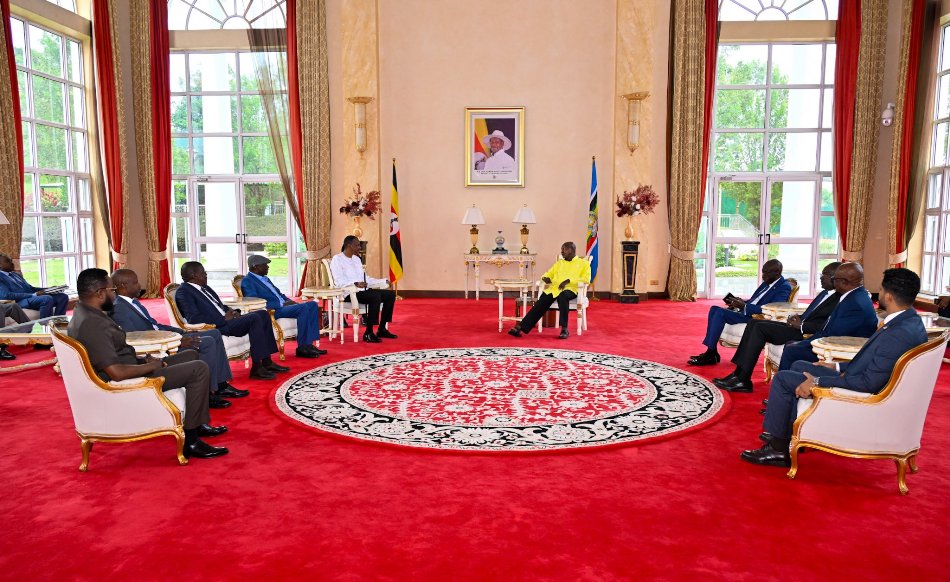

The government of the Republic of the Sudan has issued strong criticism of the reception granted to a senior Rapid Support Forces (hereinafter: RSF) commander by the government of Uganda, calling the visit a “blatant disregard of crimes of genocide and other violations” attributed to RSF units in the long-running Sudan RSF violence Darfur conflict. (Anadolu Ajansı)
Sudanese authorities identified the RSF leader received in Kampala as Mohamed Hamdan Dagalo, widely known as Hemedti, and stated that his visit to Uganda undermined accountability efforts related to widespread violence and atrocities within Sudan. Khartoum’s Foreign Ministry maintained that hosting a senior RSF figure implicated in violence against civilians and large-scale destruction signalled a misreading of the human impact of the conflict.
Recent Reports Of Violence And Destruction In Darfur
UN Fact-Finding Mission Reports Indicators Of Genocide In El Fasher
A United Nations fact-finding mission published findings on 19 February 2026 regarding extensive destruction in El Fasher, the major city of North Darfur. The mission’s report described patterns of violence and damage to civilian infrastructure that bear “the hallmarks of genocide,” including the systematic burning of homes and targeted attacks on residential areas. (Al Jazeera)
These findings align with earlier reports of sweeping destruction and allegations of mass atrocities in El Fasher documented in October 2025, when the city fell to intense fighting and widespread civilian displacement. Independent reporting described a dramatic escalation of violence, including looting, attacks on non-combatants and severe damage to essential services.
Escalation Of Atrocities And Human Impact
Across the broader Darfur region, multiple accounts have documented the deterioration of civilian protection. Reports from late 2025 detailed incidents of forced displacement, targeted killings and destruction of property attributed to RSF elements and affiliated militia fighters operating within contested areas. These patterns of violence have contributed to large-scale humanitarian needs, with civilians fleeing conflict zones, seeking shelter in neighbouring areas and grappling with limited access to food, healthcare and shelter.
Continued Clashes Between SAF And RSF Forces
SAF Repels RSF Assault Near Western Border
On 24 February 2026, the Sudanese Armed Forces (hereinafter: SAF) reported repelling an attack by RSF fighters on the town of Kordofan West, near Sudan’s border with South Sudan. According to Anadolu Ajansı reporting, SAF units engaged and forced RSF elements to withdraw, maintaining control of the border locality amid ongoing hostilities.
RSF Claims Capture Of Golo In Darfur
In a parallel development, the RSF announced it had taken control of Golo, a town in the central Darfur region. Africanews reported the RSF’s claim of capture, though independent verification of the security situation on the ground remained limited at the time of reporting.
Regional And Diplomatic Reactions
Sudan’s Response To Uganda’s Engagement With RSF Leaders
Sudanese government statements following the RSF commander’s visit to Uganda framed the episode as minimising the humanitarian consequences of the conflict. Khartoum’s critique emphasised that the actions of RSF units — including mass displacement and destruction — have contributed to a difficult humanitarian situation that neighbouring states and regional partners should consider when engaging with members of the RSF leadership.
The Sudanese Foreign Ministry reiterated calls for regional cooperation focused on civilian protection and conflict de-escalation, highlighting that diplomatic engagement with figures associated with violence could complicate prospects for accountability and peace negotiations.
Broader Conflict Context
Origins And Ongoing Dynamics
The conflict between SAF and the RSF began in April 2023 following the collapse of a power-sharing framework between the two forces. Hostilities have since spread across multiple fronts, with Darfur and western Sudan among the areas experiencing sustained violence. Civilians have borne significant costs, including displacement, loss of livelihoods and damage to essential infrastructure.
International observers and humanitarian agencies have repeatedly highlighted the humanitarian crisis, noting restricted access to aid, shortages of life-saving supplies and elevated risks to non-combatants in conflict zones.
Summary Of Recent Developments
Recent developments in the Sudan conflict include:
- Diplomatic tensions: Khartoum condemned Uganda’s reception of an RSF commander as disregarding alleged crimes and civilian suffering.
- UN reporting: A fact-finding mission linked RSF destruction in El Fasher to indicators associated with genocidal patterns.
- Armed engagements: The Sudanese Armed Forces repelled an RSF assault near Kordofan West, while the RSF claimed capture of Golo.
The RSF commander’s visit to Uganda reshuffles the strategic outlook in Sudan’s conflict, as it reminds us that international actors are free to choose their side in the conflict. By hosting the RSF commander, Uganda legitimises this former subgroup of the SAF, signalling support for this side over the Sudanese government. The reasons for this move can be manifold. Most likely, however, is that Uganda potentially eyes to exert more influence in Sudan through the RSF.
Such a situation will drag the conflict in length, giving RSF motivation and an optimised ground for legitimacy. Further, this will spark counter initiatives from other states that seek to support the SAF, further adding to a prolonged conflict. However, if international bodies and strong military nations get involved, a diplomatic solution could be enforced earlier than in a situation without any foreign involvement. The result is heavily dependent on the scale and nature of involvement.