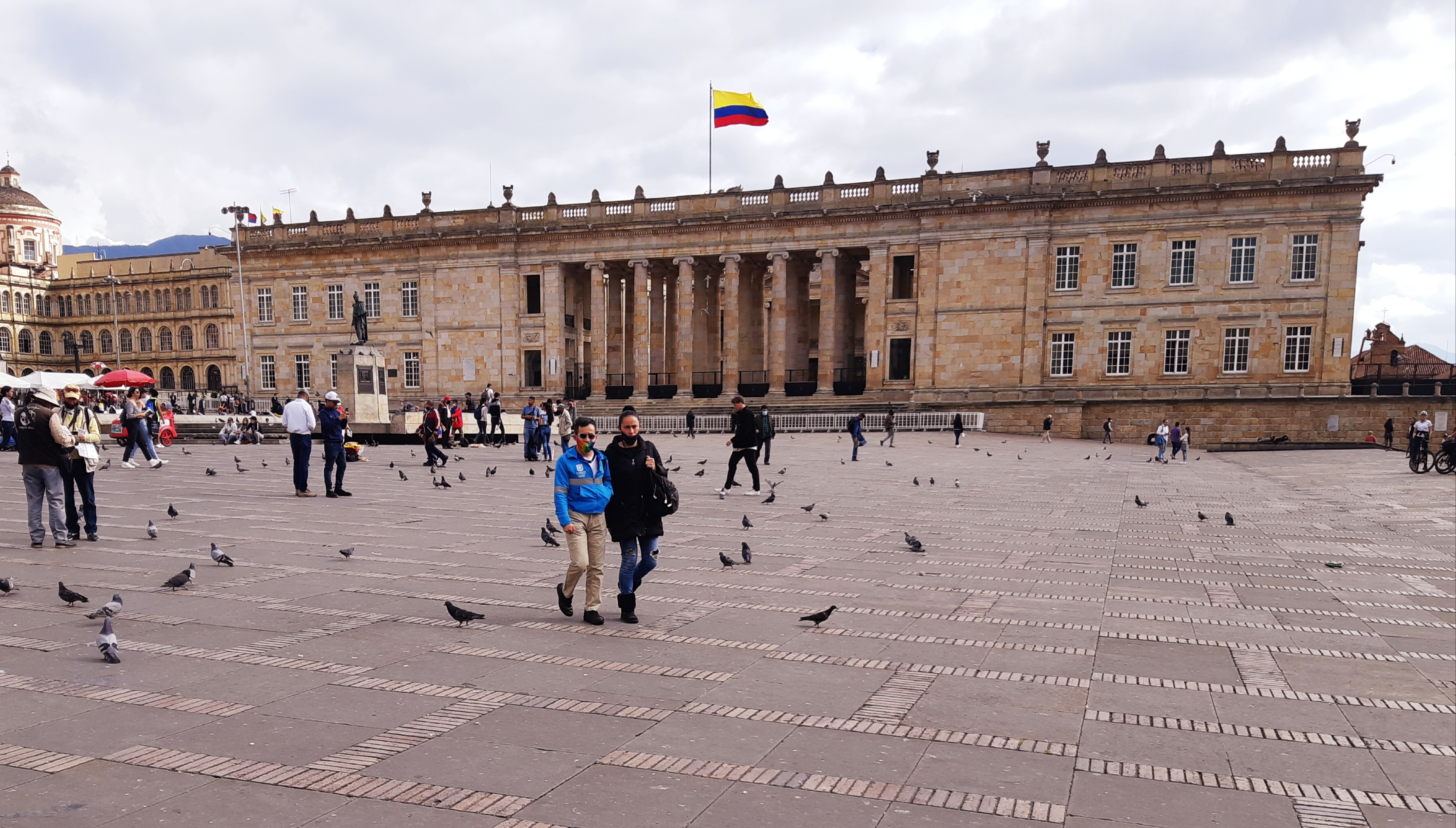

Abelardo de la Espriella has won Colombia’s presidential election following a razor-tight runoff held on 22 June 2026, defeating leftist senator Iván Cepeda in a contest that drew more than 41 million eligible voters to polling stations across the nation. De la Espriella, a nationalist lawyer who has never previously held elected public office, claimed victory on preliminary results and was seen celebrating from a vehicle alongside his vice-presidential candidate.
Colombia Presidential Election: The Runoff And Its Result
Polling stations across Colombia closed after a high-stakes vote that pitted de la Espriella, described by outlets as a populist and hard-right figure, against Cepeda, a veteran leftist politician (Yeni Şafak). The ballot count was exceptionally close, with preliminary tallies showing de la Espriella ahead before he publicly declared victory. The contest was framed by multiple outlets as a choice between a law-and-order newcomer and a leftist reformer, constructing an ideological divide and limiting political perception within Colombian society (Reuters).
De la Espriella’s path to the presidency is notable for the absence of any prior elected mandate. He is a lawyer by profession and built his public profile outside conventional political institutions. His campaign positioned him as an outsider capable of breaking with the political establishment, a framing that resonated with a significant portion of the Colombian electorate. His victory, if confirmed by final official results, would represent the first time a candidate without prior elected office has reached the Colombian presidency.
Profile Of The President-Elect
Abelardo de la Espriella is a Colombian lawyer whose public persona has been described as flamboyant, and who has cultivated a nationalist political identity (TRT World). He entered the presidential race as a relative political newcomer in institutional terms, having not served in the Colombian Parliament, the executive branch and regional government prior to this campaign. His profile drew comparisons to other outsider candidates who have risen to executive power in South American states in recent electoral cycles. He has been characterised by multiple outlets as aligned with or backed by the United States of America (hereinafter: USA), though the precise nature of that alignment was not detailed in the available source material.
Iván Cepeda And The Left’s Campaign
Iván Cepeda, de la Espriella’s opponent in the runoff, is a well-known figure on the Colombian left and has served as a senator. His campaign was oriented around reform and positioned itself in contrast to the law-and-order platform advanced by de la Espriella (Reuters). The closeness of the final count indicates that Cepeda retained substantial support across the Colombian electorate, and the result does not reflect a decisive ideological mandate for either camp. No concession statement from Cepeda was available in the source material at the time of publication.
Voter Turnout And Electoral Context
More than 41 million voters were eligible to participate in the runoff, making it one of the largest electoral exercises in Colombian history by registered electorate size. The high-stakes framing applied to the vote by observers reflected the significant policy divergence between the two candidates on issues including security, economic governance and the state’s relationship with armed groups. Colombia has been governed since 2022 by President Gustavo Petro, a leftist whose administration pursued peace negotiations with armed organisations and implemented social reform programmes. De la Espriella’s election signals a shift in the direction of Colombian executive policy, though the scope of that shift will depend on the composition of the legislature and the institutional constraints the new government faces.
Outlook: Policy Direction And Regional Implications
De la Espriella’s presidency is expected to mark a departure from the Petro government’s approach to security and economic policy. His law-and-order platform suggests a harder line on already less active armed groups, including guerrilla organisations and criminal networks that have continued to operate in parts of Colombian territory. The extent to which he can implement this agenda will depend on his ability to build legislative coalitions, given that he enters office without a prior political base in the Parliament and without the institutional networks that established party candidates typically bring to the executive.
In the context of the support by the USA, however, we must conclude that de la Espriella is part of the revival of North America’s Monroe Doctrine. Organised crime in Colombia has declined over the past decades. Therefore, the use of this argument can be seen as a fabricated element of emotional campaigning to gain temporary support. This approach is very typical of North American intervention in domestic affairs and elections, supporting the statement above.
Other than strategies applied in Venezuela and Cuba, the USA returned to their classical election-meddling, by installing right-wing politicians to counter the socialist structure of South American societies. Mexico is another example where this was applied, even though securing the win for Claudia Sheinbaum was accompanied by more than 30 assassinations of political opponents.