On 2 December 1823, President James Monroe delivered his seventh annual message to the Congress of the United States of America (hereinafter USA). Buried within a long routine address — much of it concerning fiscal accounts, post roads and tariffs on hemp — were several paragraphs that would, over the following two centuries, be elevated into one of the most consequential foreign-policy statements ever issued by a European and Neo-European power. The paragraphs were not labelled. They were not even, in 1823, particularly noticed. Yet what posterity came to call the Monroe Doctrine has structured the political imagination of the American Hemisphere for almost two hundred years.
This article examines what the Monroe Doctrine actually said, the circumstances under which it was issued, how it was transformed during the nineteenth and twentieth centuries and why it continues to shape relations between the USA and the states of South America today.
The Monroe Doctrine And Its Immediate Context
Three propositions can be extracted from Monroe’s address. First, the American continents were “henceforth not to be considered as subjects for future colonisation by any European powers”. Second, the political system of the European monarchies was “essentially different” from that of the Americas, and any attempt by European powers “to extend their system to any portion of this hemisphere” would be regarded as “dangerous to our peace and safety”. Third, the USA would not interfere in the internal affairs of existing European colonies, nor in the wars of the European powers themselves.
The address was written principally by the Foreign Minister of the USA, John Quincy Adams, who would succeed Monroe in the presidency two years later. According to the Office of the Historian of the Ministry of Foreign Affairs of the USA, the immediate trigger was twofold. The first concern was Russian expansion southwards along the Pacific coast of North America; in 1821, Tsar Alexander I had issued an imperial ukase claiming the coastline as far south as the 51st parallel. The second and more important, was the perceived risk that the Holy Alliance — chiefly France, Austria, Prussia and Russia — might assist Spain in reconquering its newly independent colonies in South and Central America.
The Foreign Minister of the United Kingdom, George Canning, had earlier proposed a joint Anglo-American declaration warning the Holy Alliance off. Adams persuaded Monroe to decline. A joint statement, Adams reasoned, would tie the USA to British policy and leave it appearing, as he put it, like “a cock-boat in the wake of the British man-of-war”. A unilateral declaration was preferable. It is one of the lasting ironies of the Doctrine that its credibility in 1823 rested almost entirely on the Royal Navy, which alone possessed the capacity to prevent a Holy Alliance expedition from crossing the Atlantic.
Forgotten, Then Resurrected
For roughly two decades, the Doctrine receded from public discussion. The USA was not yet a continental power, let alone a hemispheric one, and the European recolonisation that Monroe had warned against did not in fact materialise — partly because British naval supremacy made it unattractive and partly because the political will in Europe was lacking.
The Doctrine was revived in 1845 by President James K. Polk, who invoked it in connection with the annexation of Texas and the broader project of westward expansion. It was invoked again in 1865 against the French intervention in Mexico that had installed Maximilian I as emperor. By the closing decades of the nineteenth century, however, the Monroe Doctrine had begun to undergo a transformation that its authors would scarcely have recognised.
In 1895, during a boundary dispute between Venezuela and British Guiana, the Foreign Minister of the USA, Richard Olney, sent a note to London asserting that the USA was “practically sovereign on this continent, and its fiat is law upon the subjects to which it confines its interposition”. This formulation, often called the Olney Corollary, marked a decisive shift. The original Doctrine had been a defensive statement directed at European powers. The Olney note recast it as an assertion of the USA’s primacy over the entire hemisphere.
The transformation was completed in 1904 by President Theodore Roosevelt. In his annual message to Congress, Roosevelt argued that “chronic wrongdoing, or an impotence which results in a general loosening of the ties of civilised society” by any state in the American Hemisphere might require intervention by “some civilised nation”, and that the USA, “however reluctantly”, might be forced into “the exercise of an international police power”. This Roosevelt Corollary inverted the original meaning of the Doctrine almost completely. Where Monroe had warned European powers not to intervene in the Americas, Roosevelt now claimed for the USA the right to intervene in any American state whose internal conduct it disapproved of.
The Interventionist Era
What followed was a sustained period of armed and financial intervention by the USA in the Caribbean basin and Central America. American forces occupied Cuba on several occasions, Haiti from 1915 to 1934, the Dominican Republic from 1916 to 1924 and Nicaragua intermittently between 1912 and 1933. Customs houses were taken over in the Dominican Republic and elsewhere to ensure repayment of European creditors — the very situation the Roosevelt Corollary had been articulated to manage.
The Roosevelt Corollary was formally repudiated under President Franklin Delano Roosevelt’s Good Neighbour Policy in the 1930s, and the USA committed itself, at the Seventh International Conference of American States in Montevideo in 1933, to the principle that “no state has the right to intervene in the internal or external affairs of another”. This commitment, however, proved selective in practice. During the Cold War, the language of the Doctrine returned, this time fused with an anti-communist strategy.
The Central Intelligence Agency–organised overthrow of the Guatemalan government of Jacobo Árbenz in 1954, the failed Bay of Pigs invasion of 1961, the naval quarantine of Cuba during the missile crisis of October 1962, the dispatch of more than 20.000 troops to the Dominican Republic in 1965, the support for the Chilean coup of 11 September 1973 and the Reagan-era backing of contra forces in Nicaragua during the 1980s were all defended, at various moments, by reference to the Doctrine’s logic, even when the Monroe Doctrine itself was not explicitly invoked.
As the Brazilian Center for International Relations (CEBRI) has noted in its analysis of inter-American relations, the Monroe Doctrine functioned during this period less as a precise legal instrument than as a flexible rhetorical frame within which the USA asserted a unilateral right to define hemispheric security.
South American Perspectives
The Doctrine has been received very differently south of the Rio Grande. The Argentine jurist Carlos Calvo formulated, in 1868, what became known as the Calvo Doctrine, holding that foreign nationals should be subject to local jurisdiction and could not call upon their home states to intervene on their behalf. The Foreign Minister of Argentina, Luis María Drago, advanced a related principle in 1902, in response to the Anglo-German-Italian blockade of Venezuela, arguing that public debt could not justify armed intervention by a European power against an American state. The Drago Doctrine was a direct response to the conditions that would, two years later, produce the Roosevelt Corollary.
Throughout the twentieth century, South American diplomacy worked steadily to constrain the Monroe Doctrine through multilateral instruments. The Charter of the Organisation of American States, signed in Bogotá in 1948, codifies the principle of non-intervention in unusually strong terms. Regional bodies such as the Community of Latin American and Caribbean States (CELAC), founded in 2010, were created in part to provide a hemispheric forum from which the USA and Canada are absent — an institutional answer to two centuries of asymmetry.
Analyses published by think tanks such as CEBRI emphasise that the Doctrine’s afterlife in South American political consciousness is not principally a matter of the text itself, which few citizens of the region have read, but of the practices it came to authorise: support for authoritarian regimes considered reliable, opposition to elected governments considered unreliable and a structural reluctance to treat South American states as fully sovereign actors in the international system.
The Kerry Declaration And The Trump-Era Revival
On 18 November 2013, the Foreign Minister of the USA, John Kerry, told an audience at the Organisation of American States that “the era of the Monroe Doctrine is over”. The relationship between the USA and the other American republics, Kerry said, would henceforth be “a partnership among equals”. The statement was widely noted in the regional press, though reactions were sceptical: a doctrine declared dead by one government may be revived by the next.
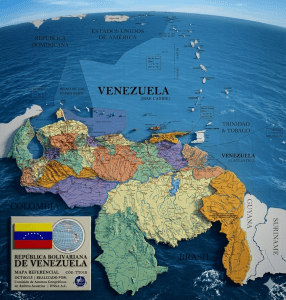
Within four years, this is what occurred. In February 2018, the Foreign Minister of the USA, Rex Tillerson, invoked the Monroe Doctrine by name during a speech at the University of Texas at Austin, describing it as “as relevant today as it was the day it was written”. The USA’s National Security Adviser, John Bolton, in November 2018 referred to Cuba, Venezuela and Nicaragua as a “troika of tyranny” and declared that “the Monroe Doctrine is alive and well”. These statements were issued against the backdrop of the political crisis in Venezuela, growing Chinese economic engagement throughout South America and Russian military cooperation with Caracas and Managua.
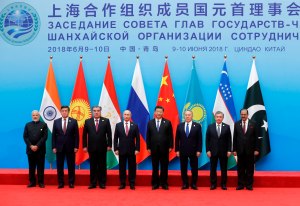
According to data compiled by the Anadolu Agency and other regional outlets, Chinese trade with the states of South America and the Caribbean grew from approximately 12$ billion in 2000 to more than 450$ billion by the early 2020s, with the People’s Republic of China overtaking the USA as the leading trade partner of several South American states, including Brazil, Chile and Peru. It is in this context — the relative decline of the USA’s economic predominance in its traditional sphere of influence and the simultaneous re-emergence of external great powers — that the Doctrine’s twenty-first-century revival should be understood.
Continuities And Contradictions
Several features of the Doctrine’s two-century life are worth highlighting in closing.
First, the gap between the text and the practice has always been wide. Monroe, in 1823, articulated a defensive, almost minimalist principle. What was done in the Monroe Doctrine’s name during the twentieth century — repeated military intervention, the engineered removal of elected governments, the underwriting of authoritarian rule — bears little resemblance to that original text. The Monroe Doctrine, as it has actually operated, is largely the work of Adams, Olney and Roosevelt rather than of Monroe.
Second, the Doctrine has always depended on the actual distribution of power. In 1823, it was credible only because the Royal Navy was willing to enforce it. In 1904, it was credible because the USA had become a major naval power in its own right. In 2026, its credibility is increasingly contested by the economic presence of the People’s Republic of China and, in narrower areas, by Russian military diplomacy. However, it is still upheld as exercises of power remain unchallenged, such as the kidnapping of the Venezuelan President, Nocilas Maduro. A doctrine of hemispheric primacy is intelligible only as long as one state possesses something approaching hemispheric primacy.
Third, the Monroe Doctrine has never been a matter purely of relations between the USA and external powers. It has always also been a statement about the political standing of South American states themselves — about whether they are to be treated as fully sovereign or as wards of a hemispheric guardian. This is the dimension of the Monroe Doctrine that has generated the most sustained resistance within the region, and it is the dimension that will most likely determine whether it survives, in any operational form, into the second half of the twenty-first century.
Systemic Conclusion
The Monroe Doctrine is one of the most paradoxical political phenomena there is. It is a statement by one state that unilaterally grants the exercise of power over others, without their consent. Even more paradoxically, all the states legitimise this statement by non-intervention. It is the most blatant case of social constructivism and legitimization through power, and based on racial paradigms.
It shows us that the perception of power and monopoly on narratives and knowledge are key soft aspects of international politics that have far-reaching implications and can shift the route of mankind into completely different directions. If the Democratic Republic of Congo were to issue a statement about non-intervention of other states in Sub-Saharan Africa other than the Congo, the likelihood of compliance would be close to zero.
The reason for this is that the economically more successful nations in the world are European and Neo-European. With their economic success, they have established a monopoly on informational flows and knowledge. Economic success is then paired with racist societal tendencies, the intrinsic belief of being able to formulate a statement, such as the Monroe Doctrine, and more so that other nations naturally have to respect it. Especially in our two landmark works on how race influences knowledge regimes in politics, you can delve deeper into the conceptual analysis of this important part of international politics (to learn more about “Knowledge and Race”, click here; to learn more about how racial perspectives influence political outcomes, click here).
Finally, the Monroe Doctrine also shows us this: Our perspectives and the value that we proactively attach to political actors have profound weight. Utilising this, societies can and should shape world politics for the better, standing up against the oppression of other states and peoples. It is the organised majority that legitimises actions in politics, and as long as the people of this world remain silent, others can (and apparently do) act as they wish just by formulating a statement that nobody ever harshly rejected.