
Inside NATO, Outside the New Europe? Türkiye and the Risk of Strategic Exclusion
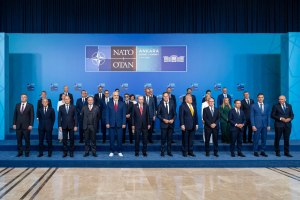
The North Atlantic Treaty Organisation (hereinafter: the NATO) Summit held in Ankara on 7-8 July 2026 projected institutional confidence. Allied leaders reaffirmed their commitment to Article 5, announced more than $50 billion in new defence procurements and presented greater European and Canadian responsibility as the foundation of a modernised Alliance. Formally, therefore, NATO did not...

Whose Seat Is It? Party Switching, Elected Office and Democratic Legitimacy in Türkiye
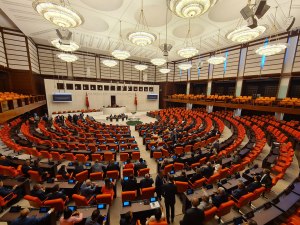
When a member of parliament or a mayor switches parties after being elected, the act may seem like an ordinary exercise of political freedom. Yet it raises a deeper democratic question: whose seat is it? Does the elected office belong to the individual officeholder, to the party that nominated them or to the voters who...
Türkiye’s Military Alignment: NATO, an Islamic Army or the Turan Army?
Türkiye’s debate on military alignment is increasingly narrated as a civilisational choice: remaining anchored in the North Atlantic Treaty Organisation (hereinafter: NATO) or turning towards alternatives often invoked in public discourse as a “Turan Army” or an “Islamic Army”. This framing is politically evocative, but analytically misleading. NATO is an existing alliance with decades of...

Lesson from Samarkand: “Union” or Multi-Vector Balancing in the Turkic World?
Samarkand has become the clearest illustration that the trajectory of Turkic cooperation is shaped less by cultural affinity than by the cost structure of external partnerships. On 4 April 2025, the European Union (hereinafter: EU) and the five Central Asian republics elevated relations to a strategic partnership and launched a 12€ billion Global Gateway investment...

Czechia’s Populist Return: Babiš, Coalition Hardliners and the European Union Friction Map
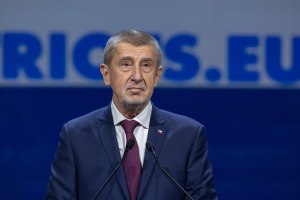
In December 2025, Czech politics entered a new phase of populist incumbency as President Petr Pavel appointed Andrej Babiš Prime Minister, returning the right-wing party ANO to power after four years in opposition. The October election outcome matters less as a routine alternation than as a governing reconfiguration: Babiš’ parliamentary arithmetic ties cabinet survival to...
Deterrence on Trial: Russia’s Drone Incursion into Poland and the Low-End Stress Test for NATO
Since late summer, Russia’s long-range strike campaign against Ukraine, built around cruise missiles and Shahed-type drones, has pushed the risks of cross-border spillover to the front of North Atlantic Treaty Organisation (hereinafter: NATO) politics. That abstraction turned concrete on the night of 9-10 September 2025, when 19 suspected Russian drones crossed into Polish airspace during...
