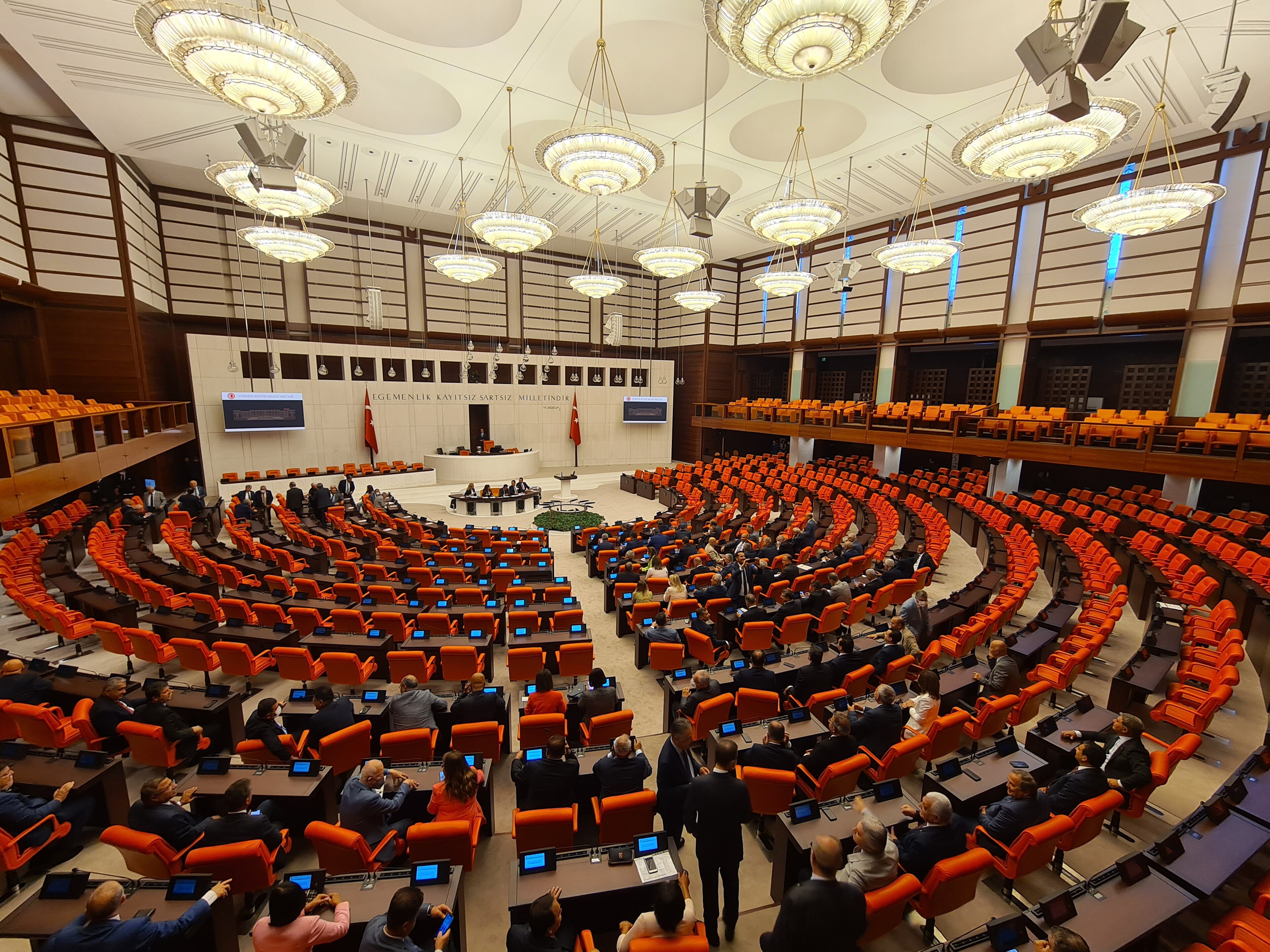

When a member of parliament or a mayor switches parties after being elected, the act may seem like an ordinary exercise of political freedom. Yet it raises a deeper democratic question: whose seat is it? Does the elected office belong to the individual officeholder, to the party that nominated them or to the voters who supported a particular candidate, party, programme and political position?
In Türkiye, party switching is not automatically punished by the loss of office. Members of parliament operate under the principle of free mandate, while mayors do not lose their position merely because they leave the party under whose label they were elected. Legally, therefore, changing party is often possible. Democratically, however, the issue is more complicated.
Voters rarely vote only for an individual. Especially in a highly party-centred and polarised political system, they also vote for party identity, ideological orientation, alliance politics and the broader political camp represented by the candidate. When an elected official transfers their mandate to another party, the representative relationship created by the election may be altered without renewed voter consent. This does not mean that party switching should be banned altogether. Elected officials should not be reduced to instruments of party headquarters. Parties may abandon their promises, change direction or force representatives into positions that conflict with their principles or constituents. In such cases, resignation or even political realignment may be democratically defensible.
The real problem is not party switching as such, but political transfer without accountability. When an elected official changes his party shortly after an election, moves into a camp clearly rejected by their electorate or appears to exchange voter mandate for access to power, resources or future nomination prospects, legal freedom turns into a democratic legitimacy problem. Türkiye, therefore, needs a more honest debate not only about whether elected officials may switch parties, but about how a free mandate can be reconciled with voter mandate.
Legal Freedom and the Limits of Democratic Legitimacy
The legal framework in Türkiye gives elected officials considerable room to move after an election. A member of parliament does not lose office simply because they leave the party under whose list they were elected. This reflects the constitutional logic of free mandate: deputies are not formally bound to a party, constituency or electoral bloc, but are understood to represent the nation as a whole. A similar practical consequence exists for mayors. Leaving the party of election or joining another one is not in itself treated as an automatic ground for losing the mayoralty. This legal freedom has a democratic rationale. It protects elected officials from becoming mere extensions of party headquarters. If every disagreement with party leadership carried the threat of losing office, representative democracy would become excessively party-centred. Deputies and mayors would be less able to object to authoritarian tendencies inside their parties, resist corruption, defend local interests or distance themselves from a programme that the party itself has abandoned after the election.
Yet the same legal freedom also creates a democratic vulnerability. Elections do not produce only individual mandates; they also produce party-based mandates. In Türkiye, where political competition is highly party-centred and increasingly structured around alliances, ideological blocs and leader-driven polarisation, the party label is rarely a minor detail. It is often the main reason why voters support a candidate in the first place. This is why the legality of party switching cannot settle the democratic question. A deputy may legally keep his seat after changing party, and a mayor may legally continue in office after changing political affiliation. But the deeper issue is whether the political meaning of the mandate has been altered. If voters supported a candidate as part of one political project and that officeholder later carries the authority of the office into an opposing project, the problem is not merely personal inconsistency. It is the possible displacement of voter consent.
The key distinction, therefore, is between independence of judgement and transfer of mandate. Representative democracy needs the first. It becomes distorted by the second. An elected official must have enough autonomy to act according to conscience, principle and public interest. But that autonomy should not be used to convert votes cast for one political identity into institutional power for another without explanation, accountability or renewed democratic authorisation. For this reason, the Turkish debate should move beyond the narrow question of whether party switching is legally allowed. The more important question is when legal freedom remains democratically defensible and when it becomes a way of carrying the voter’s mandate into a political destination the voter did not choose.
Do Voters Vote for the Person or the Party?
The democratic legitimacy of party switching depends largely on how we understand the vote itself. If elections were purely personal contests, then an elected official’s later decision to change parties would be easier to defend. The voter would have chosen the individual, and the individual would remain in office as the same person. Yet most elections, especially in Türkiye, do not work in such a purely personal way.
In parliamentary elections, the party label is central. Voters usually choose not an isolated individual, but a party list, a leader, an ideological position, an electoral alliance and a broader vision of government. Many voters may not even know all the candidates on the list in their constituency. Their vote is therefore attached primarily to the political identity represented by the party. When a deputy elected through that party identity later joins another party, the democratic meaning of the original vote becomes contested.
The situation is more complex in mayoral elections. Mayors are more visible as individuals, and local politics can create stronger personal bonds between candidates and voters. A successful mayor may receive support because of personal credibility, local service capacity, administrative competence or direct relations with the community. In this sense, the personal mandate of a mayor may be stronger than that of a parliamentary deputy. Yet even mayoral elections are not detached from party politics. In large cities, especially, voters often treat mayoral contests as part of a broader national struggle. Party identity, alliance politics, ideological polarisation and attitudes towards the central government shape local voting behaviour. A mayor elected under one party label may therefore embody not only a personal local mandate, but also a collective political message. If that mayor later moves to another party, the meaning of the local mandate may change as well.
This is why the simple distinction between “voting for the person” and “voting for the party” is insufficient. In reality, voters often vote for a package: the candidate, the party, the programme, the alliance, the leader, the ideological camp and the expected direction of government. Party switching becomes problematic when it breaks this package after the election and treats the office as if it belonged only to the individual. The democratic question is therefore not whether personal agency matters; it clearly does. Elected officials are not robots, and voters may value their character, competence and judgement. The question is whether personal agency can override the political meaning through which the office was won. If the party label played a decisive role in securing the mandate, leaving that label behind is not merely an administrative change. It is a transformation of the electoral contract.
A more honest debate on party switching in Türkiye must begin from this point. The mandate belongs neither entirely to the party nor entirely to the individual. It emerges from the relationship between voters, candidates and political organisations. For that reason, an elected official may have the right to leave a party, but they cannot plausibly claim that such a move has no democratic consequence. The seat may be legally held by the individual, but its legitimacy is politically co-produced by the voters and the party under whose name it was won.
Between Legitimate Rupture and Political Transfer
Not every act of party switching carries the same democratic meaning. A deputy or a mayor may leave a party for reasons that are politically serious and democratically defensible. Parties are not static organisations. They may abandon their promises, move away from their founding principles, enter alliances that contradict their electoral mandate, tolerate corruption, centralise authority in the hands of party leadership or impose decisions that conflict with the interests of constituents. In such cases, leaving the party may be less a betrayal of voters than an attempt to remain faithful to the political or ethical commitments on which the representative was elected.
This possibility matters because democracy cannot be reduced to party discipline. If elected officials were forced to remain within their original party under all circumstances, parties would gain excessive control over representation. A deputy would be discouraged from resisting an authoritarian party leadership. A mayor would be pressured to follow the party line even when local interests demanded a different position. In this sense, the freedom to resign, remain independent or realign politically can serve as a safeguard against the complete subordination of elected office to party machinery. Yet the opposite danger is equally real. Party switching may also become a form of political transfer. This occurs when an elected official treats the mandate not as a relationship of trust with voters, but as a personal asset that can be moved to another party for strategic advantage. The problem becomes more complicated when the switch takes place shortly after an election, when it benefits the stronger party, when it appears to be linked to access to public resources or when it carries the officeholder into a political camp that their electorate clearly opposed.
The distinction between legitimate rupture and political transfer, therefore, depends on several democratic tests. The first is timing. A switch immediately after an election is harder to justify than one that follows a visible and substantial change in party direction. The second is justification. A principled break over programme, corruption, authoritarianism or local interests is different from a move explained only by vague references to “service” or “better opportunities”. The third is ideological distance. Moving within a broadly similar political family is not equivalent to crossing into a camp against which the candidate campaigned. The fourth is benefit. If the switch produces obvious career, resource or nomination advantages for the officeholder, public suspicion becomes unavoidable. These criteria do not provide a perfect formula. Politics is too complex for every case to be judged mechanically. But they help clarify the democratic issue. The question is not simply whether an elected official has changed parties. The question is whether the change can be explained as a defensible act of representation or whether it looks like the conversion of a voter mandate into personal or partisan currency.
For this reason, transparency is essential. An elected official who changes parties should not hide behind the formal legality of the act. They should explain why the mandate they received can still be represented under a different political label. They should clarify what changed: the party, the political context, the needs of the constituency or their own position. Without such an explanation, party switching appears less like a democratic conscience and more like post-electoral repositioning.
The core democratic problem, then, is not movement itself. Democratic politics requires movement, disagreement and sometimes rupture. The problem is unaccountable movement: the transfer of an elected office from one political project to another without a convincing account of why this remains compatible with the voter’s original mandate. A democracy can tolerate principled exits. It should be far more sceptical of political transfers disguised as conscience.
MPs and Mayors Are Not the Same
Party switching by members of parliament and party switching by mayors should not be treated as identical phenomena. Both raise questions of democratic legitimacy, but they do so in different institutional settings. A deputy occupies a seat in the national legislature. A mayor controls a local executive office. One affects parliamentary representation and legislative balances; the other affects local administration, municipal resources and the political identity of local government. In the case of members of parliament, party switching may alter the composition of the legislature. Even when it does not change the government majority, it can affect party groups, committee balances, legislative strategy and the symbolic distribution of political support. In a fragmented or polarised parliament, a small number of defections can carry disproportionate political weight. For this reason, a deputy’s party switch is not merely an individual act of political repositioning. It may reshape the national representative map produced by the election.
The democratic problem is especially visible because parliamentary candidates in Türkiye are elected through party lists. Many voters cast their ballot primarily for the party, its leader, its programme or its alliance rather than for a specific individual candidate. This does not eliminate the deputy’s personal mandate, but it weakens the claim that the seat belongs only to the individual. If a deputy enters parliament through one party’s electoral identity and later joins another, the voter may reasonably ask whether their vote has been redirected to a political destination they did not choose.
Mayors present a different but equally serious problem. Unlike deputies, they are directly associated with executive authority at the local level. A mayor does not simply participate in deliberation; they govern a municipality, shape local priorities, influence resource allocation and represent the political direction of the city or district. When a mayor changes party, the issue is therefore not only representational. It also concerns the political control of local executive power.
This is particularly important in Türkiye, where local government is often tied to national political conflict. Municipal elections are rarely only about roads, parks, transport or waste management. They are also read as signals of party strength, opposition capacity, government approval and ideological mobilisation. A mayor elected under one party label may therefore embody a broader political message. If that mayor later joins another party, the local electorate may feel not merely disappointed, but politically displaced. At the same time, the personal mandate of mayors should not be ignored. Voters may support a mayoral candidate because of competence, visibility, local service performance or personal trust. In smaller municipalities, especially, the individual candidate may matter more than national party identity. This makes mayoral party switching more complicated than parliamentary switching. A mayor may plausibly claim that voters chose them as a person, not only as a party representative.
Yet this argument has limits. The stronger the role of party identity in the election, the weaker the claim that the office is purely personal. In large metropolitan municipalities, highly contested districts or elections dominated by national polarisation, the party label may be central to the mandate. In such cases, a mayor’s party switch can alter the political meaning of local government even if the mayor remains the same individual. The difference between MPs and mayors, therefore, lies not in whether party switching matters, but in how it matters. For deputies, the central issue is the integrity of parliamentary representation. For mayors, it is the continuity of the local executive mandate. In both cases, however, the same democratic principle applies: an elected office may be legally held by an individual, but its legitimacy is produced through a relationship with voters. When that relationship is substantially altered, legality alone cannot answer the democratic question.
Beyond Prohibition: Institutional Options for Democratic Accountability
The democratic discomfort created by party switching does not automatically mean that the practice should be prohibited in all circumstances. A total ban would create its own democratic risks. It could trap elected officials inside parties that have changed direction, become corrupt, abandoned their promises or violated the principles on which they were elected. It could also strengthen party leadership at the expense of representative judgement. In such a model, the party would own the seat almost completely, while the elected official would become a subordinate agent of party discipline.
At the other extreme, complete freedom is also problematic. If deputies and mayors can change party at any moment, without explanation, consequence or renewed accountability, elections lose part of their binding force. Voters may support one political identity and then watch the mandate being carried into another. This weakens trust not only in the individual officeholder, but also in the electoral process itself. It encourages the perception that mandates are transferable assets rather than democratic authorisations. The task, therefore, is not to choose between absolute freedom and absolute prohibition. The more useful question is how to design accountability mechanisms that distinguish principled rupture from opportunistic transfer. Türkiye does not need a model that eliminates the autonomy of elected officials. It needs one that makes party switching politically costly when it contradicts the voter’s mandate and democratically defensible when it is based on clear, public and principled reasons.
One option is a public justification requirement. Any elected official who resigns from the party of election or joins another party could be expected to issue a formal statement explaining the reasons for the decision. This would not necessarily remove them from office, but it would create a public record. The officeholder would need to explain what changed: the party’s programme, the political context, the needs of the constituency, the conduct of party leadership or their own political position. Such a mechanism would not solve every problem, but it would make silent and unexplained transfers harder to normalise.
A second option is a cooling-off period. Under this model, an elected official who leaves their party could remain independent for a defined period before joining another party. This would preserve the right of exit while limiting immediate transfers. The democratic logic is straightforward: leaving a party may be an act of conscience, but immediately joining another party, especially a rival or governing party, creates suspicion that the move is strategic rather than principled. A period of independence would help separate resignation from transfer.
A third possibility is renewed voter authorisation in the most serious cases. This could take different forms, from by-elections to local recall mechanisms, though each would require careful constitutional and institutional design. Such mechanisms would be especially relevant where a party switch clearly alters the political meaning of the mandate. They would also be costly and potentially destabilising. For that reason, they should not be treated as an automatic solution for every case. Yet the principle behind them is important: when an elected official carries a mandate into a substantially different political project, voters may have a legitimate claim to be consulted again.
A fourth and softer option is party and parliamentary ethics regulation. Parties, parliament, municipal councils and electoral authorities could develop clearer norms on post-election switching. These norms may not always require legal sanctions. They could include transparency standards, disclosure of negotiations, restrictions on immediate office benefits after switching or public reporting of changes in party affiliation. The purpose would be to reduce the perception that party switching is connected to personal advantage, public resources or future candidacy deals.
The most balanced approach would combine these instruments. Party switching should not automatically lead to the loss of office, because democratic representation requires independence of judgement. But neither should it remain an entirely consequence-free act. A defensible model would protect the right to leave a party, encourage independence where necessary, require public justification, discourage immediate transfers and reserve stronger democratic remedies for cases where the original voter mandate has clearly been transformed. Such a framework would not eliminate political controversy. No institutional design can fully separate conscience from ambition or principle from calculation. But it would shift the debate in a healthier direction. Instead of asking only whether party switching is legal, Türkiye would begin asking whether it is transparent, accountable and compatible with the mandate created by the election. That is the democratic question that matters most.
The Political Ethics of Party Switching
The problem of party switching cannot be solved by law alone. Legal rules matter, institutional safeguards matter and accountability mechanisms matter. Yet the deeper issue is also one of political ethics. A democratic system depends not only on what elected officials are legally permitted to do, but also on how they understand the moral meaning of the mandate they have received.
In a healthy representative democracy, an elected office is not a private possession. It is a public responsibility created through voter trust. A deputy or mayor may legally occupy the seat, but the authority attached to that seat is generated by citizens who voted under specific political expectations. Those expectations may concern ideology, party identity, local service, opposition to a rival bloc, support for a governing project or a promise of political change. To disregard these expectations after the election is not merely a tactical move. It weakens the ethical bond between representative and represented. This is why party switching often produces public anger even when it is legally valid. Voters may feel that their choice has been reinterpreted without their consent. They may feel that a mandate given for one political purpose has been used for another. In highly polarised systems, this feeling becomes even stronger. If voters supported a candidate partly to prevent a rival party from gaining power, the later transfer of that elected office to that rival party may appear as a reversal of the election’s political meaning.
Political ethics also requires attention to incentives. If elected officials can gain access to resources, visibility, protection, future candidacy or executive influence by changing party, party switching may become a rational career strategy. Once this becomes normalised, the electorate begins to suspect that political loyalty, ideological commitment and campaign promises are negotiable after the election. The immediate damage falls on trust in individual politicians. The more serious damage falls on trust in democratic representation itself. This does not mean that loyalty to a party is always virtuous. Blind party loyalty can be as damaging as opportunistic defection. Elected officials may sometimes have a democratic duty to break with their party, especially when the party violates its promises, attacks constitutional principles, engages in corruption or acts against the public interest. The ethical question is therefore not whether politicians should always remain loyal. The question is what kind of loyalty matters most: loyalty to the party, loyalty to personal ambition or loyalty to the voters and principles that made the mandate legitimate. From this perspective, the most defensible form of party switching is one that is public, reasoned and costly. It should be public because voters deserve to know why the representative relationship has changed. It should be reasoned because democratic politics requires justification, not merely manoeuvre. It should be costly because a serious rupture should not look indistinguishable from a tactical transfer. If changing parties brings only advantages and no burden of explanation, the act becomes too easy to detach from democratic responsibility.
Türkiye’s debate on party switching, therefore, needs a stronger ethical vocabulary. The issue is not simply whether a deputy or mayor has the legal right to move. The issue is whether that move respects the democratic meaning of the election. A representative who changes parties may remain in office legally. But to remain democratically credible, they must show that the switch is not a private transaction conducted with a public mandate. The health of representative democracy depends on this distinction. Elections give officials authority, but they also create obligations. Party switching becomes most damaging when it preserves the authority while evading the obligation. That is why the question “Whose seat is it?” cannot be answered only by constitutional doctrine or electoral law. It must also be answered by democratic ethics.
Conclusion: Free Mandate Should Not Swallow Voter Mandate
Party switching is not a marginal technical issue. It goes to the heart of representative democracy because it raises a simple but uncomfortable question: can an elected official carry a mandate won under one political identity into another without renewed accountability to voters?
The answer should not be a rigid prohibition. Democratic representation requires space for judgement, dissent and rupture. A deputy or mayor may have legitimate reasons to leave a party that has abandoned its promises, betrayed its principles, acted against local interests or become incompatible with the public responsibilities attached to the office. A system that forces elected officials to remain loyal to party leadership under all circumstances would not protect democracy; it would merely strengthen party control over elected office. Yet unrestricted party switching is no better. When an elected official changes party without explanation, immediately after an election or in a way that contradicts the political meaning of the vote, legal freedom becomes democratically fragile. The voter’s mandate cannot be treated as a transferable asset. An elected seat may be legally occupied by an individual, but its legitimacy is produced through the relationship between voters, candidates and parties. This is why Türkiye needs a more precise democratic vocabulary on party switching. The key distinction is not between movement and immobility, but between principled rupture and political transfer. Principled rupture can be justified. Political transfer must be questioned. The former may protect representative conscience; the latter risks converting voter authorisation into personal or partisan currency.
A more balanced approach would therefore avoid both extremes. Party switching should not automatically terminate office, but it should also not remain a consequence-free act. Public justification, transparency, cooling-off periods, temporary independence, restrictions on immediate political benefits and, in the most serious cases, renewed voter authorisation could all help restore the link between legal mandate and democratic legitimacy.
The democratic test should be straightforward. Did the elected official explain the switch clearly? Did the party or political context substantially change? Is the new affiliation compatible with the mandate voters originally gave? Did the officeholder gain obvious personal, institutional or career advantages from the move? And above all, were voters treated as the source of the mandate or merely as the means through which the office was obtained?
Representative democracy depends on this distinction. A free mandate is essential because elected officials must not be reduced to party instruments. But a voter mandate is equally essential because elections must mean something after the votes are counted. If a free mandate is interpreted so broadly that it swallows the voter mandate, representation begins to lose its democratic substance. The seat, therefore, belongs neither entirely to the individual nor entirely to the party. It belongs to a democratic relationship. That relationship can survive disagreement, resignation and even principled realignment. What it cannot survive indefinitely is the normalisation of political transfer without accountability. In Türkiye, the real task is not simply to decide whether elected officials may switch parties. It is to ensure that when they do, the voters’ will does not disappear from the equation.
For further research on the political party as a political structure, click here!