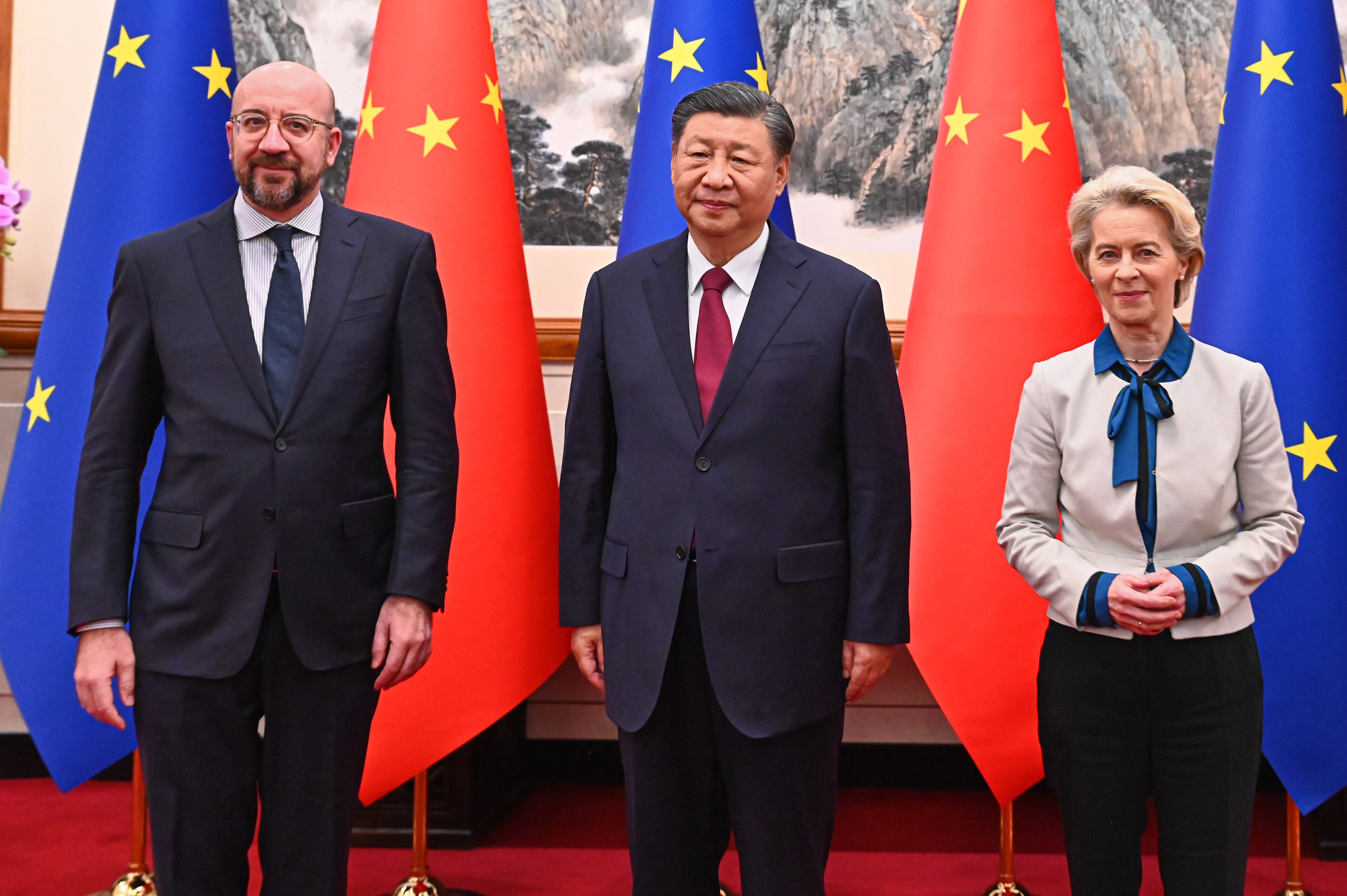

The European Union has set an October 2026 deadline for China to make tangible concessions on bilateral trade imbalances, with European Commission President Ursula von der Leyen warning that the EU will retaliate if Beijing fails to meet the terms. The warning, issued in early July 2026, marks a significant hardening of the EU’s position in ongoing EU China trade negotiations and comes amid mounting concern in Brussels over Chinese export volumes, industrial overcapacity and the risk of deindustrialisation across European member states.
The October Deadline And Von Der Leyen’s Warning
Speaking publicly in early July 2026, Commission President Ursula von der Leyen stated that the EU would take retaliatory measures if China does not address the trade imbalance by October, according to Euronews. The deadline frames the current round of EU–China trade talks as time-bound, shifting the diplomatic dynamic from open-ended dialogue to a structured ultimatum. Von der Leyen’s statement represents the most direct public warning from the Commission’s leadership in the current trade dispute cycle.
The EU has simultaneously moved to target specific categories of Chinese imports, with Brussels examining measures to curb the flow of goods it considers artificially priced due to state subsidies, as reported by Deutsche Welle. These measures are being pursued in parallel with diplomatic engagement, reflecting a dual-track approach that combines negotiation with the threat of trade defence instruments. EU institutions have grown increasingly concerned that Chinese overcapacity in sectors such as steel, electric vehicles and solar panels is distorting European markets, according to Eurometal.
EU China Trade Imbalance And Deindustrialisation Concerns
The structural trade imbalance between the EU and China has become a central concern for European policymakers, with the deficit in goods trade widening over recent years. Al Jazeera reported in late June 2026 that EU officials are increasingly linking the volume of cheap Chinese exports to fears of deindustrialisation in European manufacturing sectors, citing the economic pressure on domestic producers. Industries in member states with significant manufacturing bases — including Germany, France and Italy — have raised concerns about their capacity to compete with Chinese goods that benefit from state support.
The Mercator Institute for China Studies (hereinafter: MERICS) has argued that the EU must take a more confrontational stance in addressing China’s trade challenge, contending that the structural conditions driving Chinese export surpluses are unlikely to self-correct through market mechanisms alone, as outlined in its analysis. MERICS identifies Chinese industrial policy, state financing and domestic overcapacity as the principal drivers of the export volumes now reaching European markets. The institute’s position reflects a broader shift in the analytical consensus among European policy research bodies, which have moved away from earlier frameworks emphasising mutual economic benefit.
Sectoral Exposure And Import Measures
EU institutions have focused particular attention on sectors where Chinese overcapacity is most acute. Steel and aluminium, electric vehicles and renewable energy components — especially solar panels — have been identified as areas where Chinese export volumes are placing sustained downward pressure on European producers’ pricing and market share. The European Commission has already imposed additional tariffs on Chinese electric vehicles following an anti-subsidy investigation concluded in 2024, and the current trade talks take place against that backdrop of existing trade defence measures. Brussels is now assessing whether further instruments are warranted across additional product categories.
Beijing’s Response And Retaliation Signals
China has signalled that it will not accept EU measures without a response. Politico reported that Beijing has threatened retaliation over EU moves to curb imports, identifying specific European export categories as potential targets. Chinese officials have characterised the EU’s trade defence actions as protectionist and inconsistent with World Trade Organization (hereinafter: WTO) rules, a position Beijing has maintained throughout the dispute over electric vehicle tariffs. The prospect of a tit-for-tat escalation raises the stakes for European exporters in sectors such as luxury goods, agriculture and automotive components, which have significant exposure to the Chinese market.
The European Policy Centre (hereinafter: EPC) has described the current state of EU–China relations as one requiring a carefully calibrated geometry of coexistence — acknowledging deep economic interdependence while managing competitive and systemic tensions, as set out in its most recent volume on the bilateral relationship. The EPC’s framing reflects the difficulty Brussels faces in pursuing trade defence measures against a partner that remains one of the EU’s largest trading relationships by volume. Any retaliatory exchange would carry costs for both sides, though the distribution of those costs across sectors and member states would be uneven.
Concluding Remarks
There is no obligation of China to act in any other state’s interest than its own. If the structural weakness of the European economy and production capacity results in a trade balance, it is not the task of China to fix this, especially considering the benefits for China itself. Europe can adopt hostile measures to counter this. However, the most beneficial policy course would be to fix the structural problems of the European economy in the long run.
What is particularly interesting in this case is the global media coverage of this particular issue. Here, we screened many sources that implicitly sided with the EU and portrayed China’s trade strategy as the problem in this constellation. As long as a nation adheres to international law and best practises of international trade, it should not face punishment for the ineffectiveness and inefficiency of economic policymaking elsewhere.