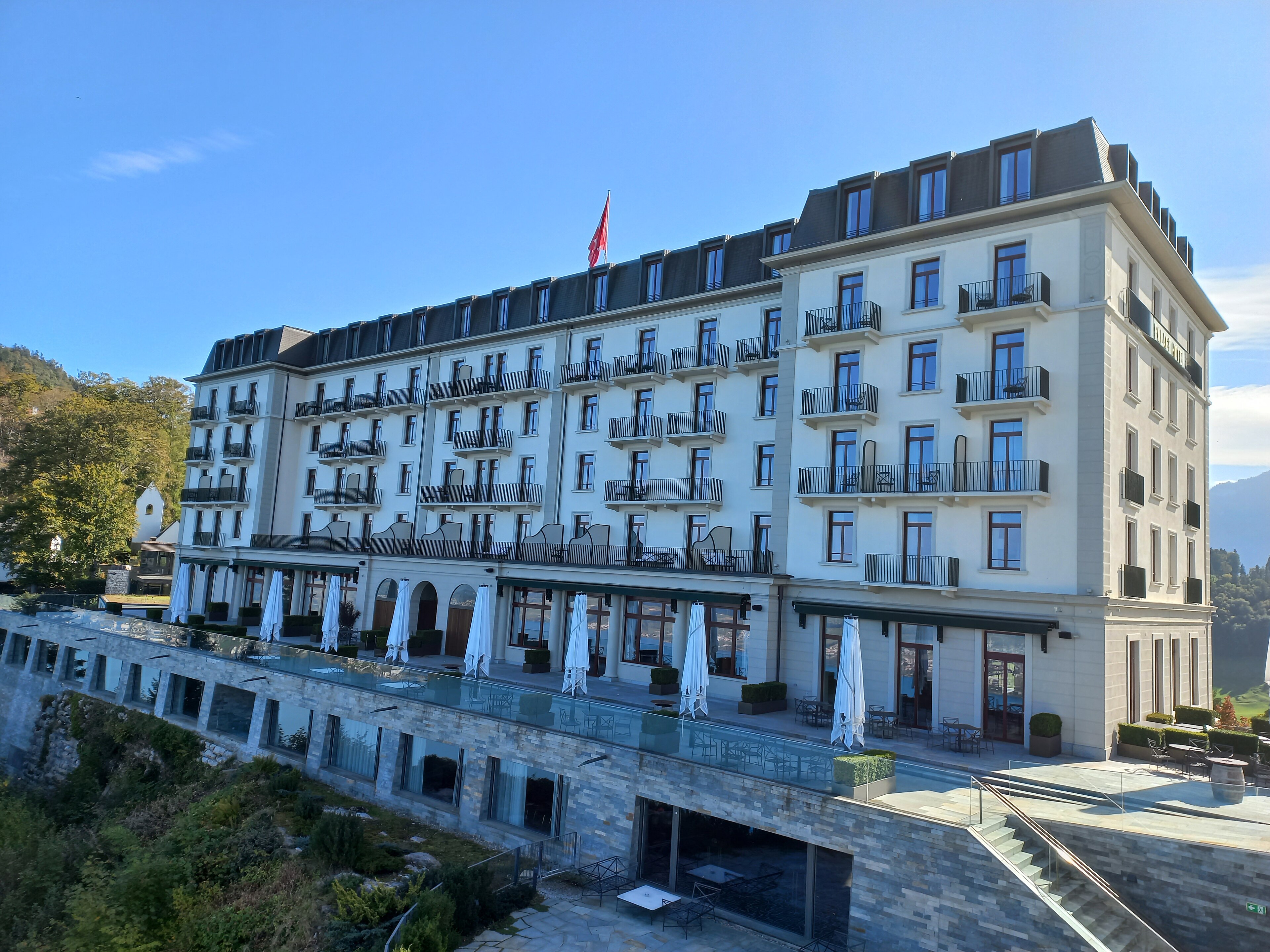

The first round of talks bewteen Iran and the United States of America (hereinafter: USA) in Switzerland concluded on Monday at the Bürgenstock mountaintop resort, mediators announced, after an opening session that covered oil sanctions relief, the status of the Strait of Hormuz and the ongoing conflict in Lebanon. The quadrilateral format brought together delegations from the United States of America, Iran, Pakistan and Qatar, with Islamabad and Doha serving as facilitators under the framework of the Islamabad Memorandum of Understanding (hereinafter: MOU) signed on 18 June. Mediators confirmed the conclusion of the first round even as both sides exchanged public threats during the negotiations themselves.
Quadrilateral Format And The Islamabad MOU
Pakistan’s Foreign Ministry announced on Saturday that technical-level discussions would convene in Bürgenstock under the Islamabad MOU, with Pakistan and Qatar facilitating implementation. Iran’s Foreign Ministry confirmed that the quadrilateral meeting had begun, describing the focus as the implementation of the MOU rather than a new framework agreement. Iran’s Foreign Ministry spokesperson stated that Iran’s delegation first held bilateral sessions with Pakistan and Qatar before the four-party format convened. TRT World reported that Iran’s position entering the talks was that a final agreement could not begin until key provisions of the 18 June memorandum were implemented, including the cessation of hostilities in Lebanon. The talks, therefore, operated within a 60-day ceasefire window established by the MOU.
Ahead of the opening session, Iranian Foreign Minister Abbas Araghchi met with his Swiss counterpart in what TRT World described as a preparatory bilateral exchange. The Swiss venue, already associated with prior multilateral diplomacy, hosted the delegations at the Bürgenstock resort. Al Jazeera characterised the negotiations as high-stakes talks aimed at reinforcing the MOU, with both sides entering under significant domestic and regional pressure. Pakistan’s role as a co-mediator alongside Qatar reflects the architecture established in Islamabad, where the two states brokered the original ceasefire framework between Washington and Tehran.
Oil Sanctions Relief And Frozen Assets
Oil sanctions relief emerged as a substantive agenda item during the Bürgenstock session. Hamid Bovard, managing director of the National Iranian Oil Company (hereinafter: NIOC), confirmed that lifting oil sanctions and related exemptions was discussed during the quadrilateral talks. A member of Iran’s negotiating team subsequently confirmed that Tehran and Washington had finalised a draft agreement on temporary sanctions relief for Iranian oil exports, though the broader provisions of the MOU were stated to remain contingent on a final settlement ending the war in Lebanon. The United States Treasury announced a 60-day sanctions waiver for Iran’s oil sector, according to RT, as the talks continued. The Japan Times noted that unwinding United States sanctions on Iran is unlikely to be quick or easy, given the layered legislative and executive instruments involved and the question of whether an interim deal can translate into durable economic relief. Iran’s Foreign Ministry spokesperson also confirmed that the release of frozen Iranian assets was among the topics covered during the first day of talks, alongside Lebanon and the Strait of Hormuz.
Strait Of Hormuz Closure And Mutual Threats
The opening of the Bürgenstock talks was complicated by Iran’s announcement that the Strait of Hormuz had been closed to vessel traffic. The Islamic Revolutionary Guard Corps (hereinafter: IRGC) Navy announced on Saturday that it had closed the Strait of Hormuz to all maritime traffic, citing Israeli strikes in Lebanon and alleged United States violations of ceasefire commitments as justification. Iran’s central military command stated that the closure followed Israeli strikes in Lebanon, according to The Japan Times. The United States maintained that the waterway remained open, according to RT, creating a direct factual dispute between the two delegations at the outset of negotiations. Al Jazeera reported that Iranian armed forces cited Israeli attacks on Lebanon as the trigger for the closure announcement.
Public statements from both sides during the talks added further tension. The North America President threatened to strike Iran if it did not stop Hezbollah from what he described as causing trouble, while Iran’s chief negotiator Mohammad Bagher Ghalibaf warned the United States to exercise caution with its statements, Euronews reported. RT reported that the Iranian delegation protested threats made by President Trump, with talks allegedly halted temporarily as a result, though this was attributed to unnamed sources. Al Jazeera’s live coverage confirmed that the first day of talks covered Lebanon, Hormuz and frozen assets, with Trump repeating threats to resume attacks on Iran even as negotiations proceeded. Despite the hostile public atmosphere, United States Vice President JD Vance stated that 18 hours of talks had laid a very good foundation, with both sides agreeing a mechanism to keep the Strait of Hormuz open and to maintain Lebanon’s ceasefire.
USA Senate War Powers Resolution On Iran
While the Bürgenstock talks were under way, the upper chamber of the Parliament of the USA voted 50 to 48 on Tuesday to adopt a War Powers Resolution directing the President to end unauthorised hostilities against Iran. Four Senate Republicans crossed party lines to join the majority of the Democratic Party in approving the resolution, which the House of Representatives had passed earlier in the month. The upper chamber vote was confirmed by TRT World and RT. The Financial Times described the resolution as largely symbolic and a sign of disquiet over the President’s handling of the conflict. Yeni Şafak noted that the measure is nonbinding and that the USA and Iran had already reached an interim peace agreement mediated by Pakistan, with technical talks proceeding under the 60-day ceasefire, contextualising the resolution’s practical weight. The resolution does not carry the force of law without presidential signature or a veto override, and the White House has not indicated it would comply.
Outlook: Sequencing, Sanctions And Legislative Constraints
The Bürgenstock round established several working parameters: a mechanism for keeping the Strait of Hormuz open, a draft framework for temporary oil sanctions relief and a shared acknowledgement that Lebanon’s ceasefire must hold before broader MOU provisions can be activated. The 60-day sanctions waiver on Iranian oil represents a concrete, if time-limited, economic signal from Washington, though the Japan Times assessment that full sanctions unwinding would be neither quick nor easy reflects the structural complexity of reversing measures embedded across multiple legislative instruments. The sequencing problem — Iran conditioning final agreement talks on Lebanon, while Lebanon’s status depends on Israeli military decisions outside the direct control of either negotiating party — remains the central constraint on progress.
What this negotiation also shows is that the USA has failed this time with their strategy to initiate conflict and then negotiate a new, and for them more favourable, framework. In the past, the USA went on to create a situation of discomfort and received concessions from the opposing party, who wanted hostilities to end, resulting in a constructed new reality. Examples of this were the sanctions waves last year. This time, Iran was able to dictate terms and managed to improve its situation as the lifting of sanctions has been a central part of the negotiations.
Whether this agreement will last depends nearly entirely on the USA’s patron state, Israel, to end its invasion of Lebanon, and on its avoiding sabotage and false flag operations. In the past, Israel has violated agreed-upon ceasefires on multiple occasions.