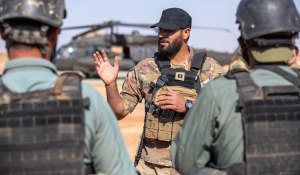
Lake Chad, once one of the largest and most critical sources of freshwater in Africa, has shrunk to a 10th of its original size due to global warming, causing devastating effects to the lives of approximately 30 million people across Nigeria, Niger, Chad and Cameroon. This climate crisis has given rise to far-reaching socioeconomic issues, adding to violent conflict and allowing terror groups to destabilise the region, demonstrating the deeply intertwined climate-security nexus. Addressing the complex challenges in the Lake Chad Basin requires an integrated approach, combining local knowledge, regional diplomacy, collaborative security efforts and ongoing international support.
In this article, we examine the environmental destruction, socioeconomic breakdown and security threats that have reformed the Lake Chad area, explore existing mitigation strategies at the local, regional and international level and identify challenges at each level.
The Climate Security-Nexus in Lake Chad
Lake Chad presents a climate-security nexus, which refers to the interconnectedness between global climate changes and the exacerbation of already existing challenges. In turn, environmental shifts have been found to generate new security concerns, especially in areas that are already experiencing social, political, or economic struggles. The United Nations (hereinafter: the UN) has recognised the threat climate change poses to security, stressing the importance of systematic international action.
Environmental Degradation
Lake Chad receives much of its water flow from the Chari-Logone river system, located in the Central African Republic (hereinafter: the CAR), which flows into the Lake Chad sink. Hence, we can trace the beginning of the lake’s shrinkage to reduced rainfall in the CAR. In the 1960s, the CAR experienced reduced rainfall due to global climate change. Due to reduced rainfall, vegetation has disappeared, and sand dunes have formed on lakebeds. Droughts have had different effects on various regions in the basin. In the Diffa district of Niger, droughts have caused the vegetation in the area to dry up, making it easy for wildfires to spread. This affects the amount of fertile land available for livestock grazing and agriculture. Droughts have caused a shrinkage of the lake and the loss of fertile soil in northeastern Nigeria. The lake only measures 7 meters deep, making it quite shallow and prone to drastic changes in response to decreased rainfall. The shrinkage of the lake has also led to a decline in agricultural productivity.
Rising temperatures, another climate change trend, affect the region. In Chad, the average annual temperature has increased by 0,2°C/0,3°C between 1961 and 2015. Increased temperatures and reduced rainfall have led to evapotranspiration, declining rates of rainfall, desertification and water dearth.
Other climate events, such as historic droughts and floods, have also contributed to the environmental degradation of the basin. The reduced rainfall and high temperatures affect agricultural production in the area. Fishing, farming and pastoralism all rely on the lake’s resources, and these activities are sources of income for the basin’s population. As the water resources diminish, these activities are impacted. The majority of the population along the basin depends heavily on agriculture and fishing to survive. The shrinkage of the lake has affected the species and quantity of fish available for fishermen. The river’s ecosystem has been disrupted as many species of fish have died, and the appearance of invasive aquatic plant species renders the river uninhabitable for the fish.
In Nigeria, droughts have led to poor crop production and yield loss, animal mortality, and far-reaching food insecurity, as people cannot grow their own crops, or there is no fresh produce to buy. These effects have propelled millions into poverty and made them dependent on humanitarian aid to survive. Higher temperatures lead to increased rates of evaporation, weighing the atmosphere with precipitation. This leads to short but heavily concentrated rains, escalating the likelihood of floods. Floods in 2022 and 2024 have already affected and displaced millions of people in the basin. Climate prediction models have approximated that floods of this extent could occur every 2-5 years in the basin.
Lastly, anthropogenic environmental degradation in the area is caused by unsustainable and inefficient irrigation projects. Examples of such projects include the South Chad Irrigation Project and the Chad- Mamdi Polder Irrigated Agricultural Development Project, aimed to promote agricultural production by increasing water extraction; however, they resulted in environmental degradation. The South Chad Irrigation Project had caused nearby canals to dry up, disrupting the agriculture and ecosystem of those areas. Projects that diverted freshwater supplies from the lake and tributary rivers, like the Maga dam built by Cameroon in 1979, the Tiga dam on the River Yobe and the Yaguou-Tekele dike on the Chari-Logone river, impact the levels and flow of the lake.
Socioeconomic Breakdown
Socioeconomic breakdown is highly intertwined in the Lake Chad basin. Climate change, governance inefficiency, high levels of poverty, lack of access to basic services, poor infrastructure, food insecurity, displacement and mass migration have created a complex humanitarian emergency.
Poor governance in the region is illustrated by endemic corruption, mismanagement of funds and resources, underfunded institutions, marginalisation and neglect of communities and lack of accountability and transparency. Public service delivery and infrastructure are concentrated in urban areas, leaving rural communities neglected and marginsalised. For example, 70% of Niger’s population does not have access to electricity. There is widespread corruption, bribery, cronyism and nepotism permeating various industries of the Lake Chad states. Government officials and other prominent figures in all Lake Chad states enjoy impunity as judicial decisions are often swayed by bribes. Border control is particularly affected, with police officers taking bribes from migrants. The public service industries are rife with corruption and the mismanagement and appropriation of funds, with many officials demanding bribes and gifts. In 2016, several Nigerian officials were arrested for corruption and bribery. Among them were three judges, two of them being justices of the Supreme Court. Nepotism and cronyism were particularly rife in Chad under former President Idriss Déby, who often assigned key positions within the security and government sectors to friends and family. In 2024, Chad scored 21/100, with 0 being highly corrupt and 100 being devoid of corruption, on the Transparency International Corruption Perceptions Index, ranking it 158th out of 180 nations. Niger scored 34/100 and was ranked 107th, Nigeria scored 26/100 and was ranked 140th, and Cameroon also scored 26/100 and was ranked 140th.
All Lake Chad nations also score low on the Human Development Index (hereinafter: HDI), which measures the well-being of a nation by looking at its life expectancy rates, levels of education and the standard of living (the Gross Domestic Income per capita). The HDI score for Lake Chad nations ranges between 0,4 and 0,5, signifying low human development. We can attribute low development to weak governance and lack of access to basic services, as explored above.
Poverty is an interconnected issue in the basin, with one of the causes being the environmental crisis. Many people are left without incomes as they rely on the rapidly depleting natural resources to make a living. The majority of the population along the basin relies heavily on agriculture and fishing to survive. Rapid climate fluctuations make it difficult for these populations to sustain their traditional livelihoods or provide enough food to sustain themselves, leading to high rates of food insecurity and poverty. Many are unable to physically access healthcare as there are insufficient medical facilities in rural areas, or, due to poverty, cannot afford medical care. Children cannot receive an education as they cannot afford to, or the education services that are available are underfunded, and teachers are ill-equipped. Schools are also a target for militant groups, causing instability and fear. These armed groups have often attacked schools, destroying infrastructure, kidnapping and killing students and teachers.
Migration and displacement in the Lake Chad basin are driven by violence and climate disasters. The presence of militant terror groups, such as Boko Haram and ISWAP, in the region has prompted large numbers of people to flee their homes and nations in search of safety. This has led to internal displacement and cross-border migration. As we have already discussed, Lake Chad’s water resources have diminished over time due to various climate-related disasters. Climate-related disasters, such as droughts and floods, and rising temperatures result in crop loss, livestock mortality and damage to aquatic ecosystems. As the land deteriorates and the waters disappear, so too do their livelihoods. As water resources disappear in one area, floods and heavy rainfall appear in another area, resulting in people following the movement of the water as their incomes and lives depend on it. As they follow the river, they enter other, already inhabited, territories. This has often led to intercommunal conflict. Dwindling water and land resources have caused competition at local and community levels, causing further instability and fragmentation. For instance, conflict arose in 2021 between fishermen and pastoralists in the North of Cameroon when fishermen would dig holes to hold water and fish in the same area frequented by pastoralists, leading to the injury and drowning of many pastoralists’ animals. 85.000 people fled to Chad, 15.000 fled across Cameroon, 44 were killed and 111 were injured. In addition, 112 villages were burned.
Population growth is also an important factor driving tensions. The population of Lake Chad has quadrupled since the 1960s, and has been predicted to double by 2050. This dramatic increase has put further strain on the diminishing resources, resulting in tensions between the people who depend on it for survival.
The presence of violent militant groups, such as Boko Haram and Islamic State in the West African Province (hereinafter: ISWAP), in the region has prompted large numbers of people to flee their homes and countries in search of safety. This has led to internal displacement and cross-border migration.
Lake Chad’s economies have suffered due to the presence of militant groups. The Lake Chad nations have shut down various sectors that they believed to be sustaining Boko Haram, through payments, racketeering or the direct involvement of armed groups in specific ventures. Some of the industries affected are rural motorcycle taxi services, rural markets, fuel and agricultural fertilisers. Products such as peppers, fish, dried meat and livestock, which contribute greatly to the economy, were also curtailed or outright forbidden. As many of Boko Haram’s attacks focus on the borders between states, leaders were forced to reduce cross-border trade.
The youth population is particularly vulnerable in the Lake Chad Basin. As the majority of the population relies on agriculture and fishery practices for their livelihood, the opportunities available to the youth are limited. This area lacks economic diversification, making it difficult for the youth to secure employment. As natural resources disappear and conflict remains rife, youth unemployment increases. The Lake Chad Basin has a “youth bulge” with 62% of its population under the age of 18. This large percentage is unable to secure employment, making them vulnerable to recruitment by armed groups who promise work and wages. However, this remains a factor to be mitigated by the basin nations’ governments. It is essential that the basin’s national governments undertake concerted efforts in rebuilding and diversifying the economy.
Food insecurity in the region is caused by various factors, including conflict, climate change and economic constraints. Conflict and the presence of Boko Haram affect food access and production. In some cases, food is stolen and farmers are denied access to their land. This inhibits the ability of people to buy or sell food, or to grow their own food, leading to food insecurity. Intercommunal conflict results in the destruction of land and water resources, diminishing the population’s ability to provide for themselves. It also causes people to flee, disrupting trade and agropastoral production. A decrease in production leads to an overarching reduction in food supply. Low production increases the price of goods, which is detrimental as the majority of the population in the basin is living in poverty and is unable to afford basic goods and services, further entrenching the area in food insecurity. Lastly, climate change itself strips away the land and water resources that people use to provide food for their families. With the loss of water resources, limited access to fertile land – due to uncertain weather patterns, floods and drought- and loss of fish species, people are unable to provide food for themselves. This has left millions of people across the basin without food, leading to high rates of malnutrition.
Security Implications
Jama’atu Ahlis Sunna Lidda’awati wal-Jihad, more commonly known as Boko Haram, was founded in 2002 in Maiduguri, Nigeria, by Mohammed Yusuf. Boko Haram started as a non-violent separatist Muslim sect that opposed the injustice and corruption of the Nigerian government, the government’s straying from the “true” sharia law, as well as European and Neo-European influence and democracy. However, in 2009, an altercation resulted in a violent exchange between Boko Haram members and state police. Yusuf consequently released a series of videos in which he pointedly threatened the government and security forces with violence, declaring the state illegitimate. This resulted in “Operation Flush”, a military initiative known for its brutality against Boko Haram members. Some sources state that Yusuf was murdered by the military, while the Nigerian government affirms that he was killed while trying to escape.
In 2010, Boko Haram re-emerged under the leadership of Abubakar Shekau, marking the beginning of Boko Haram’s military campaign to overthrow the Nigerian government and implement a theocracy based on Islamic Law. Tactics employed by Boko Haram included the use of improvised explosive devices (hereinafter: IEDs), vehicle-borne improvised explosive devices (hereinafter: VIEDs) and female suicide bombers. They carried out attacks against European and Neo-European influences in Nigeria. In 2011, Boko Haram took responsibility for a VIED attack on the UN headquarters in Abuja. In 2014, they carried out near-daily attacks on various people throughout Nigeria. Schools are targeted by militant groups, causing instability and fear, as they often destroy infrastructure, kidnap and kill students and teachers. Boko Haram’s most notable act was the kidnapping of 276 Nigerian schoolgirls in 2014. This act received international condemnation and prompted regional action against the group. Boko Haram also had ties to other terrorist groups, such as al-Qaeda in 2010, and the Islamic State in Iraq and the Levant (hereinafter: ISIL) in 2015. Boko Haram has also splintered into smaller groups, the most notable being the ISWAP, contributing to violence in the basin.
This instability was concentrated in Nigeria for a while, but eventually spread across the Lake Chad territory due to weak borders, poor governance and existing socioeconomic issues. Poorly defended and porous borders. The borders between Nigeria and the other Lake Chad nations are vast, understaffed, and underequipped. Rural and remote areas are often neglected by Lake Chad governments. They lack infrastructure and funding, meaning that the borders in these areas are also neglected. There have been several instances in which borders have been attacked by Boko Haram or ISWAP insurgents, but due to a lack of resources and manpower, they were not able to fend off their attackers. This issue is compounded as the military is already preoccupied with counterterrorism efforts, unable to spare resources to fortify the borders. The inability to protect their borders allows Boko Haram and ISWAP to acquire weapons and commandeer territory, resulting in the expansion of the groups’ control and the oppression of citizens on that land.
Instability, caused by climate change and the Lake nations’ governments’ inadequate responses to these factors, fuels armed violence and conflict in the region. Poor governance and existing socioeconomic factors facilitate the expansion of militant groups. The neglect and marginalisation of rural communities and areas create recruitment hotspots for armed groups. Lack of investment, infrastructure, and access to basic services fuels discontent between citizens and governments. This dissatisfaction aids the recruitment endeavours of armed groups. Militant groups offer financial and employment incentives to the population, persuading them to join armed forces. Corruption of border officers and government officials cements the power of militant groups. Mismanagement of funds and the resulting inability to provide necessary infrastructure and resources impede the capacity of security forces to protect borders or combat armed groups.
Climate instability, and therefore increased displacement and migration, present opportunities for transnational militant groups to recruit and grow their networks. Displacement, lack of livelihoods, limited access to resources and malnutrition create the prime environment for recruitment. This constant movement leaves people, particularly women and children, vulnerable to trafficking, sexual and gender-based violence, which are tactics employed by militant groups. Women and girls are kidnapped, forced into marriages and held for ransom.
Looking at the climate-security nexus, it is evident that climate change acts as a threat multiplier. In order to address the concerns in the region, it is necessary to develop holistic and integrated solutions.
Innovation and Integration at the Local Level
Traditional Resource Management
A combination of local, indigenous knowledge and modern institutions and technologies has proven effective in the Lake Chad Basin. The Global Environmental Facility’s (hereinafter: GEF) project, Reversal of Land and Water Degradation Trend in the Lake Chad Basin Ecosystem, promotes the adoption of local knowledge on water conservation and encourages the participation of the community in developing and executing climate change responses and sustainable development practices. The GEF, through its policies, commits to engaging the community in its projects. By involving the indigenous population, the GEF actively promotes the integration of traditional and modern solutions.
Parts of the basin, like Niger, have used traditional water management techniques, but have modernised them by using different materials. Small-scale producers in Niger have transformed traditional irrigation methods, such as buckets and treadle pumps, and have improved these methods by using innovative systems such as drip irrigation, PVC pipes, tubewells and much more. This has allowed these small-scale farmers to increase and maintain crop yields.
Community-based adaptation strategies have also been instrumental in mitigating the effects of climate change in the Lake Chad basin. These adaptation strategies have been facilitated by non-governmental organisations (hereinafter: NGOs) or led by the indigenous population. NGOs, in partnership with local governments, are providing climate adaptation materials and resources to local farmers. These strategies include demonstrations on harvesting, planting, water conservation methods and weed management. Resources provided by NGOs can include resilient seeds that are able to withstand the climatic variations in the area. Organisations such as the FAO and the WFP provide cash vouchers that allow people to purchase food, goods and other necessary equipment. They also provide medical care for animals, mitigating livestock mortality. Other community-based adaptation strategies have included alternating between fishing and agricultural activities based on the water levels of the lake. When the Lake’s water levels are high, the fishery is more lucrative as the amount of fish to be sold goes up, and when it is low, fertile land and nutrient-rich soil are exposed, making it ideal for agricultural activities.
The women of the indigenous population have made great strides in climate adaptation strategies. Hindou Oumarou Ibrahim, from the Mbororo subgroup of the Fulani people of Chad, pioneered participatory mapping in 2013. Participatory mapping involves using digital mapping tools, satellite imagery and traditional geographical knowledge to map out natural resources. Participatory mapping allows each group to map out their interests and resource sites, and then different communities can use this platform to collaborate and negotiate the use of the land, as well as map out movement routes.
By being able to see and visualise the land, land proprietors are more inclined to collaborate and negotiate mutually beneficial deals for resource access. It is mobile, needing only a map and a computer, as well as being linguistically accessible to various groups of people. As this method is visually focused, Hindou is able to reach and work with all groups of people, regardless of language. Participatory solution-finding methods are highly effective as everyone involved in the process has a part to play. They have responsibilities to carry out and actively contribute to the process. This method of solution-finding prioritises the involvement of the communities who are actually affected by the issue, bringing key perspectives, cultural insights and a sense of responsibility. They improve the understanding of the sociocultural context, circumventing blind spots and allowing for better decision-making that truly serves the people of the community.
Local Innovation
Local farmers have developed hybrid farming techniques in response to the changes in their environment. Farmers have begun farming for domestic consumption in addition to farming for crops to be sold. Crops are planted in varying soils and different areas of water availability, resulting in a combination of traditional and new farming techniques. Farming systems in the area have moved from subsistence farming to a more intensive form of farming.
Climate-smart adaptation strategies have assisted local farmers and pastoralists in adjusting to climate change. These strategies are often adopted with the assistance of aid institutions, such as the Association for the Promotion of Local Development Initiatives and the Rural Development Program. In Cameroon, rainfed sorghum, transplanted sorghum, for domestic consumption, and rainfed cotton, to be sold, are planted in a short cycle at the end of the rainy season. The aim of this cycle is to increase the yield of cotton to be sold, and to ensure a maximum yield of sorghum for consumption.
In Chad, farmers use intercropping and compost to enhance soil nutrition and crop yield. Millet and sorghum are often interplanted with groundnuts or cowpeas. Cereal crops release nitrogen, enhancing soil quality and therefore crop yield.
Water management strategies aim to preserve soil structure and nutrients, as well as enhance water absorption. These strategies are especially important during periods of drought. Seuils d’épandage or water-spreading weirs and stone bunds aid in water absorption over wide areas and prevent soil erosion. Traditional half-moon pits, in conjunction with compost top-dressing, help to rehabilitate degraded soil and land by increasing water seepage.
On the western part of Lake Chad, fishing and agriculture are balanced by using the fluctuations of the lake to ensure subsistence all year round. When the peak period for fishing (November to February) dies down, agriculture picks up (February to September), efficiently coinciding with the rainy season (July to September). Transhumance and improved fodder banks have increased livestock quality and production. By planting nitrogen-abundant crops such as fodder grasses and legumes, animals and farmers benefit. These crops are of improved quality, and therefore better for animal consumption, as well as imbuing the soil with more nutrients, which benefits farmers and their crop quality and yield.
Challenges at the Local Level
- Despite the successes of these integrated efforts and initiatives that have been implemented in order to mitigate the effects of climate change, several factors allow instability at the local level to persist. Socioeconomic vulnerabilities like poverty, limited access to basic services and government neglect, factors worsened by climate change, incapacitate local communities. These vulnerabilities impact the population’s resilience, creating a cycle of instability that threatens the region and any hope for peace. Despite adaptation strategies, climate change has stolen many livelihoods across the basin, pushing millions of people into poverty and food insecurity. Poor access to basic services, due to government neglect and corruption, has increased their vulnerability and worsened the humanitarian crisis.
- The failure of local governments to address resource scarcity has inflamed intercommunal conflict, destabilising local communities. Poor management of natural resources has led to increased competition within local communities, fanning the flames of instability and conflict. Poorly planned infrastructure projects have affected the environment and access to resources such as fertile land and water, forcing people to migrate. As we’ve established, migration has also led to conflict as people move to new territories, increasing the demand and competition for resources.
Regional Level: Diplomatic and Security Initiatives
Lake Chad Basin Commission
The Lake Chad Basin Commission (hereinafter: the LCBC or the Commission) was established in 1964 and comprises the four countries that border the lake, namely Niger, Nigeria, Chad and Cameroon. The LCBC has been instrumental in coordinating efforts to secure the region, managing shared resources, and addressing the humanitarian crisis. In 2000, the LCBC published and ratified the document, “The Challenges of the Lake Chad Basin, Vision 2025”, which identified various challenges within the basin, such as population growth and the impact of climate change. It went further to propose the Lake Chad Basin Vision 2025 in order to deal with these issues. This Vision 2025 relied on integrated, sustainable management policies that included local, national and regional participants. In addition to the document, the LCBC established the Strategic Action Program (hereinafter: SAP) and the Lake Chad Development and Climate Resilience Action Plan to address these issues. The Strategic Action Plan provides a framework that identifies seven priorities that will be key in resolving the issues identified in the Vision 2025 document. These priorities include:
- Knowledge and information sharing, and monitoring of the Lake’s environment
- Improved water management
- Conserving the nature capital of the Lake
- Improving infrastructure
- Ameliorating the standard of living for the Lake Chad populations
- Increasing access to natural resources in order to reduce conflict
- Invest in producers and their supply chains
The Lake Chad Governors’ Forum has affirmed its commitment to providing guidance, ensuring stakeholder engagement, facilitating and monitoring regional cooperation on all matters concerning the security and development of the area, and ensuring that all agreements, projects and plans are moving forward accordingly. Through these commitments, we see the Governors’ Forum act as an accountability system in the Lake Chad region.
Military Cooperation
Military cooperation in the Lake Chad territory began in 1994, when LCBC member states committed to developing a joint security task force to deal with increasing cases of smuggling and criminal activity in the basin. In 1998, the Multinational Joint Security Force (hereinafter: the MNJSF) was established to manage military activities in the area. In 2009, the “Boko Haram Uprising” revitalised the MNJSF. Due to the transboundary nature of Boko Haram’s activities, the MNJSF was regenerated to form the Multinational Joint Task Force (hereinafter: the MNJTF) consisting of the Lake Chad nations and non-member state, Benin. The purpose of the MNJTF is to establish a safe environment in all states and areas affected by Boko Haram and other extremist groups, to reduce conflict and violence against the civilian population, to assist in the implementation of stabilisation programmes enacted by the LCBC and its partners, and to assist in delivering humanitarian aid to affected areas.
The MNJTF also operates along borders to discourage transboundary criminal activity, as well as to ensure the safety of goods and people crossing the border. They also carry out counterterrorism measures to ensure the security of the borders, preventing Boko Haram and its allies from launching cross-border attacks. These tasks necessitate cross-border operations, and the MNJTF is permitted to conduct its affairs across Areas of Responsibility (hereinafter: AORs). The MNJTF has conducted various operations since 2015, which have had some successes. Operations conducted in 2021 and 2022 resulted in the elimination of 22 Boko Haram/ISWAP organisations, as well as the capture of top Boko Haram/ISWAP commanders, and the release of 4000 civilians.
The MNJTF, through intelligence sharing, cross-border operations and civilian protection strategies, allows for collaboration between LCBC states. Due to the transnational nature of Boko Haram, the MNJTF members rely on intelligence sharing in order to efficiently and effectively tackle Boko Haram. Strategies employed by the MNJTF include information gathering and military cooperation with local vigilante groups such as the Civilian Joint Task Force (hereinafter: the CJTF) in Nigeria. Vigilantes have proven to be an effective source of information in the fight against Boko Haram. In 2017-2018, the CJTF entered the scene in the fight against Boko Haram. They gathered intelligence and confiscated weapons and vehicles, which led to the arrest of Boko Haram extremists in north-eastern Nigeria and a reduction in attacks.
Civilian protection strategies carried out by the MNJTF include creating safe environments by combatting extremist groups in the area, coordinating humanitarian campaigns and aid delivery, providing safe passage for humanitarian workers to affected areas to ensure that the population has access to basic goods and services, and supporting stabilisation programs, like the Regional Strategy for the Stabilisation, Recovery and Resilience (hereinafter: the RSS). The RSS is a civil initiative meant to stabilise zones affected by Boko Haram that works in hand with the MNJTF efforts.
Frameworks such as the LCBC, MNJTF, the RSS and the Lake Chad Governors’ Forum work together to achieve sustainable water management, security and stability, provide humanitarian aid and assistance, promote development, encourage community engagement and participation, as well as enhance regional cooperation. They all work together to achieve integrated solutions to the crisis in the region.
Economic Integration
Regional trade in the Lake Chad zone is primarily informal due to closed borders, the inability to move goods and services due to poor infrastructure, and security concerns. However, efforts are being made to mitigate these issues to increase trade. These efforts include support from international funding institutions and various regional infrastructure developments.
In 2022, the World Bank approved 538$ million from the International Development Association (hereinafter: the IDA) for the Cameroon-Chad Transport Corridor Project, which aims to improve road and rail infrastructure along the Douala (Cameroon) -N’Djamena (Chad) passage, improve trade and the movement of goods, people and services, enhance communication systems and to help networks adapt to climate change. This corridor is vital to economic growth as 35% of each country’s GDP flows through this corridor and is projected to boost income in the Lake Chad area by 4,8%.
Chad has secured a 170$ million investment from the International Development Association for its project “Chad Connectivity and Integration Project” which seeks to increase regional integration, improve logistics, connectivity and supply chains, particularly in the fishery and spirulina industries. It further prioritises improving sub-regional trade, increasing access to essential services, and enhancing the efficacy of traders, producers, and transportation organisations. The project devotes itself to the paving of the Trans-Saharan Highway, which is a crucial locus for cross-border trade, linking Bol to the Trans-Saharan Highway, the maintenance of 50km of rural roads in order to improve access to local markets, as well as the establishment of energy-efficient warehouses and markets run on solar energy in various locations.
Lake Chad’s surrounding nations have signed resource-sharing agreements, such as the Water Charter of the Lake Chad Basin, signed in 2012 by Cameroon, Niger, Chad, Nigeria, the CAR and Libya. The agreement confirms that all member states declare that Lake Chad, its channels, aquifers, and marine ecosystems are considered part of international waters and that all member states will cooperate in working towards sustainable water management and development in the Lake Chad area. The Water Charter is a binding agreement that ensures equitable, coordinated and integrated governance of the Lake’s resources.
The African Development Fund has approved a 17,97$ million grant to support initiatives to stabilise the Lake Chad region. The fund consists of an 11,11$ million grant to Chad and a 6,86$ million loan to Cameroon, with an additional 20$ million provided by the United Nations Development Programme (hereinafter: UNDP) and the United Nations Peacebuilding Fund. This project targets security, the sustainable development of the economy, job creation for women and the youth, as well as enhancing the sense of community and regional cooperation. It will also assist in establishing commercial infrastructure and provide vocational training in areas such as sewing, fishing, welding, agriculture, carpentry, livestock farming and environmentally sustainable jobs.
Challenges at the Regional Level
- Poor coordination is a crucial barrier to the efficacy of the LCBC. There is a lack of cohesion amongst the LCBC member states, hampering their ability to move as one. Each state prioritises its own national interests, resulting in weak regional coordination and the impediment of collaboration and effective decision-making. There is no organisation or cohesion in the enforcement of legal frameworks. No state is obligated to follow through on projects or agreements, making it difficult to ensure accountability.
- Lack of funding and resources affects the ability of the LCBC to implement and maintain projects to ensure lasting success. LCBC member states have weak economies, affecting the amount of funds they are able to dedicate to the LCBC annual budget. International financial aid for the LCBC is declining due to a lack of support. Vital sponsors, such as the United States of America, have rescinded crucial funding for the Lake Chad basin. Additionally, other global crises have caused international aid institutions to divert support.
- Lack of resources, insufficient and delayed funding, impede the task force’s ability to carry out and sustain operations. As discussed, the LCBC states, and thus those contributing to the MNJTF, have weak economies, impacting the amount of funds they are able to allocate to military operations. Additionally, the MNJTF does not have access to vital military equipment to combat militant groups. As established, Boko Haram makes profound use of IEDs; however, the MNJTF does not have counter-IED tools. Furthermore, Lake Chad’s geography includes swamps and islands that militant groups often take advantage of. The MNJTF does not have naval or amphibious capabilities to meet militants in this type of terrain.
- The persistence of Boko Haram and other militant groups in the area inhibits economic development in the basin. Despite efforts made by the MNTJF, as explained above, they have not been able to entirely eradicate terrorism in the area. In fact, decisions made in response to the presence of Boko Haram and others have negatively impacted the economy. Various products, like peppers, fish and livestock, have been restricted, disrupting trade and affecting small businesses. Industries such as agricultural fertilisers and fuel vending were banned entirely, cutting off major economic contributors. Despite the large-scale infrastructure investments and projects, the area still lacks private sector investment. The instability caused by violence deters international investment, reducing sustainable economic development in the basin.
- Despite the various projects and investments, the economy is underdeveloped, partly due to corruption and mismanagement of funds. Projects are often delayed as money intended for establishing infrastructure and increasing connectivity is siphoned away by corrupt officials. This erodes the trust between nations, institutions and officials, stifling cooperation and development. Additionally, the LCBC’s authority and abilities are weakened by this mistrust. In conjunction with corruption, climate change impacts the region’s economic development, as it attacks key economic industries, such as agriculture, fishing and animal rearing. Frequent climate disasters such as floods and droughts disrupt the agricultural sector, destroy infrastructure and lead to displacement and job losses, consequently affecting a nation’s Gross Domestic Product (hereinafter: GDP).
International Level: Support Framework
Involvement of the United Nations
In March 2017, the United Nations Security Council (hereinafter: UNSC) issued Resolution 2349, which emphasises peace and security in the Lake Chad Basin. It calls for multilevel solutions and responses to the Lake Chad crisis by addressing the threat of Boko Haram and other terrorist groups, such as ISIL, highlighting the importance of civilian safety and the protection of human rights, encouraging humanitarian support and funding, and calling for regional cooperation amongst Lake Chad states.
The UN provides wide-ranging humanitarian assistance to the Lake Chad populations, addressing a number of vulnerabilities in the area. Several UN programmes and initiatives aim to address food insecurity, lack of shelter, access to basic services and education and gender-based violence. The UN, through agencies such as the Food and Agriculture Organisation (hereinafter: FAO), the World Food Programme (hereinafter: WFP), and the Central Emergency Response Fund (hereinafter: CERF), addresses food insecurity in the Lake Chad region.
The UN has also provided climate adaptation support to countries in the Lake Chad area via the National Adaptation Plan (hereinafter: NAP). NAPs aim to address climate change and help in achieving the UN’s Sustainable Development Goals (hereinafter: SDGs), by addressing it at a local, national, regional and international levels. Chad and Niger are two states in the Lake Chad locality that have followed NAPs to mitigate global warming effects.
The UNDP’s Community-Based Climate Risk Management project, closely linked to Chad’s NAP, aims to enable the vulnerable populations of Chad to effectively respond to climate disasters through early warning systems and financial mechanisms. The Community-Based Early Warning Systems (hereinafter: CBEWS) component of the project will provide necessary and prompt information regarding climate change to the national partners and community members, allowing them to respond to these risks. Under these initiatives, Chad has had some successes in early warning systems, particularly in gathering and distributing information to weather stations. 64 weather stations were acquired and positioned throughout the country, increasing access to information for many.
International Financial Institutions
International financial institutions play a big role in amplifying regional and local efforts to respond to climate change. The World Bank is heavily involved in the area, aiming to promote regional cooperation, facilitate infrastructure development, increase food security and job access, promote social cohesion, women and the youth populations in the region, as well as develop knowledge sharing and capacity. The World Bank has several projects in the basin, such as the aforementioned Cameroon-Chad Transport Corridor, aimed at increasing connectivity via building necessary infrastructure and promoting economic growth and job creation.
The Lake Chad Region Recovery and Development Project (hereinafter: PROLAC), also funded by the World Bank, aims to promote recovery in the Lake Chad area by encouraging regional cooperation, crisis monitoring, increasing connectivity, and supporting agricultural livelihoods in Cameroon, Chad, and Niger. This project also aims to promote knowledge sharing and regional dialogue, hosted by the LCBC.
The Lake Chad basin has secured climate financing from various sources in order to address climate change at all levels. Organisations like the UNDP, World Bank and the AU have all provided funding to build climate resilience and mitigate climate effects as part of various ongoing projects. The Green Climate Fund allocated 10$ million to the Lake Chad and Adaptation to Climate Change project aimed at reducing emissions and increasing climate resilience and adaptation.
There are various non-governmental organisations that provide assistance in the Lake Chad region. This assistance can range from humanitarian support, climate resilience building, institutional capacity building, peacebuilding and peacekeeping initiatives. The International Rescue Committee (hereinafter: IRC) runs various projects in the territory to address food insecurity, the safety of the population and economic growth. The Associate for Humanitarian Action and Sustainable Developments (hereinafter: ACHDR) is an NGO active in the Lake Chad region, focusing on peacebuilding and conflict prevention in Chad.
Some new funding mechanisms include the Multi-Partner Delivery Fund (hereinafter: SMDF) and the Nexus Funding Facility (hereinafter: NFF), launched by the LCBC, UNDP and partners such as Germany and Sweden. The SMDF and NFF aim to promote sustainable development, build resilience, encourage peace and boost community-based resolutions. The SMDF bolsters the RSS, allowing the LCBC to effectively coordinate initiatives to stabilise the area, encourage resilience and promote social cohesion in Boko Haram affected areas. The NFF forms a multiyear funding framework aimed at enhancing humanitarian, development, and peace programmes.
Technological Innovation
Satellite monitoring systems have been used through the years to monitor Lake Chad. It allows the water quality and levels of the lake to be monitored, ensuring sustainable management. Landsat-MSS and Landsat-OLI satellite images have been used throughout the years (1973-2017) to monitor any developments in the water surface level of the lake. Geographic information systems and remote sensing data, provided by Landsat, have revealed water surface level changes, as well as a connection between a shrinkage in the lake’s surface area and drought periods in Lake Chad.
Tools such as the Gravity Recovery and Climate Experiment satellites and the Google Earth Engine have been valuable monitoring tools. GRACE satellites have been used to examine shifts in the Lake’s surface area, as well as providing relevant data to guide water management in the basin. GEE has provided remote sensing data, which has been used to analyse environmental developments in the region.
Climate change and its effects are predicted using various models and tools to ensure sustainable water management and flood risk assessment in the Lake Chad area. Scientists have used data sourced from the Tropical Rainfall Measuring Mission, a research satellite aimed at providing information regarding rainfall and its effect on weather and climate, and the Climatic Research Unit, a research unit dedicated to studying natural and human-caused environmental changes, and climate models to predict the flow of the Chari River and to make sense of past and future trends. To predict flooding and measure the supply of the Chari-Logone River system, the Modele Grand Bassin, a hydrologic model, was developed. It examines various climate features, such as rainfall, temperature, humidity, solar energy and wind speed, and fixed data, such as land utilisation, soil and elevation, to divide the Basin into sections that are hydrologically similar.
Challenges at the International Level
- There are a large number of stakeholders present in the basin, with various concurrent projects and initiatives. However, poor coordination among the multiple stakeholders has led to overlap and inefficiency. As we have seen, there are a number of international actors present in the basin, such as the UN and their various agencies, the World Bank, the Green Climate Fund and others. Too many actors addressing the same issue creates difficulties as each organisation will have their own timeframes, prerogatives and instructions. This can often lead to fragmentation, affecting the efficacy of the organisation’s initiatives.
- While various projects and initiatives are present in the basin, robust monitoring and evaluation frameworks are absent. This oversight can lead to unintended and conflicting results. Combining evaluation frameworks with widespread, all-encompassing monitoring creates a comprehensive process. Often, seasonal rivers are not monitored, creating a gap in understanding the overarching shifts of rivers and water bodies along the main river. Other factors that affect the river, such as pollution, are also under-monitored. It is essential to monitor human activity and waste disposal in the basin in order to preserve the aquatic ecosystem and the health of the people.
- The ongoing crisis in the basin has led to aid dependence, entrenching the people of Lake Chad in the humanitarian crisis. Boko Haram’s threat to regional security, persistent climate change, poor governance and socioeconomic issues have made the people of the lake reliant on aid to survive, which is unreliable and unsustainable. In June 2025, aid organisations received only 10% of the necessary funds to mitigate the humanitarian crisis in Lake Chad, further worsening the humanitarian crisis as the population faces phases 3 and 4 of food insecurity. Furthermore, the ongoing security crisis makes it difficult for aid organisations to reach the populations that need it the most. The presence of militant groups hinders the movement and accessibility of humanitarian aid groups, made worse by the lack of cooperation and coordination between the aid groups and security forces.
Preliminary Conclusion
As illustrated, the crisis in the Lake Chad basin is heavily intertwined, necessitating integrated solutions. Efforts have been made at each level, with varying degrees of success. However, to truly mitigate this nexus, more robust, comprehensive and collaborative action must be taken. The root causes of instability, such as socioeconomic vulnerability caused by poor governance, the presence of violent military groups and the insufficiencies of regional bodies and the poor coordination and commitment of international actors, must be addressed in order to ensure sustainable development in this area. The challenges identified in this article will be addressed in a subsequent policy paper.