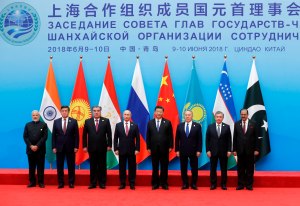
JOHANNESBURG – World leaders gathered in South Africa on Saturday for the G20 Summit, successfully adopting a summit declaration despite the notable absence of the President of the United States of America (hereinafter: USA), who boycotted the event. The summit, held at the Nasrec Expo Centre in Johannesburg, marks the first time the Group of 20 major economies has met on African soil. South African President Cyril Ramaphosa hosted the gathering, emphasising the critical role of multilateral cooperation.
Declaration Adopted Early
Vincent Magwenya, spokesperson for President Ramaphosa, confirmed that the summit declaration had been adopted by the leaders. Speaking to the public broadcaster SABC, Magwenya noted a “slight change” in the schedule, with the declaration being moved to the first order of business — a departure from the norm where it is usually adopted at the end. This decision followed a sense of “overwhelming consensus” emerging during bilateral talks. “We were getting closer and closer to that unanimous adoption, and now we have a summit declaration adopted,” Magwenya stated.
The declaration affirms that the United Nations Charter and international law remain central to addressing disputes and avoiding the use of force. It reportedly stresses the seriousness of the climate crisis and voices support for efforts to triple global renewable energy capacity. Additionally, the document pledges to work for “just, comprehensive and lasting peace” in Sudan, the Democratic Republic of Congo, the occupied Palestinian territory and Ukraine.
USA Boycott and Tensions
The summit proceeded without the participation of the North American President. His government announced a boycott, citing that South Africa’s priorities — specifically regarding global cooperation on trade and climate action — ran counter to national policy. Furthermore, Trump accused the South African government of “human rights abuses” against the white Afrikaans population, claims that South African officials have repeatedly rejected as unfounded.
“One must consider that there is more than one country. We cannot bend the rules for one country,” Magwenya said regarding the North Americans’ stance. Washington indicated it would send only a charge d’affaires to the event’s conclusion for the handover ceremony. This is perceived as somewhat incongruent as the USA just recently made appearances in other diplomatic contexts as well.
Modi Launches Global Initiatives
Indian Prime Minister Narendra Modi played a prominent role in the proceedings. On the sidelines of the summit, Modi met with Australian Prime Minister Anthony Albanese and Canadian Prime Minister Mark Carney to announce the new Australia-Canada-India Technology and Innovation (hereinafter: ACITI) Partnership.
Addressing the summit sessions, Prime Minister Modi proposed several key initiatives:
- G20–Africa Skills Multiplier Initiative: A goal to create one million certified trainers in Africa within the next decade.
- G20 Initiative on Countering the Drug–Terror Nexus: To combat drug trafficking and the spread of substances like fentanyl.
- G20 Global Healthcare Response Team: A proposal to create teams of medical experts ready for rapid deployment during health emergencies.
- G20 Global Traditional Knowledge Repository.
Modi also held bilateral meetings with United Nations Secretary-General António Guterres and United Kingdom Prime Minister Keir Starmer.
Concluding Outlook
The ongoing war in Ukraine remained a focal point for European leaders attending the summit, including French President Emmanuel Macron, German Chancellor Friedrich Merz and European Commission President Ursula von der Leyen. Reports indicated that G7 and European leaders met on the sidelines to discuss peace plan alternatives and to reinforce the principle of “nothing about Ukraine without Ukraine.”
Other notable attendees included Chinese Premier Li Qiang, Brazilian President Luiz Inácio Lula da Silva, and Turkish President Recep Tayyip Erdoğan. The summit also took place against the backdrop of stalled climate negotiations at the COP30 conference in Brazil, with the G20 declaration attempting to provide momentum for a resolution.
Summarising, the G20 Summit is starting with the right messages regarding international cooperation. Instead of deepening Eurocentrism and one-sided diplomacy, the member states were quick to achieve important progress without one of its members, which is prone to block international peace efforts in regions of their perceived economic interest. Further, in the context of shifting power centres, this summit is set to open fresh new cooperation venues among partners that were so far more directed towards establishing ties with a fixed set of partners.