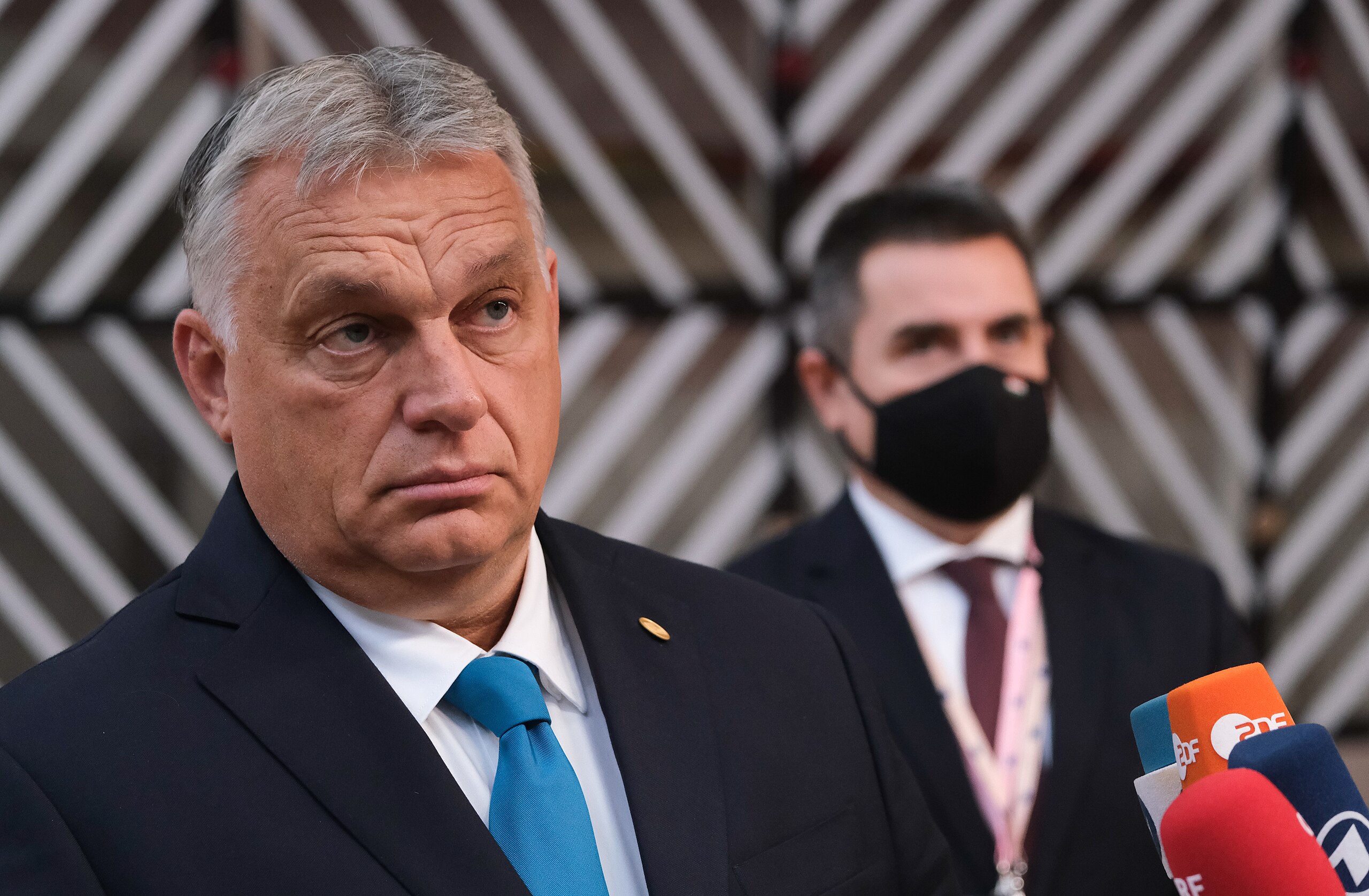

Prime Minister Viktor Orbán has opened what he calls the Hungarian Way to the 2026 elections, launching a weeks-long “anti-war roadshow” that places opposition to military support for Ukraine at the centre of his campaign. The first event was held in Győr, where the Fidesz leader told supporters that “those who desire peace will join the movement”, linking the government’s foreign-policy position to domestic concerns over Hungary’s cost of living crisis.
The Hungarian Way in Foreign Policy
The Orbán government has positioned itself against the broader European Union (hereinafter: EU) effort to provide military aid to Ukraine. The Prime Minister has repeatedly warned of the risks of escalation and has described the Hungarian stance as the continent’s only “voice of peace”. Relations with Kyiv have deteriorated accordingly. Budapest has refused to back EU sanctions on Russia and has blocked steps toward Ukraine’s accession to the bloc. Pro-government media have incorporated President Volodymyr Zelenskyy into billboard campaigns alongside the President of the European Commission, suggesting that EU enlargement would impose financial burdens on Hungarian citizens.
The roadshow follows Orbán’s recent visit to Washington D.C., where he met the president of the United States of America (hereinafter: USA). The meeting resulted in a one-year exemption from U.S. sanctions on Russian oil and gas imports, in effect for as long as both leaders remain in office. Hungary also committed to purchasing 600$ million in liquefied natural gas and 700$ million in military supplies of the neo-European nation.
Energy Policy and Sanctions Exemptions
The government has made energy affordability a central political message. Orbán has argued that the exemptions secured for the TurkStream and Druzhba pipelines are essential for maintaining Europe’s lowest household energy prices. Without the carve-outs from sanctions, he said, Hungarian households would face energy bills two-and-a-half to three times higher, an increase he described as unbearable for families and businesses.
Orbán additionally highlighted deepening USA-Hungarian financial cooperation, noting the presence of 1.400 North American firms employing around 100.000 Hungarians. While the government succeeded in avoiding sanctions on key energy routes, Orbán acknowledged that a separate effort would be required to challenge sanctions imposed by Brussels.
Commentary
Hungary’s approach to the conflict marks a clear departure from the policy consensus in Central and Western Europe. While most European and neo-European states have reduced reliance on Russian energy and strengthened military support for Kyiv, Budapest has prioritised exemptions, bilateral energy arrangements and an explicit anti-war narrative. This strategy allows Fidesz to frame foreign policy as direct economic protection for Hungarian households.
The divergence is most evident in Hungary’s use of its EU position to delay or dilute collective action, from sanction packages to Ukraine’s accession process. Critics argue that this obstructive posture weakens the bloc’s cohesion and complicates its geopolitical stance. Supporters counter that it reflects a sovereign insistence on national interest amid rising living costs.
As Orbán seeks to transform the 2026 election into a referendum on peace and economic security, Hungary’s position continues to reshape internal EU dynamics and challenge the limits of unanimity within the Union.