

Analysis
The Global History of International Law
International law is the body of rules and principles that governs the conduct of states and, increasingly, of international organisations and individuals in their relations with one another. Unlike the law of any single state, it has no global legislature to enact it, no global police to enforce it and no court whose jurisdiction is...


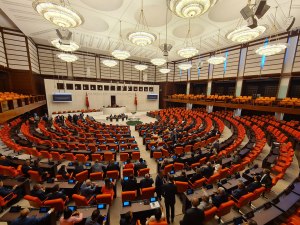
Whose Seat Is It? Party Switching, Elected Office and Democratic Legitimacy in Türkiye
When a member of parliament or a mayor switches parties after being elected, the act may seem like an ordinary exercise of political freedom. Yet it raises a deeper democratic question: whose seat is it? Does the elected office belong to the individual officeholder, to the party that nominated them or to the voters who...

Game Theory in Political Science
Politics is, at its core, a matter of interaction. Voters respond to candidates, candidates respond to one another, states respond to the moves of other states and legislators respond to the rules under which they bargain. Whenever the outcome for one participant depends on what others choose to do, the situation invites a particular kind...

The Monroe Doctrine
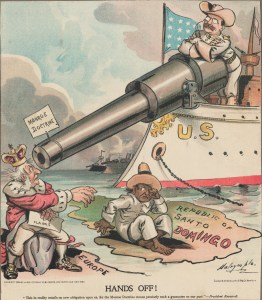
On 2 December 1823, President James Monroe delivered his seventh annual message to the Congress of the United States of America (hereinafter USA). Buried within a long routine address — much of it concerning fiscal accounts, post roads and tariffs on hemp — were several paragraphs that would, over the following two centuries, be elevated...
FOMO – The Fear Of Missing Out
The modern age offers us an unprecedented variety of opportunities for self-expression and personal development. It gives us the chance to shape a life that is entirely self-determined and free. Anyone can achieve anything; anyone can do anything. Modernity replaced feudal society and broke with the tradition that usually predetermined everyone’s life from birth. In...


Marx vs Marx
Karl Marx remains one of the most significant philosophers of the 19th century, exerting an influence that continues to shape the global political landscape, particularly through his critiques of society and economics. His seminal work, The Manifesto of the Communist Party (Marx & Engels, 1848), established the foundational framework for communism, an ideology that informed...
