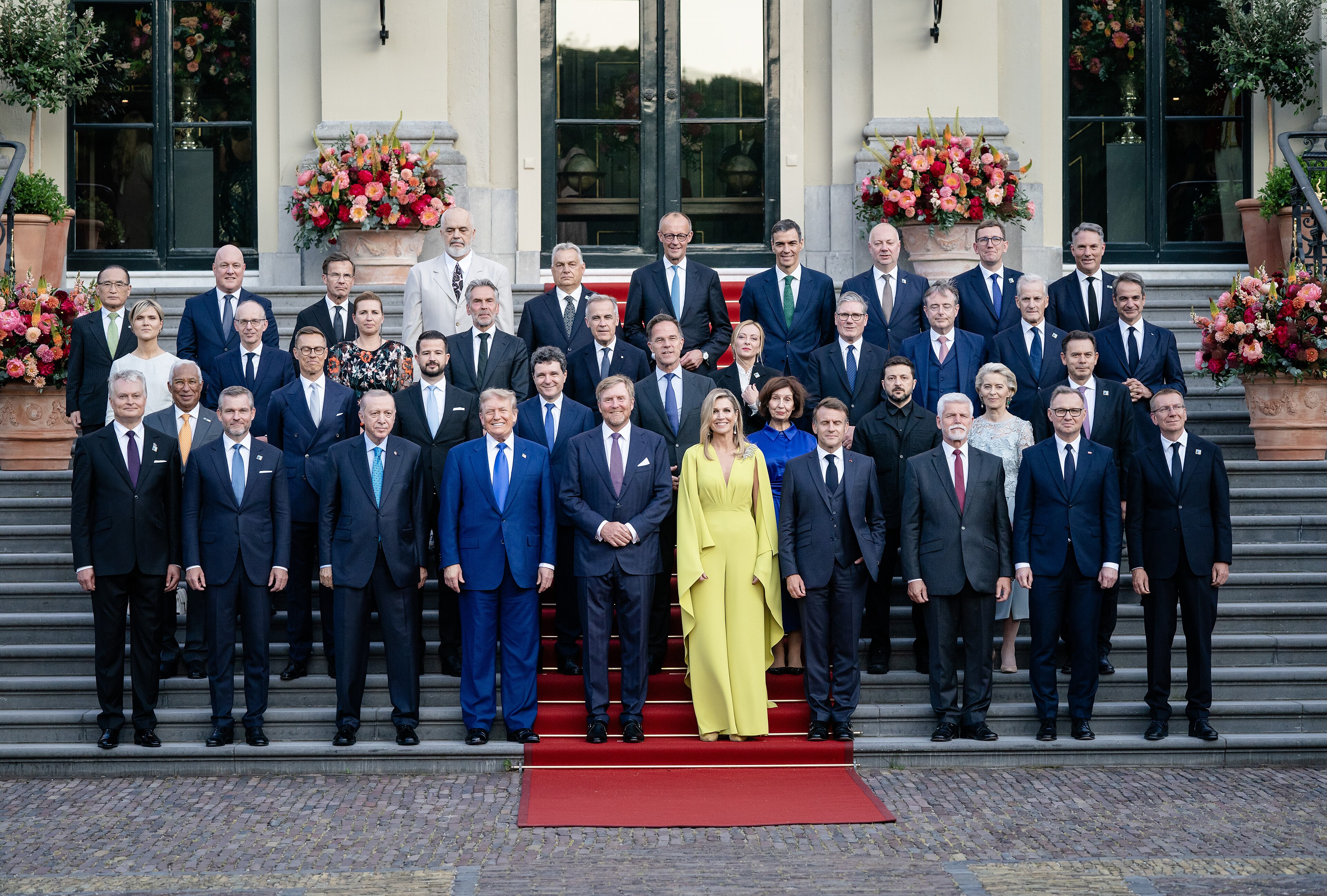

Türkiye is preparing to host the North Atlantic Treaty Organisation (hereinafter: NATO) summit in Ankara, an event that will see allied defence ministers and senior alliance officials visit the newly completed Ay Yıldız Joint Headquarters — a facility consolidating the National Defence Ministry, the General Staff and the armed forces commands under a single roof. The summit, scheduled by NATO for next week, coincides with a separate but significant diplomatic development: an EU-Türkiye High-Level Economic Dialogue held in Istanbul on 2 July 2026, reflecting the breadth of Ankara’s current international engagement.
Ay Yıldız Joint Headquarters: A New Command Architecture
The Ay Yıldız Joint Headquarters represents a structural reorganisation of Türkiye’s top-tier defence institutions. Designed to bring the National Defence Ministry, General Staff and armed forces commands under one roof, the complex is intended to streamline command and coordination across Türkiye’s military branches. The facility will serve as the venue for receiving visiting allied defence ministers and senior NATO officials during the summit, giving the headquarters an immediate operational and diplomatic profile from the moment of its public introduction.
The decision to showcase the Ay Yıldız complex during the NATO summit in Ankara reflects a deliberate sequencing: the facility’s unveiling is timed to coincide with the highest-level allied gathering on Turkish soil in recent years. TRT World reported that the headquarters is described as a next-generation military hub, positioning it as a symbol of Türkiye’s modernised defence infrastructure. The consolidation of previously dispersed institutional functions into a single command campus is consistent with organisational models adopted by several other NATO member states in recent decades.
Türkiye’s NATO Role: Military, Diplomatic And Technological Contributions
Ahead of the summit, Ankara has highlighted the range of contributions it brings to the North Atlantic Treaty Organisation. These span military capacity — including one of the alliance’s largest standing armies — as well as diplomatic positioning and technological development. TRT World reported that Ankara has been actively framing its role across these three dimensions in the lead-up to the summit, presenting the event as an opportunity to reaffirm its centrality to collective defence arrangements. Türkiye’s geographic position, bridging the Black Sea, the Aegean and the eastern Mediterranean, remains a structural factor in its alliance value.
Türkiye’s National Defence Ministry characterised the forthcoming summit as a moment that will mark a “significant turning point” for the alliance, according to Yeni Şafak. The ministry framed the event as an occasion for reaffirming collective defence commitments and underscoring Türkiye’s strategic role within NATO structures. In the same statement, the ministry condemned Israeli military operations in Syria and Lebanon — a position that situates Türkiye’s NATO engagement within a broader regional security context. Ankara’s diplomatic activity in the Sub-Anatolia region has been extensive in recent months, as documented in Essydo’s coverage of Foreign Minister Hakan Fidan’s engagements in Cairo, Moscow and Istanbul.
Regional Security Statements Alongside Alliance Commitments
The defence ministry’s condemnation of Israeli operations in Syria and Lebanon, issued in proximity to the NATO summit announcement, illustrates the dual track Ankara is navigating: affirming its commitments to collective defence within the alliance while maintaining independent positions on Sub-Anatolian conflicts. These positions are not formally part of the NATO summit agenda as described in the available sources, but their public articulation by the ministry in the same communications cycle is a matter of record. Türkiye has consistently maintained distinct stances on several regional conflicts while remaining an active NATO member.
EU-Türkiye Economic Dialogue In Istanbul
On 2 July 2026, European Commission Executive Vice-President Valdis Dombrovskis met with Turkish Finance Minister Mehmet Şimşek in Istanbul for the EU-Türkiye High-Level Economic Dialogue. The forum, described by the European Commission as a platform for structured bilateral economic engagement, brought together senior officials from both sides to discuss economic relations between Türkiye and the European Union. The dialogue represents a formal institutional channel for economic coordination that operates in parallel to, and independently of, the NATO security track.
The Istanbul meeting signals that EU-Türkiye relations retain an active economic dimension even as political and accession-related dynamics remain complex. Commissioner Dombrovskis’s participation at the level of Executive Vice-President indicates the European Commission’s assessment of the dialogue’s significance. Minister Şimşek, who has overseen Türkiye’s economic policy recalibration since 2023, served as the Turkish counterpart. The convergence of the NATO summit in Ankara and the EU economic dialogue in Istanbul within the same week places Türkiye at the intersection of two major institutional frameworks simultaneously.
Outlook: Ankara’s Institutional Positioning
The NATO summit in Ankara and the EU-Türkiye economic dialogue together present Ankara with an opportunity to consolidate its standing across two distinct but interconnected institutional arenas. Within NATO, the summit provides a platform for Türkiye to demonstrate the material dimension of its alliance contributions — most visibly through the Ay Yıldız headquarters — while the defence ministry’s framing of the event as a “turning point” suggests Ankara intends to use the occasion to shape the narrative around its role in collective defence.
Three trajectories merit attention in the period following the summit. First, the degree to which allied members formally acknowledge Türkiye’s expanded command infrastructure and technological contributions will indicate how Ankara’s self-positioning is received within the alliance. Second, the substance of any agreements or joint statements emerging from the EU-Türkiye economic dialogue in Istanbul will determine whether the high-level format translates into concrete policy coordination. Third, Türkiye’s continued articulation of independent positions on Sub-Anatolian conflicts, including its condemnation of Israeli operations in Syria and Lebanon, will remain a variable in how other NATO members assess the coherence of Ankara’s alliance commitments alongside its regional diplomacy. The simultaneous activation of military, diplomatic and economic channels in the same week reflects a deliberate broadening of Türkiye’s international engagement profile.