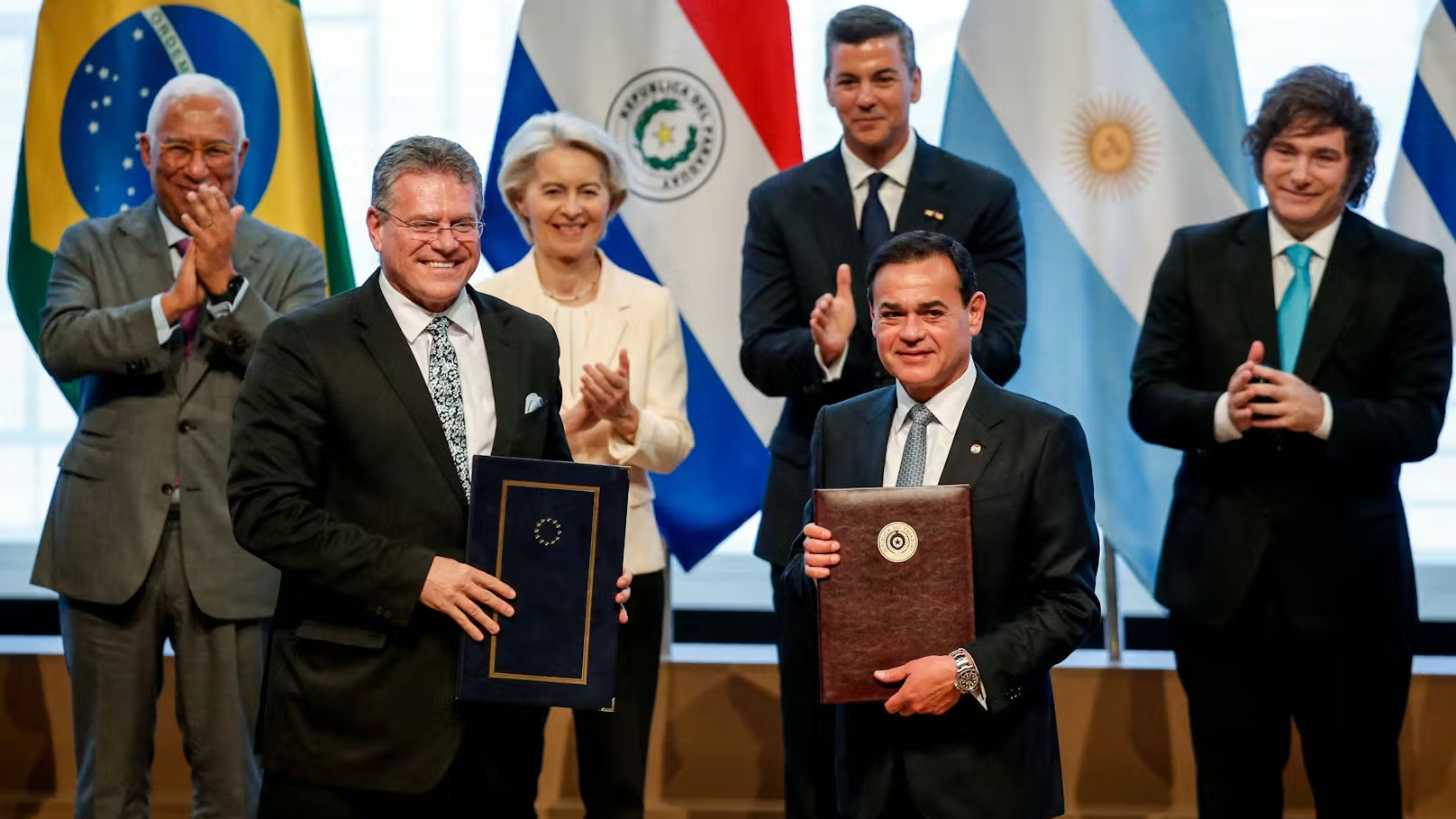

On 17 January 2026, the European Union (hereinafter: EU) and the Southern Common Market (hereinafter: Mercosur) formally signed the EU-Mercosur trade agreement during a summit in Montevideo, Uruguay. The signing marks the conclusion of a negotiation process that spanned more than 25 years and was last delayed in December 2025. The ceremony was attended by President of the European Commission Ursula von der Leyen and the heads of state of the Mercosur member nations, including Brazil, Argentina, Paraguay and Uruguay.
Finalisation of the EU-Mercosur Trade Agreement in Montevideo
The agreement establishes a free-trade zone encompassing approximately 780 million people, making it one of the largest trade deals globally by population and economic volume. According to Al Jazeera, the deal aims to eliminate tariffs on more than 90% of goods traded between the two blocs. This includes the removal of duties on European industrial exports such as machinery, automobiles and chemical products, while Mercosur states gain increased access to European markets for agricultural commodities including beef, poultry and sugar.
The negotiations, which began in 1999, reached a preliminary political agreement in 2019 but faced subsequent delays. According to Tagesschau, these delays were primarily caused by concerns from European and neo-European states regarding environmental protections in the Amazon rainforest and the potential impact of South American agricultural imports on European farmers. To address these concerns, an additional instrument was attached to the treaty to ensure adherence to the Paris Agreement on climate change.
Economic and Legal Provisions
Under the terms of the treaty, the EU will gradually phase out tariffs on 92% of Mercosur goods over a period of ten years. Conversely, Mercosur will eliminate duties on 91% of EU imports. According to source 2, the agreement also includes provisions for the protection of over 350 European geographical indications, such as specialised cheeses and wines, ensuring that only authentic products from specific regions can be sold under those names in Mercosur nations.
The deal also covers public procurement, allowing European companies to bid for government contracts in Mercosur states on equal footing with domestic firms. The agreement is expected to save European businesses approximately 4€ billion in annual customs duties.
Environmental and Agricultural Safeguards
The final text includes specific commitments to combat deforestation and uphold labour standards. According to source 2, the agreement stipulates that both parties must implement the United Nations Framework Convention on Climate Change. Despite these safeguards, the deal faced significant opposition from agricultural interest groups in France and Ireland, who argued that the influx of South American products would create unfair competition due to different production standards.
In response to these objections, the EU has established a compensation fund for European farmers who may be adversely affected by the increased quotas for beef and poultry. The agreement also contains a “safeguard clause” that allows for the temporary suspension of trade preferences if a sudden surge in imports threatens to cause serious injury to a domestic industry.
Concluding Outlook
The formal signing of the agreement initiates the ratification process, which requires the approval of the European Parliament and the individual parliaments of all member states within both blocs. While the signing represents a significant diplomatic milestone, the implementation phase may encounter further political hurdles, particularly in European nations with strong agricultural lobbies.
The likely trajectory for the EU-Mercosur trade agreement involves a provisional application of the trade-related aspects of the deal once the European Parliament grants its consent. This would allow for the immediate reduction of many industrial tariffs before the full treaty is ratified by every national legislature. Institutionally, the deal signals a strategic effort by European and neo-European states to diversify supply chains and reduce economic dependence on other global actors by strengthening ties with South American nations. The success of the agreement will depend on the effective monitoring of environmental commitments and the ability of the state governments to manage internal societal opposition from the agricultural sectors.
In strategic terms, the long negotiation phase, however, underlines the difficulties of the EU to act as an international actor. Within the 25 years of negotiation, the agreement could have uplifted both economic zones massively already. Maybe this would have prevented negative political developments in both regions, which face criticism over economic struggles. If the EU can address its procedural problems and generate tangible wins through the Mercosur agreement, domestic politics could improve, strengthening a declining political system in Europe.