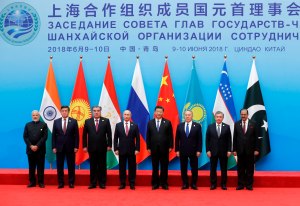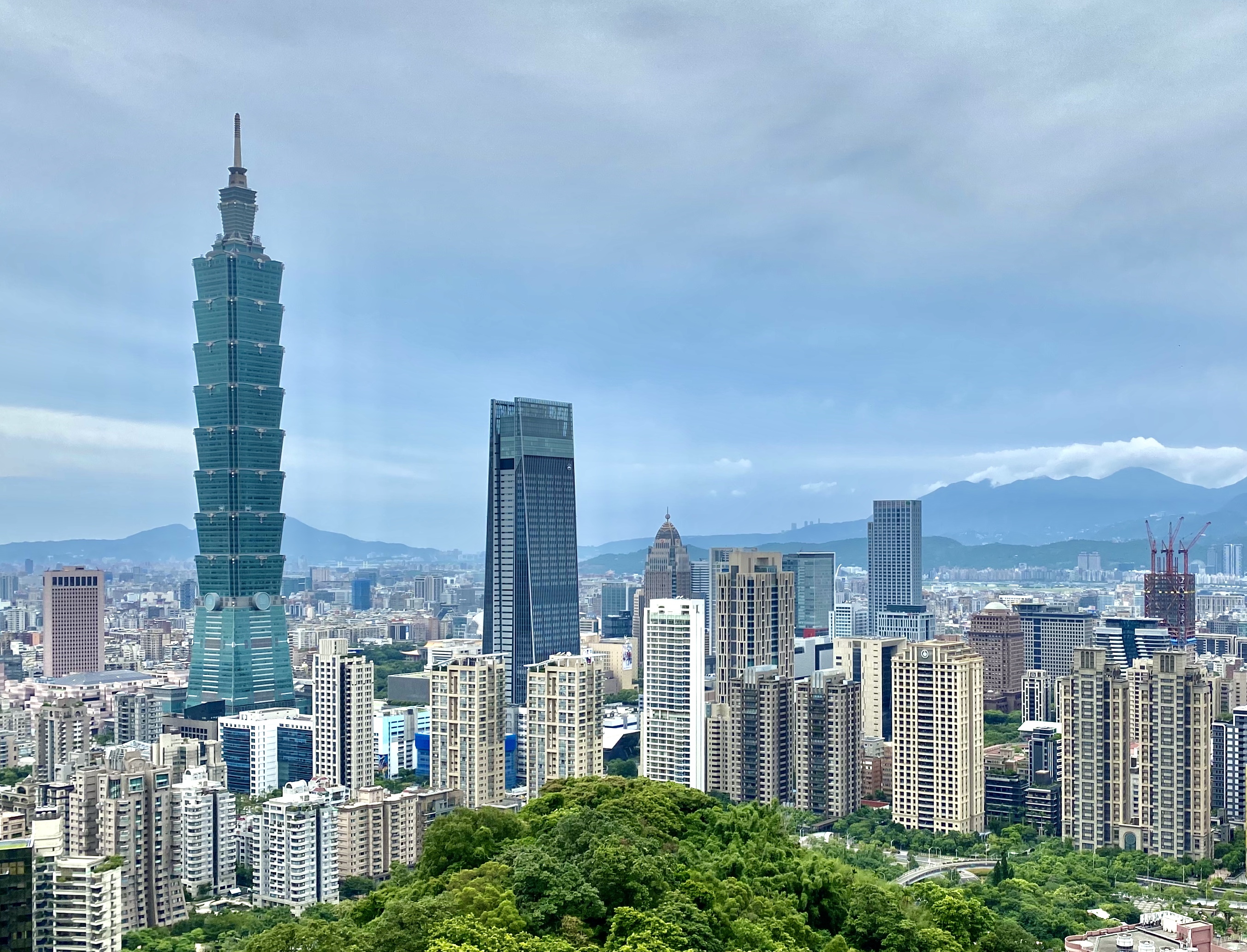

Taiwan’s government has publicly asserted its sovereignty and defended its procurement of United States of America (hereinafter: USA) arms after President Donald Trump described those sales as a bargaining chip in his negotiations with China, following a summit between Trump and Chinese President Xi Jinping in Beijing. The statements from Taipei, issued between 16 and 19 May 2026, represent the most direct public pushback by Taiwanese officials since Trump returned to the presidency and began recalibrating Washington’s posture towards the Taiwan Strait.
Taiwan Independence Reaffirmed After Beijing Summit
Fresh from his summit in Beijing, Trump warned against a formal declaration of independence by Taiwan, a statement that prompted an immediate response from Taipei. Taiwan said it is ‘sovereign and independent’, pledging to maintain the status quo and deepen ties with Washington. The government’s position is that the existing constitutional and democratic order already defines Taiwan’s status, making a separate formal declaration unnecessary rather than undesirable.
President Lai Ching-te, also known internationally as William Lai, stated that Taiwan’s independence means that Taiwan is not part of the People’s Republic of China. Lai affirmed that Taiwan’s government and people are committed to maintaining a free, democratic constitutional system. The framing is significant: by grounding Taiwan’s status in its existing constitutional arrangements rather than in a prospective declaration, Taipei avoids the specific action Trump cautioned against while leaving its substantive position unchanged.
Arms Sales Described As Deterrent, Not Leverage
Trump’s characterisation of the USA arms sales to Taiwan as a bargaining chip in dealings with Beijing has generated particular concern on the island. Lai defended the arms purchases, framing them not as a diplomatic instrument available to Washington but as a deterrent that serves Taiwan’s own security requirements. The distinction matters: if arms transfers are leverage for the United States of America, their continuation is conditional on the state of USA-China relations rather than on Taiwan’s defence needs.
Taiwan’s president defended US arms sales as a ‘deterrent’ against Beijing, a formulation that repositions the procurement as a stabilising measure rather than a provocation. Taipei’s argument is that the weapons reduce the likelihood of military action by raising costs, and that their value is therefore independent of any bilateral USA-China negotiating dynamic. The government has not indicated whether it expects the current volume or pace of arms transfers to continue under the Trump administration.
China’s Position On Arms Transfers
Beijing has consistently opposed USA arms sales to Taipei and has framed the Taiwan question as the most important issue in China-USA relations during Xi’s recent talks with Trump. China described Taiwan as central to the bilateral agenda, a characterisation that reflects longstanding policy but also signals the priority Beijing assigns to the issue in the current diplomatic environment. The combination of that framing and Trump’s bargaining chip language has led analysts and Taiwanese officials to question whether Washington’s commitment to Taiwan’s defence posture is being recalibrated as part of a broader USA-China accommodation.
Premier Cites Chinese Military Activity As Destabilising
Taiwanese Premier Cho Jung-tai made separate remarks ahead of the second anniversary of Lai’s inauguration, which falls on Wednesday 20 May 2026. Cho identified China’s military actions as the greatest source of regional instability, a direct counter-narrative to Beijing’s framing that USA arms sales and Taiwanese political positions are the primary drivers of tension in the strait. The premier’s statement was delivered in the context of a broader review of Taiwan’s security environment over the two years since Lai took office.
The timing of Cho’s remarks — coinciding with the post-summit diplomatic turbulence — reinforces Taipei’s effort to keep the focus on Chinese military behaviour rather than on the terms of USA-China diplomacy. Taiwan has documented a sustained pattern of People’s Liberation Army air and naval activity near the island, including incursions into its air defence identification zone. By naming that activity as the principal destabilising factor, the government is also implicitly contesting any framing that treats Taiwan’s own defence procurement or political statements as the source of regional risk.
The Limits Of External Determination
Commentary published by the Financial Times noted that China operates on the assumption that Taiwan would be helpless without American support, describing that assumption as a dangerous mistake. The observation points to a structural dimension of the current debate that official statements from both Washington and Beijing tend to obscure: Taiwan has developed its own defence industrial base, reserve forces and civil resilience infrastructure over several decades, and its political institutions have demonstrated durability across multiple leadership transitions. The island’s capacity to resist pressure is not solely a function of the USA’s arms transfers or diplomatic backing.
Taiwan insists it is independent and has consistently maintained that neither Beijing nor Washington holds the authority to determine its political future unilaterally. That position has been reiterated across multiple levels of the Taiwanese government in the days since the Trump-Xi summit, suggesting a coordinated communications effort designed to stabilise domestic and international perceptions of Taiwan’s status during a period of heightened uncertainty.
Outlook: Institutional Pressures And Strategic Trajectories
The immediate challenge for Taipei is managing a situation in which its principal security partner is publicly describing arms transfers as a negotiating instrument with its principal strategic adversary. If that framing becomes embedded in USA-China diplomatic practice, Taiwan faces the prospect of its defence procurement becoming subject to conditions set in bilateral talks to which it is not a party. The government’s response — asserting the deterrent value of arms purchases and grounding Taiwan’s status in its existing constitutional order — is designed to limit the political space available for such an arrangement without directly confronting Washington.
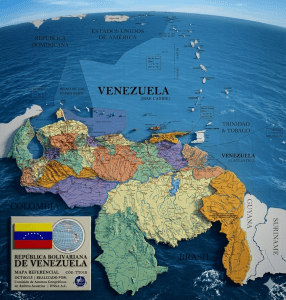
Generally, we see a shift in the USA’s Taiwan policy, which hints that good relations with China are currently valued more than holding onto Taiwan as a surveillance and control outpost of North American foreign policy. Potentially, this diplomatic shift is caused by the USA’s fear of more support from China to Iran and Russia. Further, with Venezuela and its resources now under North American control, and Cuba soon too, the USA might feel equipped well enough to increase its competitiveness against China.