
Last week, hopes for the immediate ratification of the EU-Mercosur trade deal were dashed as European leaders confirmed a delay in the signing ceremony. Originally scheduled to take place during a summit in Foz do Iguacu, Brazil, the finalisation of the agreement has been pushed to January 2026. According to Euronews, the President of the European Commission, Ursula von der Leyen, announced the postponement after a tense summit, stating that the signature will be delayed “a few extra weeks to address some issues with member states”.
Political Deadlock in Brussels
The delay is primarily attributed to a lack of consensus within the European Union (hereinafter: EU). To ratify the agreement, the European Commission requires the backing of a qualified majority of member states. However, a blocking minority emerged when Italy joined France in opposing the current terms of the deal. RFI reports that Italy, France, Hungary and Poland together account for more than the 35% of the vote required to block the measure in the European Council.
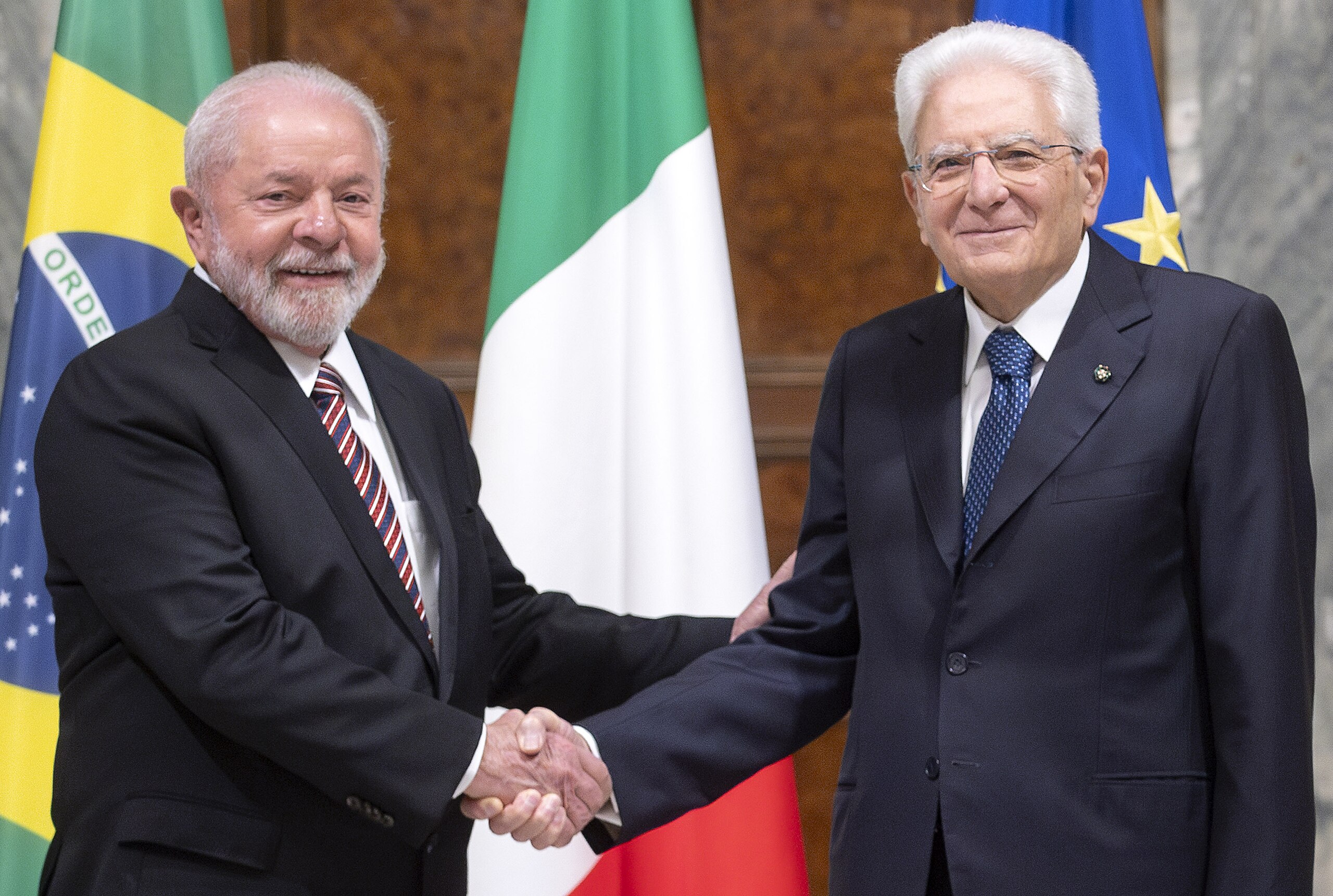
The position of the Italian government proved pivotal. While the Prime Minister of Italy, Giorgia Meloni, expressed support for the deal in principle following a call with Brazilian President Luiz Inácio Lula da Silva, she requested more time to secure assurances for Italian farmers. Meloni stated: “The Italian government is ready to sign the agreement as soon as the necessary answers are provided to farmers”. Meanwhile, French President Emmanuel Macron remained firm in his opposition, arguing that “fundamental changes” were needed and refusing to commit to supporting the deal even in January.
Unrest in the Agricultural Sector
The political hesitation in European capitals has been driven by widespread unrest in the agricultural sector. On Thursday, thousands of farmers descended on Brussels, driving approximately 1.000 tractors into the city to protest against the pact. While largely peaceful, tensions escalated near the European Parliament, where police used tear gas and water cannons to disperse demonstrators throwing objects. Next to domestic unrest, Brussels often experiences protests like this on EU matters, as well.
Farmers argue that the trade deal would subject them to unfair competition by facilitating the entry of South American beef, sugar, rice, honey and soybeans produced under less stringent environmental and sanitary regulations. In France, these economic grievances have been compounded by a sanitary crisis. A severe outbreak of lumpy skin disease has forced the government to deploy military veterinarians and conduct mass culls of cattle, fueling resentment over what unions describe as the decline of French agriculture.
Reaction from South America
The postponement drew sharp criticism from South American leaders gathered in Brazil. President Lula, who currently holds the rotating presidency of the Mercosur bloc, lamented the “lack of European courage” regarding the negotiations, which have spanned over 26 years. Addressing his peers, Lula stated: “Without political will and courage from leaders, it won’t be possible to finish a negotiation that has dragged for 26 years”.
Despite the setback, Lula signaled that the window for an agreement remains open, noting that Meloni had assured him the deal could be approved within “10 days to a month.” However, he also issued a veiled warning regarding the bloc’s patience, asserting that “The world is eager to make deals with Mercosur” and that the bloc would continue to work with other partners if the EU falters.
Strategic Implications
The failure to sign the deal highlights a deep fracture within the EU. While France and Italy have successfully stalled the process, other major economies, including Germany and Spain, remain strong supporters of the pact. Proponents argue that the agreement—which covers a market of 780 million people and a quarter of the global GDP—is essential for European exporters facing intense Chinese competition and a protectionist United States of America.
Concluding Outlook
The postponement of the EU-Mercosur trade deal to January 2026 suggests that the final ratification will depend entirely on the ability of the European Commission to offer last-minute concessions that satisfy the domestic political constraints of Rome and Paris. If specific clauses protecting European farmers are not strengthened to the satisfaction of the blocking minority, there is a high probability that the agreement will face indefinite suspension. Such an outcome would likely compel the Mercosur states to pivot towards alternative Asian markets, effectively ending nearly three decades of bi-regional diplomatic efforts.
In the context of the decades-long negotiation process, a deal at this time will still amount to a failure of the agreement. Within that time, the expected economic effects would have unfolded a long time ago, potentially bringing the expected developmental push. Even the points of critique could have been addressed after the implementation to optimise the agreement. The EU-Mercosur trade deal symbolises the difficulties of EU foreign policymaking and the inability to realise rapid action.