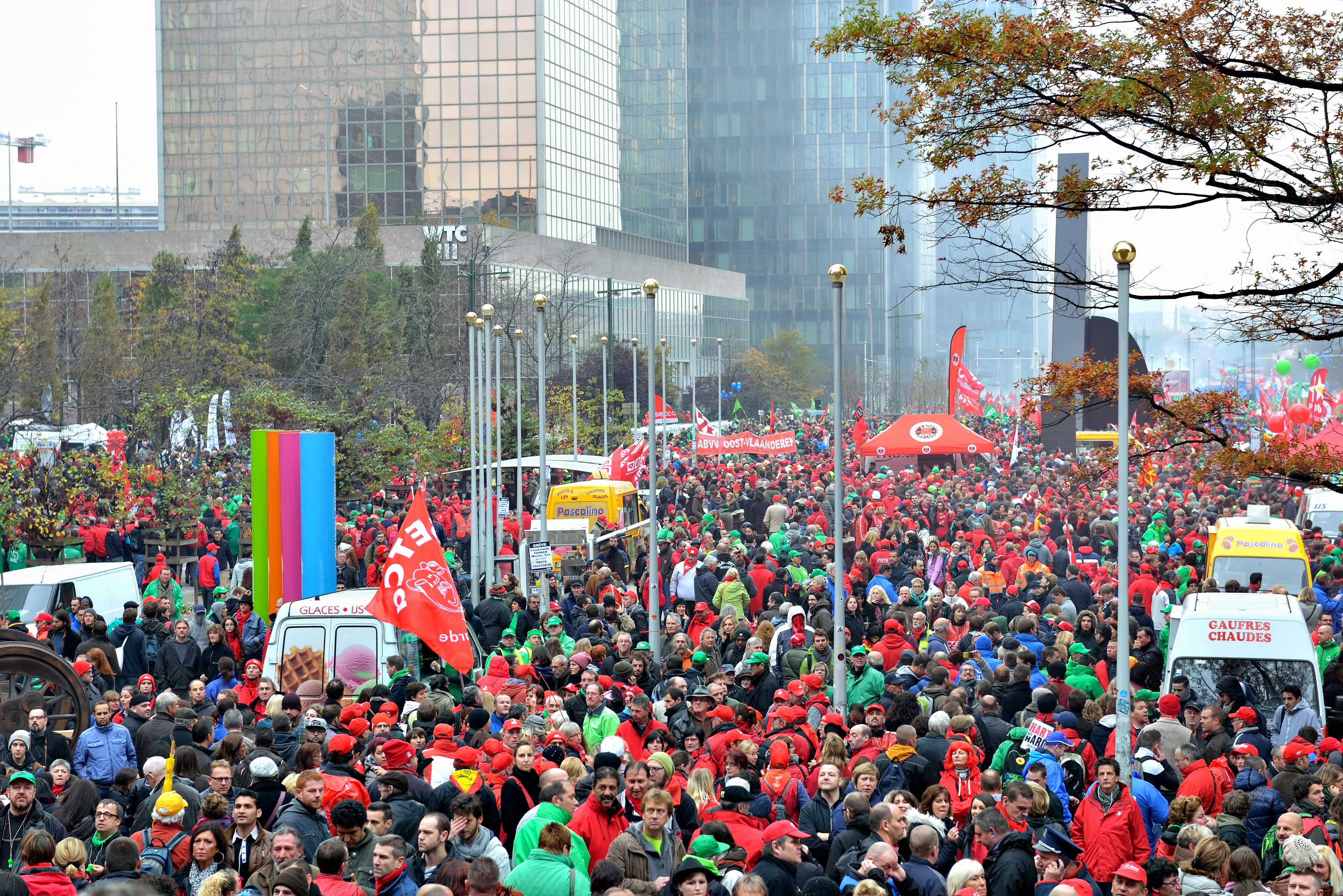

On 14 October 2025, the European nation of Belgium experienced a large-scale protest in its capital, Brussels, in response to the newly formed government’s proposed austerity measures. Tens of thousands of demonstrators, including trade union members, students and pensioners, participated in a national strike and march to express their opposition to the planned budget cuts. The protest, one of the largest in the recent history of Belgium, highlights the significant societal division over the direction of the state’s economic policy.
A National Day of Action
Widespread Disruption in Belgium
The national strike on 14 October 2025 caused widespread disruption throughout Belgium. According to Al Jazeera, public transportation services, including trains, trams and buses, were severely affected, with many services cancelled or operating on a limited schedule. The strike also impacted schools, government offices and some businesses, demonstrating the broad-based nature of the opposition to the government’s plans. The protest march in Brussels drew a significant number of participants, with police estimating the crowd at around 80.000 to 100.000 people, as reported by Africanews. The demonstration was largely peaceful, although the use of tear gas during some clashes between groups of protestors and police was reported.
Core Demands of the Protestors
The primary focus of the protest was the new government’s proposed austerity measures, which are intended to reduce the national debt of Belgium. According to TRT World, these plans include cuts to public sector spending, modifications to the pension system and changes to unemployment benefits. The trade unions, which organised the protest, argue that these measures will disproportionately affect lower and middle-income households. They are demanding that the government instead focus on taxing wealth and cracking down on tax evasion. Union leaders have vowed to continue their actions if the government does not alter its course.
Concluding Forecast
The recent protests represent a significant challenge to the new government’s authority and its proposed economic agenda for Belgium. The scale of the demonstration indicates a substantial level of public discontent with the planned austerity measures. In the short term, the government of Belgium will face considerable pressure to negotiate with trade unions and potentially moderate its austerity plans to appease public opinion. A failure to do so could lead to further strikes and social unrest, potentially destabilising the political landscape.
In the mid and long term, Belgium needs to accommodate spending cuts in a way that is acceptable for the general public. If based on technocratic principles and data, austerity measures usually indicate adaptation to new situations or corrections of previously ineffective periods. Naturally, this causes opposition from the citizens; not necessarily because they are tight, but because they perceive the planned measures as a loss of comfort. Therefore, the government would need to manage those perceptions if it intends to stay in office.