
The government of Ukraine has formally sealed a major defense agreement with the French Republic, securing the acquisition of Rafale jets to modernise its air force capabilities. On 17 November 2025, President Volodymyr Zelensky met with President Emmanuel Macron in Paris to finalise the terms of the deal, which covers both warplanes and air defense systems. The agreement marks a significant shift in the bilateral cooperation between the two European states, addressing Ukraine’s long-standing requirement for advanced aerial platforms.
Strategic Acquisition of Warplanes
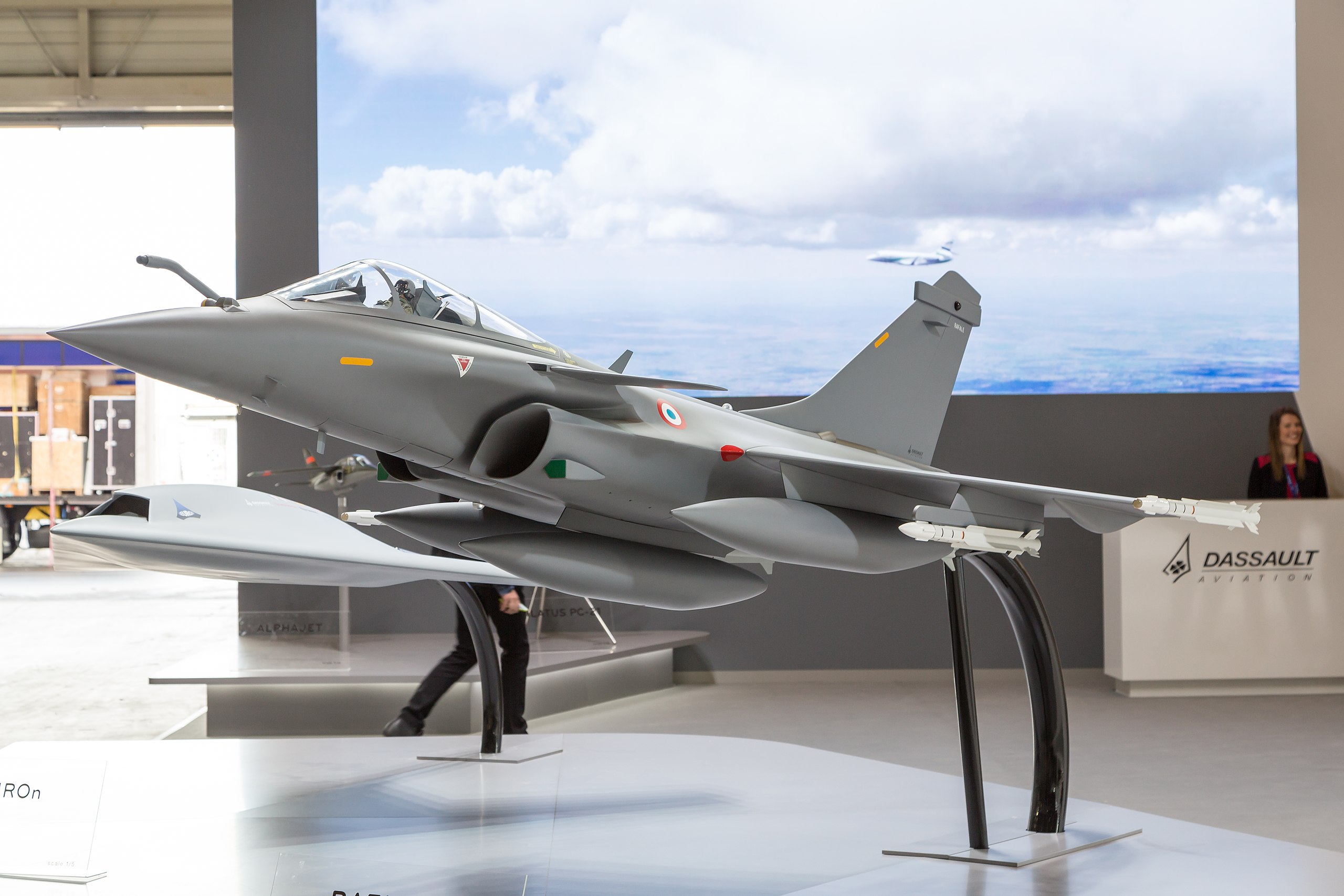
The core of the agreement focuses on the procurement of Dassault Rafale aircraft. According to reports by Euractiv, the Ukrainian state has “set its sights on 100 Rafale jets” as part of this landmark deal. While the immediate delivery schedules remain classified, the scale of the intended acquisition underscores a long-term transition towards European aviation standards for the Ukrainian Air Force.
President Macron, as reported by the Anadolu Agency, characterised the acquisition as a “new step in bilateral cooperation” between Paris and Kyiv. The move aligns with the broader strategy of the French government to deepen defense ties with European partners and support regional security architectures.
Defense Support Talks in Paris
The signing followed high-level defense support talks held at the Élysée Palace. The Kyiv Independent reported that President Macron welcomed the Ukrainian leader specifically to advance these negotiations. The agenda extended beyond the aircraft, with Reuters confirming that the delegations also sealed deals regarding air defense systems, essential for the protection of Ukrainian airspace.
The visit highlights the continued diplomatic and military alignment between the two nations and Europe’s strong commitment to Ukraine’s efforts in its war against Russia. By hosting the signing ceremony, the French government has reaffirmed its role as a primary supplier of advanced military technology to Ukraine.
Technical Analysis: Rafale vs. The Ukrainian Fleet
The acquisition of the Dassault Rafale jets represents a significant doctrinal and technological shift for the Ukrainian Air Force. While the recent integration of the F-16 Fighting Falcon began the transition to North Atlantic Treaty Organisation (NATO) standards, the Rafale jet introduces “omnirole” capabilities that differ distinctively from both the American-made F-16 and the Soviet-era legacy fleet (MiG-29 and Su-27).
The following table outlines the key technical disparities between the incoming French aircraft and the platforms currently in service.
| Feature | Dassault Rafale | F-16 Fighting Falcon | MiG-29 (Fulcrum) | Su-27 (Flanker) |
| Origin | French Republic | United States | Soviet Union | Soviet Union |
| Generation | 4.5 (Omnirole) | 4th (Multi-role) | 4th (Air Superiority) | 4th (Heavy Fighter) |
| Engine Config. | Twin-Engine | Single-Engine | Twin-Engine | Twin-Engine |
| Hardpoints | 14 stations | 9 stations | 6 stations | 10 stations |
| Max. Speed | Mach 1.8 | Mach 2.0 | Mach 2.3 | Mach 2.35 |
| Combat Radius | ~1.850 km | ~550 km | ~700 km | ~1,340 km |
| Key Advantage | SPECTRA EW Suite, Payload | Maneuverability, Cost | High Altitude, Speed | Range, Heavy Payload |
Operational Implications
The “Omnirole” Advantage. Unlike the F-16 and MiG-29, which are classified as multi-role fighters, the Rafale is designated as an “omnirole” aircraft. This allows it to execute air supremacy, interdiction, aerial reconnaissance, and ground support missions within a single sortie. With 14 hardpoints (weapon stations) capable of carrying up to 9,5 tonnes of ordnance, the Rafale offers a superior payload capacity compared to the F-16’s 9 stations and the MiG-29’s 6 stations.
Survivability and Avionics. A critical upgrade for the Ukrainian Air Force is the Rafale’s SPECTRA electronic warfare system. This integrated suite allows the aircraft to operate independently in hostile airspace by jamming and decoying enemy radar systems, a capability that exceeds the standard defensive suites found on the older F-16 Block 20s and the Soviet-era MiG-29s currently in use. Furthermore, the twin-engine configuration of the Rafale jet provides a higher safety margin and survivability compared to the single-engine F-16, a vital factor when operating over contested territory.
Strategic Range. While the Su-27 Flanker has historically provided Ukraine with long-range interception capabilities, the Rafale matches this strategic reach with modern avionics that the Su-27 lacks. The Rafale’s combat radius significantly outperforms the F-16 and MiG-29, allowing for deep-strike missions without immediate reliance on aerial refuelling, which remains a logistical challenge in the current theatre.
Concluding Outlook
The integration of Rafale jets into the Ukrainian armed forces represents an important technical and logistical addition for the state’s defense apparatus. This acquisition is likely to necessitate extensive training programs for pilots and maintenance crews, establishing a long-term structural link between the French aerospace industry and the Ukrainian military. The successful execution of this deal, particularly the ambitious target of 100 airframes, would significantly alter the balance of air power in the region over the coming decade.
With this deal, European nations continue their comeback in international politics. Just recently, the United Kingdom sold 20 Eurofighter jets to Türkiye. Whereas European nations were following a very defensive foreign policy, there has been more activity that signals that Europeans want to be more involved in foreign affairs, especially conflict-related matters. Another example is Germany’s surprising policy reversal in terms of military conscription or Poland’s East Shield Project. Therefore, we expect more international activity in the coming months from European nations.