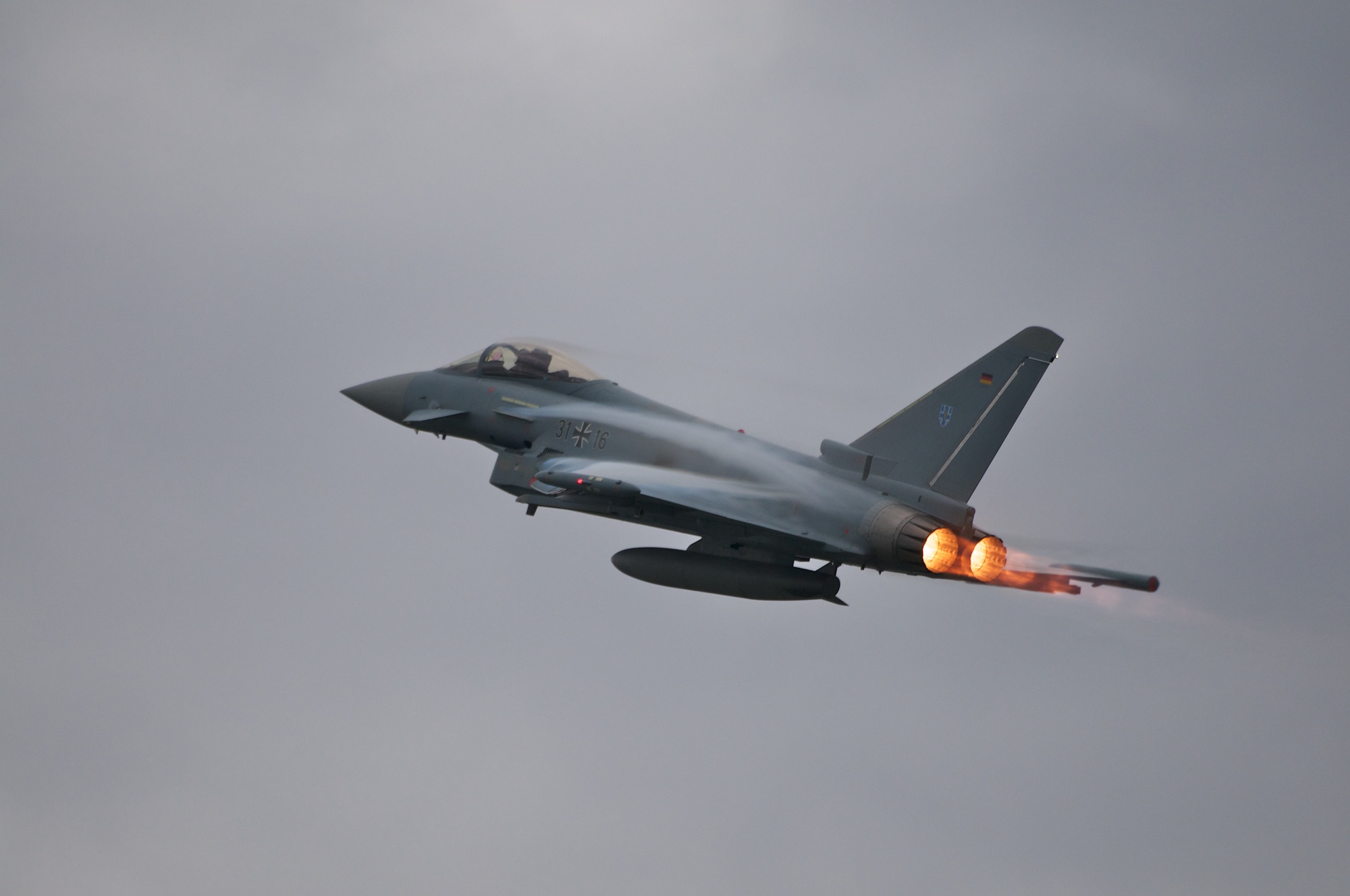

The Republic of Türkiye formally signed a substantial defence procurement agreement with the United Kingdom (hereinafter: UK) on 27 October 2025, for the acquisition of Eurofighter Typhoon fighter jets. This initial agreement, valued at approximately 9€ billion, secures 20 of the advanced European-built aircraft for the Turkish Air Force (Euronews; Al Jazeera). The procurement is viewed as a major strategic step for Türkiye to modernise its air power capabilities following its exclusion from the United States of America’s fifth-generation F-35 fighter jet program. This agreement solidifies the UK’s position as a key institutional partner in Türkiye’s defence industry strategy and sets the stage for further negotiations involving other Eurofighter consortium members regarding the full desired fleet size.
Details of the Initial Agreement and Procurement Strategy
The United Kingdom as Key Facilitator
The initial deal signed between Türkiye and the United Kingdom covers the first batch of the planned Eurofighter acquisition. This acquisition of 20 units represents an effort by the Turkish state to address the gap in its air force inventory resulting from the F-35 program exclusion. The United States of America had excluded Türkiye from the F-35 program due to its purchase of the S-400 air defence system from the Russian Federation. The Eurofighter Typhoon, a fourth-generation multi-role aircraft, is therefore positioned as a viable and immediately available alternative for maintaining the operational capacity of the Turkish Air Force (Eurasian Times).
The significance of the UK’s role in finalising this initial 9€ billion deal was highlighted by high-level political engagement. Reuters reported that Keir Starmer, the leader of the UK’s opposition party, visited Türkiye to meet with the President and discuss the Eurofighter sale, underscoring the political priority the UK places on the defence partnership. This high-level dialogue served to strengthen the institutional relationship necessary for advancing the complex procurement process involving a European consortium.
Pursuit of Expanded Eurofighter Fleet
The 20 jets secured from the UK represent only a portion of the Turkish state’s overall goal. Türkiye is actively seeking to acquire a total of 60 Eurofighter jets. This requires the procurement of an additional 40 units, for which the government is in negotiations to purchase second-hand units from the fleet of Qatar (Middle East Eye). The successful acquisition of these additional aircraft is dependent upon receiving unanimous approval from all four member states of the Eurofighter consortium: the United Kingdom, Germany, Italy and Spain.
Consortium Obstacles and Geopolitical Context
The finalisation of the Türkiye Eurofighter fleet acquisition faces substantial geopolitical hurdles, primarily stemming from within the manufacturing consortium itself. While the United Kingdom and Spain have been generally supportive of the sale, the Republic of Germany has historically expressed opposition to the transfer of military equipment to Türkiye. Euractiv noted that Germany’s previous objections have stalled similar defence deals, and the need for unanimous consent from all four consortium members means that Germany’s position remains critical to the transfer of the jets, including the second-hand units from Qatar. The negotiations must therefore navigate not only the commercial terms of the sale but also the complexities of intra-European political and security cooperation.
This acquisition strategy is intrinsically linked to Türkiye’s broader domestic defence industrial objectives. The procurement of the Eurofighter is intended to serve as a bridge to the full operational capability of the domestically developed KAAN national fighter jet program. The Eurofighter platform offers the Turkish Air Force an advanced jet capability while domestic industry efforts focus on completing the KAAN project.
This strategic balancing act between foreign procurement and domestic production is a central element of the Turkish state’s long-term defence planning. For a more detailed discussion on the domestic challenges associated with this long-term strategy, one can consult Essydo Magazine’s analysis regarding the challenges of the domestic program, specifically the Debate Over KAAN Fighter Jet Engine. The procurement of the Eurofighter fleet provides an operational solution that mitigates the risks associated with potential delays or challenges in the KAAN program’s development timeline.
Concluding Forecast
The signing of the initial Türkiye Eurofighter deal with the United Kingdom is a development with dual effect. On the one hand, the procurement of new fighter jets will strengthen Türkiye’s military, which is already among the strongest in the world.
On the other hand, it shows that the domestic innovation and production capacities are still behind, making manpower the Turkish army’s main source of power. The immediate institutional challenges lie in the transition to domestic production, but with an extended tech stack of foreign technologies. In the short term, it will be important to secure unanimous approval from the Eurofighter consortium for the remaining 40 jets, particularly from Germany. This negotiation will test the limits of defence cooperation and political influence within European institutions.
If Türkiye successfully navigates the political obstacles and secures the full fleet, the resulting Türkiye Eurofighter acquisition would immediately bolster the nation’s air power and provide a robust operational bridge to the KAAN program. This trajectory would solidify Türkiye’s strategic autonomy in defence policy. Conversely, a failure to secure the additional jets due to a German veto would compel the Turkish state to seek alternative, potentially non-European, solutions, which could introduce new geopolitical complications into its defence partnerships. The political manoeuvring surrounding the next 40 aircraft will be a useful optimisation of the Turkish Air Force’s operational readiness in the next decade.