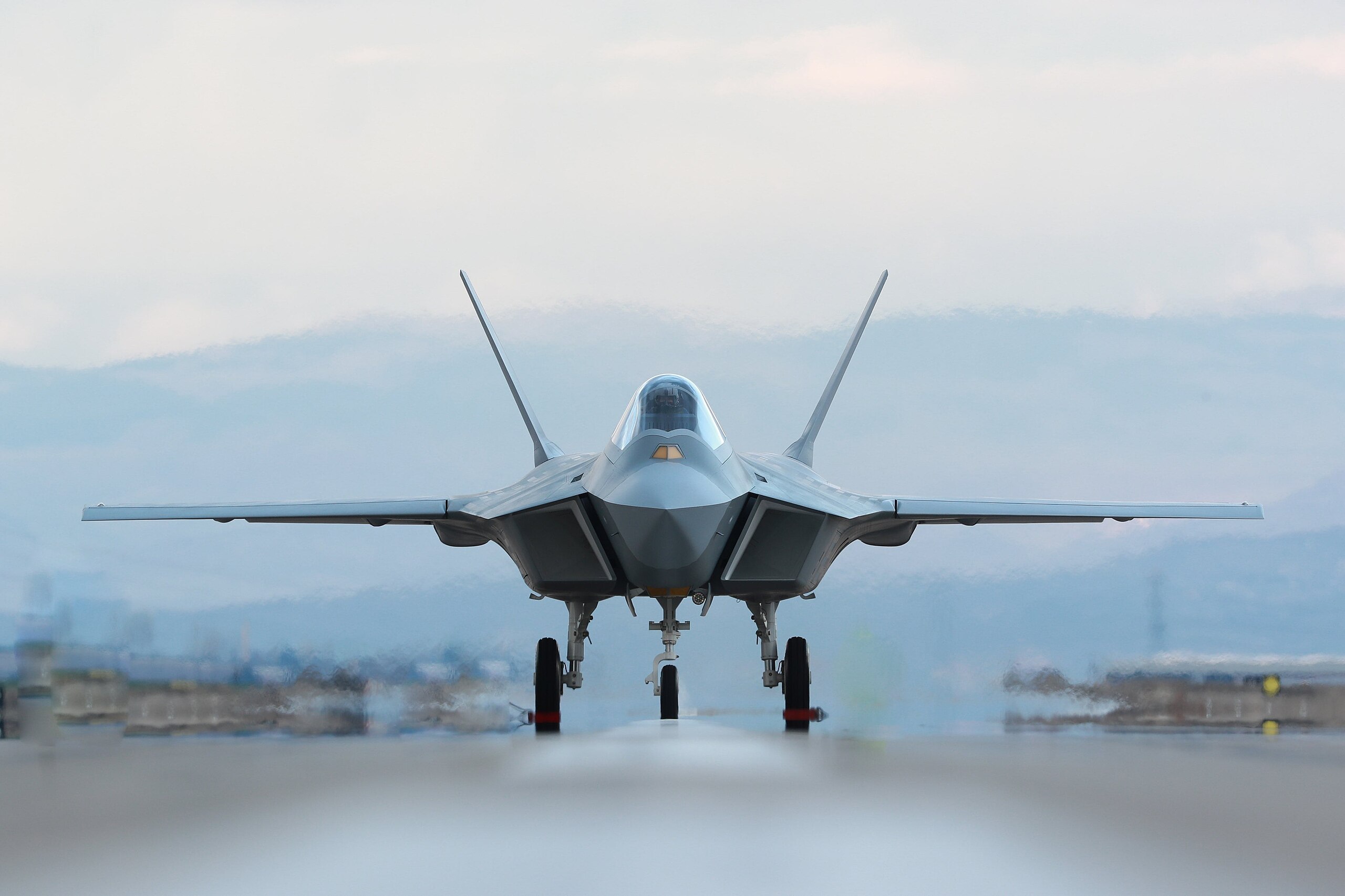

A high-level public debate has erupted in Türkiye regarding the engine of the KAAN, our nation’s ambitious fifth-generation national combat aircraft. The controversy was triggered by conflicting statements from the Foreign Minister and the head of the nation’s defence industry, bringing the project’s reliance on foreign technology and the long-term goal of developing a domestic engine into sharp focus. The discussion underscores the immense strategic and technological challenges involved in creating a cutting-edge combat aircraft.
The Spark: Conflicting Official Statements
The public debate was initiated by comments attributed to the Turkish Minister of Foreign Affairs, Hakan Fidan. During a public meeting, the Foreign Minister reportedly stated that the production of the KAAN had been halted. He linked this alleged stoppage to an issue with sourcing engines, specifically referencing a failure to procure necessary power plants from Ukraine due to the ongoing war.
This assertion was promptly and publicly corrected by Haluk Görgün, the President of the Turkish Presidency of Defence Industries (hereinafter: SSB). Görgün clarified that the KAAN project was proceeding according to its established schedule. He confirmed that the initial prototypes of the KAAN fighter jet are being, and will continue to be, powered by the F110 engine, which is produced by a North American company. He stated that there was no issue with the supply of these engines for the prototype phase and that a contract was in place for their delivery.
The Two-Track Engine Strategy
The differing statements highlight the project’s dual-track engine strategy, which is a common practice in complex aerospace development. For the initial development and prototype testing phase of the KAAN, Türkiye is utilising a proven, existing engine: the F110. This engine also powers the F-16 fighters that form an important part of the Turkish Air Force, making it a logical and low-risk choice for testing the new aircraft’s airframe, flight characteristics and advanced avionics systems.
In parallel with the prototype development, however, Türkiye is heavily invested in a long-term project to design, develop and produce its own domestic engine for the KAAN. This is considered the most critical element for the project’s ultimate success. The reliance on a foreign engine for the prototypes is a temporary measure, a bridge to the final goal of a fully sovereign and national fighter jet. However, the controversy arose because this strategic approach was not communicated when the KAAN was presented last year. The public perception was that the fighter jet was 100% domestically produced. Accordingly, the questions arise whether the claims of reliance on foreign technology really just remain a “temporary measure”.
The Strategic Imperative for a Domestic Engine
The discussion is focused on the engine for the future serial production of the KAAN. Using a foreign-made engine for the final production version would mean a dependency on the engine-producing nation for parts and maintenance. It would also mean that sales of the aircraft to other states could be blocked. Especially with Türkiye’s growing importance in global conflicts and the foreign policy of the Sub-Anatolian region, any dependencies on other states would mean compromises in policy effectiveness
A domestically produced engine would allow Türkiye to operate, maintain and export the KAAN without foreign approval. For this reason, the domestic engine program is a priority. The topic has also been discussed by opposition politicians who have mentioned the possibility of an embargo on the F110 engines. Another risk could also be the sabotage or surveillance of the engines through hidden technologies. On the positive side, a domestically produced engine would also enable new economic ties with states that are interested in Turkish military technology. All of these factors underline the importance of domestically produced jet engines.
Concluding Forecast
The KAAN project will continue its development and flight-testing phase using the readily available engines, as clarified by defence officials. The central and most critical challenge remains the successful and timely development of a domestic engine. Since the communication of these details has not been transparent with the launch of the KAAN jet last year, however, there might be some mistrust in the general public regarding the true commitment to full domestic production.
Therefore, it is very important that the progress of the development is communicated transparently without endangering national safety. Also, it is important that Türkiye’s defence officials learn from this communicative and planning pitfall. In the future, the goal must be to proactively manufacture core components, like engines and chips, domestically at a higher standard than the regular market offers at the time, instead of creating further dependencies on technologies that others control and can downgrade for the use in foreign states.