
A fragile ceasefire between the nations of Afghanistan and Pakistan is under significant strain following military strikes in the Kunar province of eastern Afghanistan on 27 April 2026. According to a spokesperson for the Taliban, Hamdullah Fitrat, missiles and mortars targeted civilian residences and the Sayed Jamaluddin Afghan University in the provincial capital, Asadabad. The government of Afghanistan has officially condemned the incident as an unforgivable war crime, reporting at least seven fatalities and 85 injuries, including students and faculty members.
Impact on Sayed Jamaluddin Afghan University
According to the Afghan Ministry of Higher Education, the strike on the Sayed Jamaluddin Afghan University occurred at approximately 2:00 p.m. local time, causing extensive damage to the Faculty of Education and the surrounding campus. Najibullah Hanafi, the Kunar Information and Culture Director, stated that roughly 30 students and professors were among those injured in the assault. Deputy Spokesperson Hamdullah Fitrat categorised the targeting of academic institutions as an unforgivable war crime and a provocative act of “barbarity”.
The Ministry of Information and Broadcasting of Pakistan has dismissed the reports of a strike on the university as a lie. In an official statement, the Pakistani government maintained that its military operations are “precise and intelligence-based” and targeted only militant infrastructure. Islamabad further alleged that the claims are an attempt to garner international sympathy and obscure the support provided by the Afghan Taliban to the Tehreek-e-Taliban Pakistan (hereinafter: TTP), a group that has conducted numerous attacks within the Pakistani state.
Failure of the China-Mediated Ceasefire
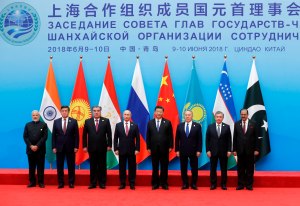
The strikes mark the first major violent incident since peace talks were mediated by China in Urumqi earlier in April 2026. During those negotiations, both states had agreed to a temporary cessation of hostilities and to explore a comprehensive solution to the border conflict. This latest escalation follows a period of open war declared by Pakistan in February 2026, which included a deadly airstrike on a drug rehabilitation centre in Kabul that reportedly killed over 400 people in March.
Alongside the Chinese government, several other states – including the United Arab Emirates, Saudi Arabia, Qatar and Türkiye – have been involved in mediation efforts to stabilise the border. According to Al Jazeera, the Islamic Republic of Iran has also offered to facilitate dialogue between Afghanistan and Pakistan, with Foreign Minister Abbas Araghchi expressing Tehran’s readiness to assist in resolving differences. Despite these multi-state efforts, the persistent cross-border skirmishes suggest that the underlying security concerns of both governments remain unaddressed.
Humanitarian and Displacement Crisis
The ongoing conflict between the two South Asian nations has resulted in significant societal disruption. According to the United Nations Office for the Coordination of Humanitarian Affairs (hereinafter: OCHA), the fighting has displaced approximately 94.000 people and resulted in hundreds of civilian deaths over the past year. The United Nations has warned that the targeting of civilian infrastructure, such as the recent strike in Afghanistan’s Kunar, further exacerbates the humanitarian crisis and undermines the principles of international law.
Concluding Outlook
The designation of the Kunar strikes as an unforgivable war crime by the Afghan administration signals a hardening of the diplomatic stance of Afghanistan, likely leading to a collapse of the current mediation framework. The primary institutional challenge in this conflict is the fundamental lack of consensus regarding the presence of non-state actors like the TTP on Afghan soil. While Islamabad views cross-border strikes as a necessary defensive measure against terror infrastructure, the Taliban government perceives these actions as direct violations of sovereignty and international humanitarian law.
The likely development for the region involves a return to high-intensity border skirmishes as the fragile Urumqi agreement loses its operational viability. Given the stated commitment of the Pakistani state to continue military operations until its security demands are met, the frequency of intelligence-based strikes is expected to increase. Conversely, the Afghan state is likely to retaliate with its own cross-border artillery, further entrenching a cycle of violence that international mediators have thus far failed to break. Consequently, the prospect of a permanent settlement remains remote, with the civilian population in the border provinces bearing the continued cost of the strategic deadlock between the two states.