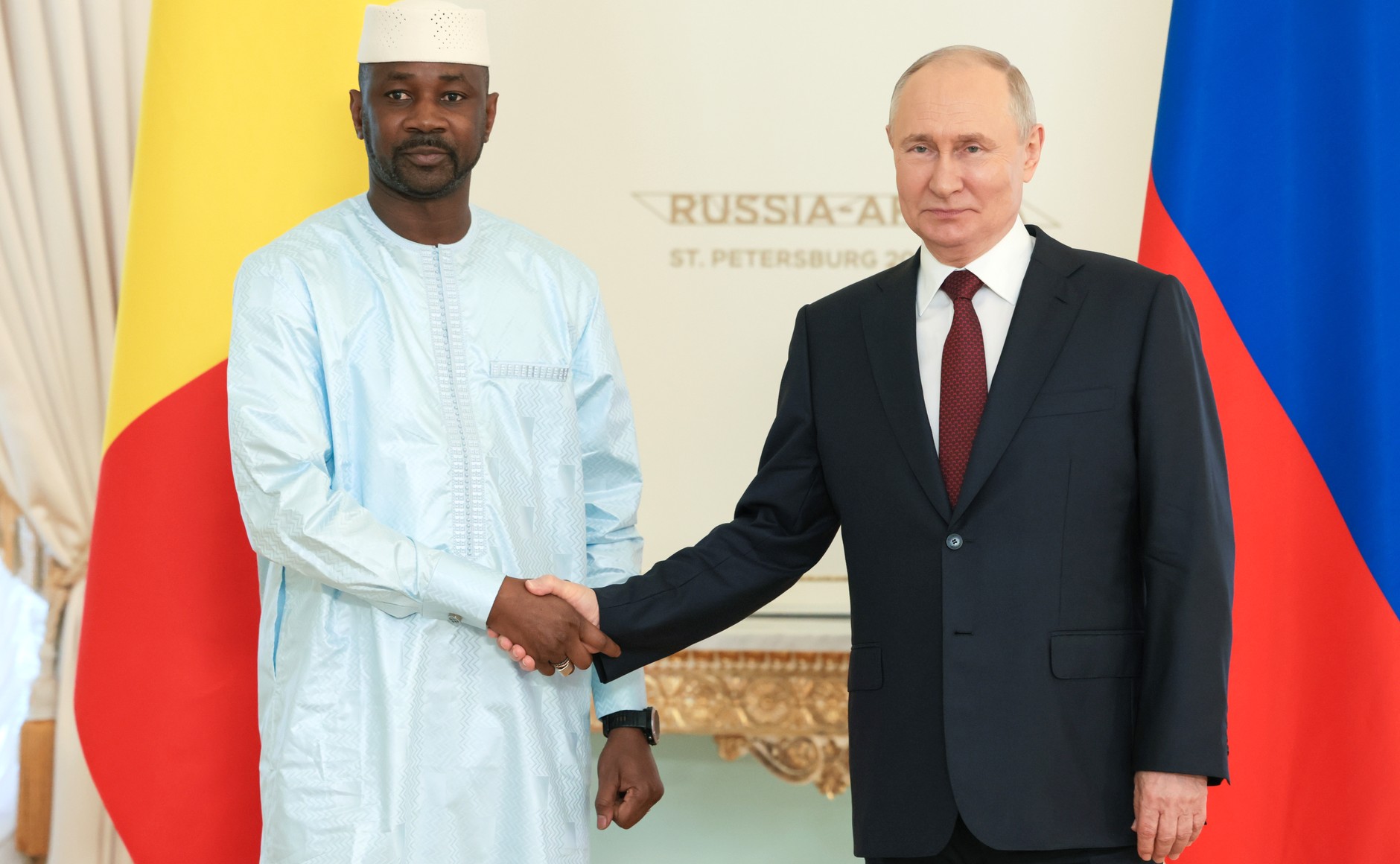

The leader of the military government of Mali, Colonel Assimi Goita, made his first public appearance on 28 April 2026 following a weekend of coordinated insurgent attacks across the West African nation. The Africa Corps, a paramilitary organisation linked to the Russian Federation, stated that it successfully thwarted what it described as a large-scale coup attempt targeting the presidential palace and key military infrastructure in the capital, Bamako. While the state military claims the situation is under control, the offensive resulted in the death of the Malian Defence Minister, Sadio Camara.
Escalation of the Security Crisis in the Sahel
According to a statement released via Telegram by the Africa Corps, between 10.000 and 12.000 fighters launched a synchronised assault on 25 April 2026. The offensive targeted strategic sites in Bamako, the garrison town of Kati, and northern urban centres including Gao, Kidal and Sévaré. The Russian-linked force alleged that the operation was intended to seize the presidential palace and a major munitions depot. The Africa Corps reported that its units killed more than 1.000 fighters to restore order, although these figures have not been independently verified.
Colonel Assimi Goita resurfaced on 28 April 2026, meeting with the Russian Ambassador to Mali, Igor Gromyko, in Bamako. During the meeting, Ambassador Gromyko reaffirmed the commitment of the Russian Federation to support the Malian state in its counter-terrorism efforts. Goita also visited a hospital to meet personnel wounded during the weekend engagements and expressed condolences for the death of Minister Sadio Camara, a key figure who had received military training in the Russian Federation.
Regional Insurgent Gains and Shifts
Despite the reported thwarting of the coup in the capital, insurgent groups have made gains in the northern desert regions. The Al-Qaeda-affiliated Jama’at Nusrat al-Islam wal-Muslimin (hereinafter: JNIM) and Tuareg-dominated separatist groups successfully pushed government forces and Africa Corps units out of the strategically significant northern town of Kidal. Furthermore, fighters from the Islamic State in the Sahel Province (hereinafter: ISSP) were reported to have entered the northeastern town of Menaka on 28 April. A spokesperson for JNIM, Bina Diarra, has since threatened to implement a total siege of Bamako, claiming the city is currently “closed off from all sides”.
Concluding Outlook
The survival of the Goita administration following the recent offensive highlights the critical dependence of the Malian state on external security guarantees provided by the Africa Corps. However, the loss of Kidal and the death of the Defence Minister suggest that the current security framework – predominantly reliant on foreign paramilitary intervention – is struggling to maintain territorial integrity against a multi- front insurgency.
As presented in our recent analysis, “Middle Class: A Driver for Political Change”, lasting political and institutional stability must develop from within the nation itself. In the Malian context, the current reliance on external military actors to preserve state structures bypasses the essential requirement for internal societal cohesion. Lasting instability is therefore to be expected in the Sahel as long as the state focuses solely on military survivalism rather than the cultivation of a sustainable middle-class foundation.
Without a robust and economically independent middle class to anchor political legitimacy and provide a buffer against radicalisation, the nation will likely remain caught in a cycle of external dependency and internal fragmentation. Consequently, while the Africa Corps may have prevented a collapse in the immediate term, the structural deficits of the West African nation suggest that further coup attempts and territorial losses are probable until an internal socio-economic transition occurs.