
The government of Türkiye has formally submitted its 2026 Central Government Budget Law Proposal to the presidency of the Grand National Assembly of Türkiye (hereinafter: TBMM). The proposal, announced by Vice President Cevdet Yılmaz, outlines the government’s fiscal plans and economic projections for the year. Türkiye’s 2026 budget projects total expenditures of 18,929 trillion Turkish Lira against revenues of 16,216 trillion Turkish Lira. The government also forecasts an economic growth rate of 3,8% for the same period, setting the stage for parliamentary debates on the nation’s economic direction.
A Detailed Look at the Fiscal Plan
Key Figures and Economic Projections
According to statements from Vice President Cevdet Yılmaz reported by Turkish news outlet Ekonomim, Türkiye’s 2026 budget is built on specific financial pillars. The government anticipates generating 16,216 trillion Turkish Lira in revenue. On the spending side, total expenditures are set at 18,929 trillion Turkish Lira. These figures result in a projected budget deficit of 2,713 trillion Turkish Lira for the fiscal year.
Alongside these fiscal targets, the government has set a key macroeconomic goal. As reported by Investing.com, Vice President Yılmaz stated that the Turkish economy is projected to grow by 3,8% in 2026. This growth forecast is a central assumption underpinning the budget’s revenue and expenditure calculations and will be a focal point of economic policy discussions. The government’s strategy appears to balance stimulating economic activity with the need to manage public finances. With the ongoing economic crisis, public sentiment is worsening by the day, which is why the fiscal year 2026 needs to bring some relief for the growing economic bubble.
The Legislative Path Forward
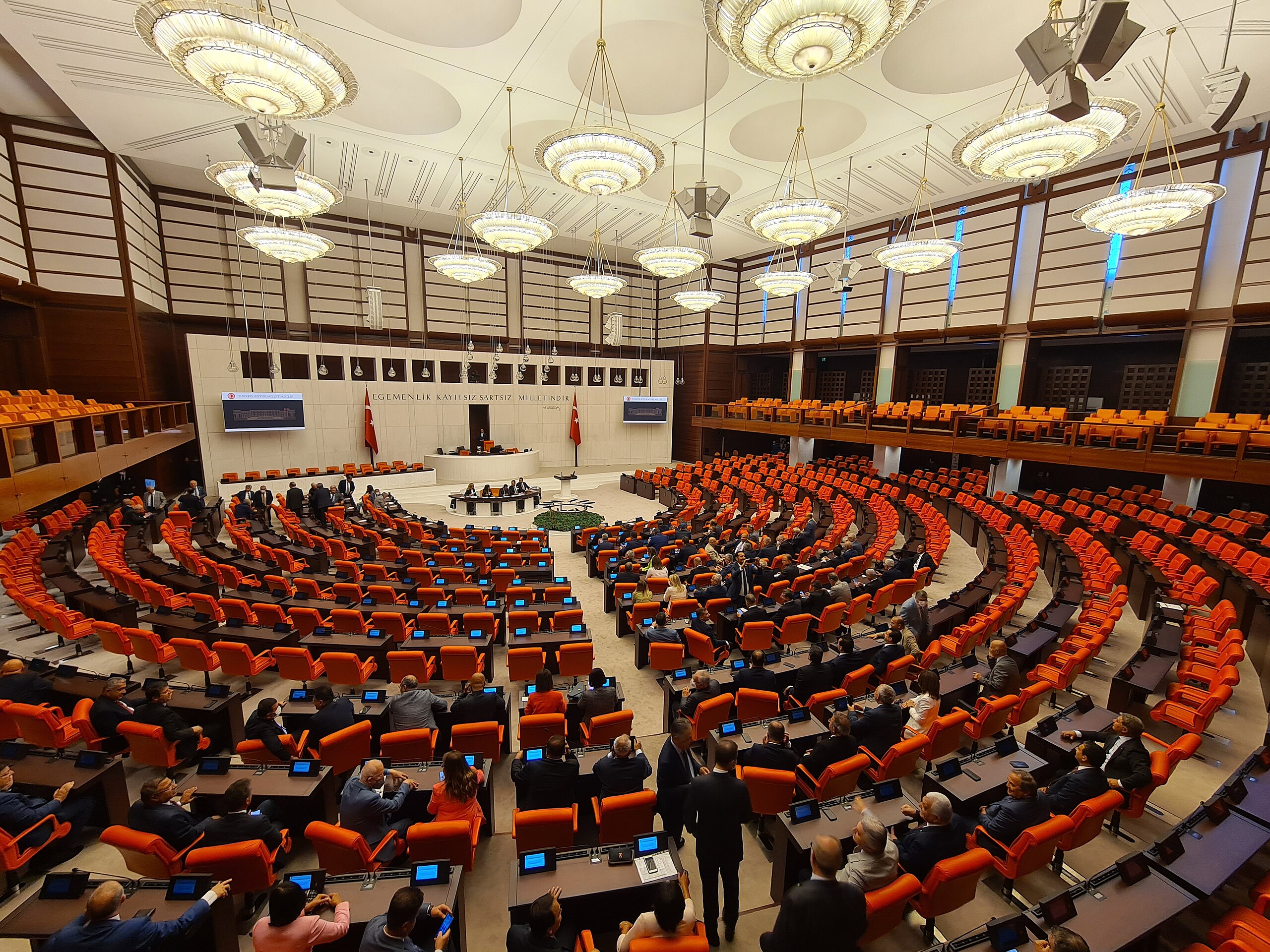
The submission of the budget proposal to the TBMM marks the beginning of the formal legislative process. The Anadolu Agency confirmed that the draft law is now in the hands of the parliament’s presidency. Over the coming weeks, parliamentary committees will scrutinise the details of the budget, followed by debates and a vote in the general assembly. This process will involve detailed discussions among political parties regarding spending priorities, tax policies and the overall economic strategy laid out in the document. The final form of Türkiye’s 2026 budget will be determined by the outcome of these legislative deliberations.
Concluding Forecast/Outlook
The submission of Türkiye’s 2026 budget proposal initiates a critical period of political and economic evaluation. It is likely that there will be a relatively smooth passage of the budget through the TBMM, with the governing coalition successfully defending its key provisions. In this case, the government would secure a mandate to implement its fiscal agenda. The primary challenge would then shift to execution: meeting the 3,8% growth target while managing the projected deficit, external economic pressures and the massive inflation. Success would depend heavily on the government’s fiscal discipline, taxation of politically connected industrials and the stability of both domestic and international economic conditions. A failure to meet revenue targets or control spending could widen the deficit, necessitating corrective measures later in the year.