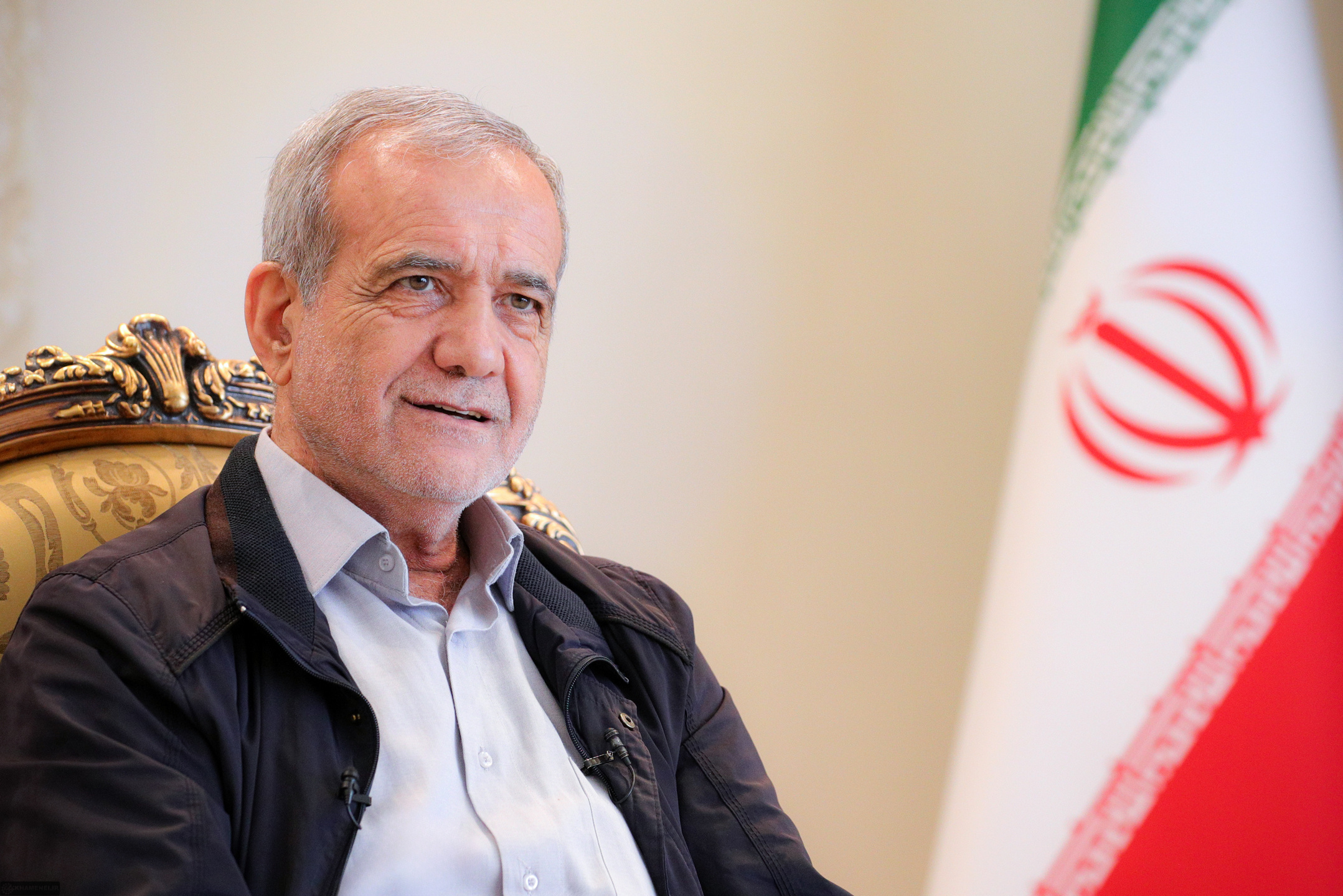

The President of Iran, Masoud Pezeshkian, has used his address to the United Nations General Assembly (hereinafter: UNGA) to state that his nation will not develop nuclear weapons. This declaration, made in New York, directly addresses the international focus on the Iran nuclear program and occurs within the context of sustained economic sanctions against the state. Speeches at the UNGA are a primary vehicle for governments to formally communicate their policy positions to a global audience. President Pezeshkian’s statements are therefore being examined for their potential impact on future diplomatic engagement and economic relations, particularly in connection with the technical findings of international monitoring agencies.
Presidential Address at the United Nations
According to Al Jazeera and Iran International, the President of Iran, Masoud Pezeshkian, stated that his nation will never seek to build a nuclear bomb. Speaking at the 80th session of the UNGA in New York on 24 September 2025, President Pezeshkian described nuclear weapons as “a crime against humanity”. He asserted that Iran’s official position, based on a religious decree by its Supreme Leader, prohibits the development and use of weapons of mass destruction. While disavowing any military dimension, he concurrently affirmed Iran’s intention to pursue its right to peaceful nuclear energy for purposes such as power generation and medical isotopes, consistent with the Nuclear Non-Proliferation Treaty. His stance is consistent with Iran’s deep cultural and political history.
Economic Aims and Sanctions
The speech also connected Iran’s diplomatic posture to its economic situation. According to Iran International, President Pezeshkian’s address is part of an effort to secure the easing of international sanctions that have affected the Iranian economy. The stated goal is to facilitate Iran’s reintegration into the global economy. President Pezeshkian’s government has identified economic revitalisation as a central policy objective. The declaration at the UNGA is presented as a measure to build confidence and reduce the justification for the existing sanctions architecture. This follows a period where Iran has increased its uranium enrichment activities, a development that has been a source of expressed concern for international monitoring bodies.
International Context and Regional Relations
The statements regarding the Iran nuclear program were made within a specific international and regional context. According to TRT World, President Pezeshkian also used his address to call for improved relations with neighbouring states, including a proposal for a regional security and cooperation forum. This diplomatic outreach is happening at the same time as the technical realities of the Iran nuclear program are being monitored by the International Atomic Energy Agency (hereinafter: IAEA). Iran International notes that some European and neo-European states, as well as Israel, have previously expressed skepticism regarding Iran’s declarations. The verification of Iran’s commitments by the IAEA remains a central element of any future diplomatic process.
Outlook
President Pezeshkian’s UNGA speech strengthens the position of his administration, but its effect on international policy will depend on the willingness of other nations to ease restrictions on Iran. The declaration against nuclear weapons, while explicit, is unlikely to alter the international stance on sanctions without accompanying technical steps that can be independently verified by the IAEA. The institutional challenges remain the gap between Iran’s stated intentions and the technical capabilities it has developed, and the negative diplomatic stance by other nations towards Iran.
Two primary scenarios can be projected. The first is a pathway toward renewed formal negotiations. In this scenario, the speech is treated as an opening for dialogue, prompting diplomatic engagement aimed at translating the verbal commitment into a verifiable agreement. This would likely involve Iran accepting enhanced monitoring or limitations on its enrichment activities in exchange for a structured, phased removal of economic sanctions. The success of this path depends on the willingness of all parties to re-enter a negotiation process and treat Iran as an equal diplomatic partner.
The second scenario is a continuation of the current political and economic status quo. If the declaration is not followed by substantive changes to the Iran nuclear program that are observable by the IAEA, it may be dismissed by other states as a rhetorical exercise. In this case, the sanctions would likely remain in place. The outcome hinges on whether the new Iranian government is prepared to offer further concessions on transparency and program scope that go beyond the verbal assurances made at the UNGA.