In 2020, we found that multipolar global, political orders are much more beneficial for international and national development than unipolar and bipolar global orders. Within the devletist framework, which emerged in 2022, this notion is further supported through analysis at much deeper levels than merely the power-political surface. Today, we can observe several trends at the global stage that lead to the conclusion that the international landscape is moving towards this preferred mode of international political structure: multipolarity. Within this shift of global power, Türkiye emerged as a considerable actor in various political realms. Even though the focus of global discourse is often on Brasil, Russia, India, China and South Africa (hence the name of the intergovernmental organisation BRICS), Türkiye’s role in international politics has become more important over the past ten years and gains more attention in professional and popular political discourse. When examining the role of Türkiye in international politics, it is important to move beyond the very simplistic view of its geographic uniqueness. Especially in terms of diplomacy, defence technology and cultural influence, Türkiye is combining brings important properties to the international stage that hold much potential for broader developmental impacts in international politics. In this article, we are going to map Türkiye’s position and role within the global political context, as well as give some strategic orientation for policymakers in terms of strengthening the nation’s course to aid the global shift towards a more multipolar world.
Turkish Foreign Policy in the Syrian Civil War
Türkiye’s 20th century was mixed in the truest sense. The old nation transformed from an empire into a republic during the First World War, safeguarded its neutrality during the Second World War, participated in the Korean War in the 1950s, joined the North Atlantic Treaty Organisation (hereinafter: NATO), became a point of tension in the Cold War, upheld its obligation to defend Cyprus in the 1970s and fought transnational terrorism from the 1980s onwards. Due to internal struggles and economic crises, Türkiye’s activity in international politics was rather low from the mid-1980s until the mid-2010s. During this period, the main themes of Turkish foreign policy were primarily limited to economic interaction with other nations and intergovernmental organisations, as well as with the European Union (hereinafter: the EU) with whom accession talks were entertained in course of a former policy strategy that aimed for European integration. With the intensification of the Syrian Civil War from 2011 onwards, Türkiye re-emerged as a more proactive actor on the international political stage. Many Syrians fled the Civil War through Türkiye, leading to a demographic shift within the nation. Naturally, Türkiye’s interest of a solution to the conflict in Syria rose quickly, impacting its foreign policy. Since a considerable amount of Syrians also moved to European nations, creating smaller demographic changes within those societies, the EU developed a similar interest as Türkiye. Due to the geographic position of Türkiye, Syrians who aimed for Europe had to pass through Anatolian lands, leading to them being treated as bargaining subjects within Türkiye-EU relations during the 2010s, reactivating Türkiye’s involvement in larger international political affairs.
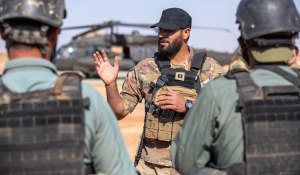
Although this re-emergence was rather reactive, Türkiye quickly adapted to the situation by shifts in foreign policy strategy that became more proactive. Between 2016 and 2019, Türkiye successfully led three operations (Operation Euphrates Shield, 24 August 2016 – 29 March 2017; Operation Olive Branch, 20 January – 24 March 2018; Operation Peace Spring, 9–17 October 2019) in Northern Syria to establish safe zones for the civil population and support the resolution of the conflict. Since October 2017 to this day, the Idlib Operation still continues as a long-term plan to protect the Turkish population of North-Western Syria. During this time, Türkiye closely cooperated with Russia and the United States of America (hereinafter: the USA) which supported different factions in the conflict with asymmetric success. As the two nations are farther away from Syria, giving Türkiye more military flexibility, high diplomatic involvement was inevitable. This placed Türkiye in a very important, but also delicate, diplomatic spot. There were several disagreements, as well as moments of cooperation, with both nations. Tensions especially rose when two Russian jets were shot down by Türkiye in 2015 due to a breach of Turkish airspace. In 2016, the Russian ambassador to Türkiye was assassinated in Ankara. Later, it was found that the individuals involved in those incidents were part of an terror network based in the USA, suggesting North American intelligence involvement.
Türkiye in the Israel and Ukraine Wars
In the aftermath of the civil war in Syria, the following and ongoing offensive of Israel into Syrian lands poses a significantly security risk for Türkiye. With it controlling parts of Northern Syria around Idlib and Israel controlling the Southern parts of the struggling nation, the tensions between those two nations are rising after years of neutral relations. A crucial point here is Israels expressed goal to fully control Syria and its cooperation with Kurdish terror organisations which are also active in Türkiye. While the course of Turkish foreign policy does not include territorial expansions into Syria beyond the Idlib region, Isreal’s territorial ambitions naturally call for diplomatic action and increased border security. Hence, since the beginning of 2025, rhetorical moves against each other raised questions about potential future conflicts. With Türkiye’s increased standing in the region and strong military, as we will see later, Turkish foreign policy has adapted a more assertive tone even against nations like Israel who enjoy the unconditional backing of the USA and EU.
Again finding its starting point in the Syrian Civil War, Turkish foreign policy enjoyed an increasingly positive international reputation which was carried into the Russian invasion of Ukraine in 2022. From the beginning of the conflict, Türkiye positioned itself as a power between those two conflicting parties. On the one side, Türkiye was keen on maintaining friendly relations with Russia, understanding the motives of the military operation by Russia. On the other side, Türkiye also understood the defensive situation of Ukraine, providing it with high-tech weaponry. Türkiye was able to bring Russian and Ukrainian delegates together as early as March 2022, just one month after the conflict began, achieving concessions from both parties to further dialogue. Most recently, both sides’ delegate came together in İstanbul in May 2025. Although the latest talks did not produce tangible results, this meeting underlined the trust Türkiye enjoys in the diplomatic realm.
Defence Industry and Normativity
All of the above, were primarily carried by two very important factors. First, it was the Turkish defence industry that was heavily expanded and made the Turkish army one of the most advanced armies in the world, next to being also the oldest standing public institution in the world. Although Türkiye’s strategic plan to reach military autarky was crafted in the mid-1970s, it was not until the beginning of the 2010s that this was seen and felt globally. The coup attempt in 2016 further accelerated military spending and research and development were bumped up to not only catch up with the global market but to surpass it. Türkiye became the third nation to develop unmanned combat aerial vehicles (hereinafter: UCAV) and has maintained its position among the top three in quality with a broad fleet of different UCAVs. Today, military exports are above 7$ billion and the autarky level of its army is set to surpass the 80% mark this year. Türkiye’s military technology and production includes aircraft carrier, a wide range of military vehicles, tanks, helicopters, fighter jets, missile systems, submarines and an expanding fleet. By staying out of major conflicts and balancing diplomatic relations during times of crisis, Türkiye was able to build such a strong national defence without being target to foreign operations that result from mistrust. However, this is also due to another very important factor in Turkish foreign policy, namely: normativity.
Turkish military operations are historically characterised by strict compliance with international law and ethical standards of warfare. Surely, this is not universally applicable to all conflicts and wars conducted during its history of more than 2000 years. However, Turkish armies have always displayed a high degree of respect and care for the opponents’ civil population, compassion for opposing armies and also for the respective cultures when governing foreign lands in the aftermath of conflict. From Metehan (eng.: Modu) over the Ottoman Sultans to today’s modern military operations, Turkish troops have a track record of low civil casualties, desire to conclude peace agreements and non-intervention in the aftermath of concluded treaties. Accordingly, there are various records on Turkish warfare that underline this ethical behaviour in warfare, such as the “last gentlemen’s war” in the Battle of Gallipoli. The normative component of Turkish foreign policy goes hand in hand with the diplomatic approach outlined above. It becomes clear that the deterrence effect of the army may play a role in Turkish foreign policy, but the strong orientation at normative anchors is what helped Türkiye to build trust and reputation in the international sphere.
Strengthening Strengths: Normative Foreign Policy
Foreign policy may often seem to be a matter of material and financial strength because many nations heavily rely on those aspects to make an international impact. These factors, however, are subject to political constraints and conjunctural movements in nations’ life cycles. What sets Turkish foreign policy apart is the key element of normative policy strategy. It is something that can be preserved through all life and policy cycle stages of a nation as it is solely tied to the level of cultural consciousness of a nation. Surely, foreign public diplomacy can destroy normative bases of nations but as long as the society is shielded from those dynamics, the state, which is the mirror of the society, can further build on normativity as a key component of foreign policy, as well as all other policy fields. This is not only applicable to Türkiye but to all nations. However, in the Turkish context, we can see that the structure of Turkish norms and values is invaluable to the global diplomatic and power-political stage. Identifying this is important to deepen conscious policymaking by building on strengths. As a general governance principle: Focusing on strengths and perfecting those creates resources and venues to improve weaknesses more effectively and efficiently.
For Türkiye, it must be clear that the strengthening of societal and political understanding and consciousness of its norms and values is paramount in furthering political development. In the particular case of foreign policy, the positive effects are not only confined to the Turkish nation but are transnational. The more Turkish foreign policy strategy consciously integrates Turkish norms and values, the more will Türkiye be able to position itself as a top nation in international politics. To be more precise, Türkiye needs to move towards manifesting its cultural core in more detail and more explicitly so that these elements find their way into popular discourse. The state, then, needs to adapt its policy strategy in ways that not only incorporate the normative elements of Turkish culture but also explicitly link the strategic parts with normative elements linguistically. By doing so, society and state reinforcingly refine the core property of the Turkish nation (namely, normativity) and deepen its application at the policy level. This is in line with the devletist school of politics where nations, just like individuals, are bound to develop their special trait to reach maximum effectiveness and progress. In Türkiye’s case, the societal special trait is its deep and progressive normativity.
Conclusion: Opportunities and Challenges
Today, Türkiye continues to hold a considerable role within global politics, however, not so much as a couple of centuries ago. Over the past decades, the old nation has re-entered the international political stage in major conflicts and managed to produce highly positive impact in each of the cases outlined above. Its role can, and most likely will, be more important with further occasions where mediation and controlled armed operation is needed. However, this should not keep Türkiye from having proactive impact in times of peace. One of the major opportunities for global politics is Türkiye’s proactive involvement in developmental politics. There are already some programmes on the African continent but a comprehensive agenda to become a top actor in this field is yet to be developed. Another untapped opportunity is the expansion of international trade through Türkiye. Its underdeveloped visa-regime and weakness in the field of developing economic ties is something that must be improved to strengthen its position in global politics and produce positive effects beyond its nation’s borders. But next to those opportunities, there also some challenges that need to be addressed. Türkiye’s normative reputation is also under attack in other fields, such as the application of the rule of law, freedom of press, income distribution and economic justice, nepotism and moral decline through Westernisation and Arabisation. While the foundation of Turkish societal and political behaviour is generally grounded in strong norms and values, these negative effects erode the credibility of the Turkish nation and weaken Turkish norms and values. Such detrimental developments need to be addressed quickly and harshly to avoid losing the main cultural property that this nation should build on. When normativity is neglected and even harmed with these detrimental developments, it is much harder to regain than comparable situations with material aspects of a nation; capital and material can be regained quickly, but lost morality may drag a nation into demise. Therefore, it is important that Türkiye overcomes those issues and strengthens its cultural core property: normativity. If done correctly, its role in international politics will be consolidated and create transnational effects for the benefit of the global state community.