
Very recently, scholars, political professionals, economic actors and the general populations of big and mid-sized economies have observed a certain transition of power between nations and civilisations. Over the past 200 years, the Anglo-Franco-Germanic nations of Central Europe, including the neo-European nations on other continents, such as Canada, Australia, New Zealand and the United States of America, have risen to the most affluent nations in the world. With their economic might, they also achieved considerable societal success, even after many atrocious wars. Their reproductive capacity remained consistently high and was constantly expanded, spurring further development. Development was constantly slower in other nations. This is not only seen within the economic framework, though societal development is often facilitated with proper economic support. In other nations, the reproductive capacity remained behind that of the Europeans, and development was often oriented towards the European ideal. Lately, however, a shift of power seems to emerge. In this dynamic, which, if true, we are only seeing the very beginning today, the reproductive capacities of Europeans are declining while the reproductive capacities of Asian nations are increasing quite rapidly. The signs of this shift will be treated in the next section. After that, it will be looked at the causes of those shifts, finishing off with a look into the future.
Power is Moving
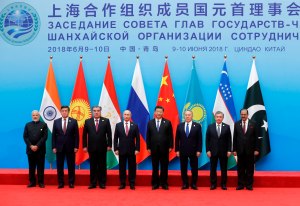
As we know from the devletist school, the existence of the concept of power is dependent on the existence of at least two actors; alone, we cannot measure the power of anything. Accordingly, power can be quantified with percentages theoretically, as the increase of power of one actor equals the decrease of power on other sides. When we examine the global shift of power within the contemporary, we can see that the main driver of this shift is not primarily the active decrease of power in Europe but the increasing development speed of Asian nations. Surely, there are also decadent dynamics in Europe that make this shift in global power apparent, but the pace of development elsewhere is a much more significant dynamic to observe. Especially, China, Russia, Türkiye, Saudi Arabia, India, Indonesia, Malaysia and South Korea display improving growth rates. Among the dimensions these nations develop more quickly is more economic production in quality. Whereas quantity was formerly the main driver of economic growth, the quality of products and services improved significantly over the past years. This alone reduces the gap between European and Asian products – they are becoming more and more equally valuable substitutes for European products. Producing a higher quality means that there are educational capacities that allow for such production. The more innovative potential is a direct display of improved education and human capital development. From here, it should also become clear that the administrative structures to enable such improvements in education have also developed. All of these developments lead to more high-end products being introduced in the Asian markets, which is also fostering global economic competition. Another sign of the power shift is that the share of European currencies, including the neo-European currency US-Dollar, as lead currencies are decreasing as global trade away from the European markets increases. International lending and price setting are less bound to the monetary policies of European nations, even though they remain somewhat dominant in the current setting. Finally, the Asian nations have developed highly sophisticated military capacities that are already on par with European technology and army power. Some Asian nations, like Türkiye, Russia and China, have developed their armies so much that they are considerably superior to those of European nations. All of these observations are quite supportive of the hypothesis that we are witnessing a shift of power from Europeans to Asians.
On the other side, there are also dynamics that make Europeans lose power, amplifying the effect of power transition. Primarily, the attractiveness and accessibility of European territory for less affluent people from all parts of the world divert the policy courses of European nations from expanding into high-end economic territory. Mostly, such migration is motivated by economic concerns. An influx of people with primarily economic concerns dilutes the overall economic and societal goal of rather normative policymaking. Instead of moving towards more innovation, the economy again moves towards production and consumption. This has societal implications as the demand for innovation is reduced, and with lower demand, the supply of innovation is reduced, too. In simple terms, immigration from significantly less affluent nations means that those immigrating people will first try to improve their standard of living. Within contemporary political systems, people will need to satisfy their material needs fully until innovation becomes the next viable driver of their behaviour. Imbalanced immigration can dilute the overall societal progress in the direction of innovation. However, this is not the only problem that the current political setup of European nations brings. As capital and power are overly valued, and since the political systems of those nations are purely designed to further those aspects, the Europeans themselves see a sharp decline in innovation and societal progress. It can be seen that European nations fall into decadence, even when we exclude the dilution effect of immigration. The acquired wealth is so extensive that it cannot uphold the innovative pace from roughly five decades ago. The marginal diminishing returns of further capital within such a situation have become so small that more effort almost results in loss.
Cause of the Global Power Shift
The easiest and most effective way to explain this global shift in power from Europe to Asia is to rise to the highest level of analysis: the macro-analytical level. This means that we should look at the most overarching dynamics there are to identify why power is moving so clearly between the civilisations. We have several reasons to do so. First, we are looking at a phenomenon that concerns many civilisations at once, and the concept of power includes one of the most fundamental resources there is. Analysing large-scale phenomena requires a wide view of things. Second, macro-level analysis has the advantage of reducing the complexity of answers. When trying to understand large-scale phenomena, there is a high risk of arriving at false conclusions when analysing at lower levels of analysis, as the interplay of variables within larger contexts cannot be covered reliably. On higher levels of analysis, we usually find very few causes for certain dynamics. From there, we can move through the meso- and micro-levels of analysis to get more accurate information about how certain phenomena function and how we can respond accordingly. In this case, the main cause for the global shift in power is the difference in life cycles between the civilisations. In essence, civilisations live through life cycles similar to those of individuals. In the end, civilisations are no more than one person consisting of the aggregate of many. Their behaviour and setup are much different a couple of centuries later than at their birth. When a new nation emerges, there are certain drivers that lead a people into the material consolidated form of a nation. Young nations are characterised by rapid change and growth. In culturally unstable nations, the first decades often also lead to extremely unstable developments, especially in international state conduct. More stable cultures tend to flourish most in their first two centuries after founding. After having reached certain levels of wealth and power, however, there is a lessened urgency to uphold the relative distance in terms of power and wealth towards competing nations. As this urgency decreases, the development rate also decreases. The Atatürk Paradox describes this phenomenon for intranational developments between societal groups.
We can see this development taking place between the European nations and Asian nations today. While European nations have reached the end of their first life cycles (with the exception of Italy and Greece, as old societies are in their second cycle) and slowly become decadent systems, the Asian nations are maturing out of their weak phases. Surely, the old Asian societies, such as the Turks and Chinese, are entering their second, or arguably third, upcycle, but these coincide with the general upwards trend in the Asian world, which is mostly within their first major upcycle. Their state behaviour that triggered the awareness that they are on the rise was motivated by the relative distance towards the Europeans some decades ago. Today, we can see that their need to close the power and wealth gap between them and the Europeans has resulted in their rise. On the other hand, European nations have slowed down because they perceived their relative distance in terms of power and wealth in comparison to the Asian world to be sufficient. It is not a deliberate decision to slow down development, but when the competitive urgency to maintain distance is reduced, those European nations became naturally outworked by the Asian nations with a heightened urgency to develop. While innovation rates drop in European nations (even though they still remain quite high), the innovation rates rise in Asia. The same can be applied to education, the military and the economy. Of course, we can identify micro-causes or symptoms if we zoom into things, but overarchingly viewed, the reason for the shift in global power is that the perceived power distance between Asia and Europe was two decades ago so large that Asian nations felt the urgency to close the gap in terms of power and wealth. Now, we can clearly see that a trend has set in, and if we look at the framework laid down in the Atatürk Paradox, we will quickly understand that Asian nations will surpass the European and neo-European nations within the next one or two centuries.