
Brazil has formally downgraded its diplomatic relations with Argentina to the chargé d’affaires level, Recalling its ambassador from Buenos Aires in what Brazilian media described on Tuesday as the strongest diplomatic response yet to the government of Argentian President Javier Milei. Brasília simultaneously requested the recall of Argentina’s ambassador to Brazil, reducing bilateral representation on both sides to the lower chargé d’affaires designation (Euronews).
The move follows weeks of sustained public criticism by President Milei directed at Brazilian President Luiz Inácio Lula Da Silva (hereinafter: Lula), including remarks in which Milei reportedly called Lula a thief. The downgrade signals a deterioration in relations between two of South America’s largest states and comes at a moment when Brazil is also managing a separate diplomatic dispute with the United States of America (hereinafter: USA).
Milei’s Criticism Of Lula And The Escalation Of The Bilateral Row
The deterioration in Brazil-Argentina diplomatic relations has been driven by a series of public statements by President Milei targeting Lula personally. According to Euronews, Milei’s remarks included characterising Lula as a thief; language that Brasília treated as incompatible with normal diplomatic conduct between neighbouring states. TRT World reported that the recall of Brazil’s ambassador followed weeks of such criticism, with the Brazilian government’s decision representing a calibrated escalation rather than a full severance of ties (TRT World). A chargé d’affaires designation maintains a functional diplomatic channel but signals a deliberate reduction in the political weight accorded to the bilateral relationship. Brasília’s simultaneous request for Argentina to recall its own ambassador indicates that the downgrade was applied symmetrically, not unilaterally.
The dispute between the two governments has developed over an extended period, with Milei’s administration making no apparent effort to moderate the tone of its public commentary on Lula or his government. Brazil’s decision to act at this point, rather than earlier, suggests that Brasília assessed a threshold had been crossed that required a formal diplomatic signal. The chargé d’affaires level is a recognised instrument in diplomatic practice for conveying displeasure without triggering the full rupture that a complete withdrawal of representation would entail. No indication emerged from the sources that either government had initiated direct talks to de-escalate the situation before the recall was announced.
USA Visa Revocation Adds A Second Diplomatic Front
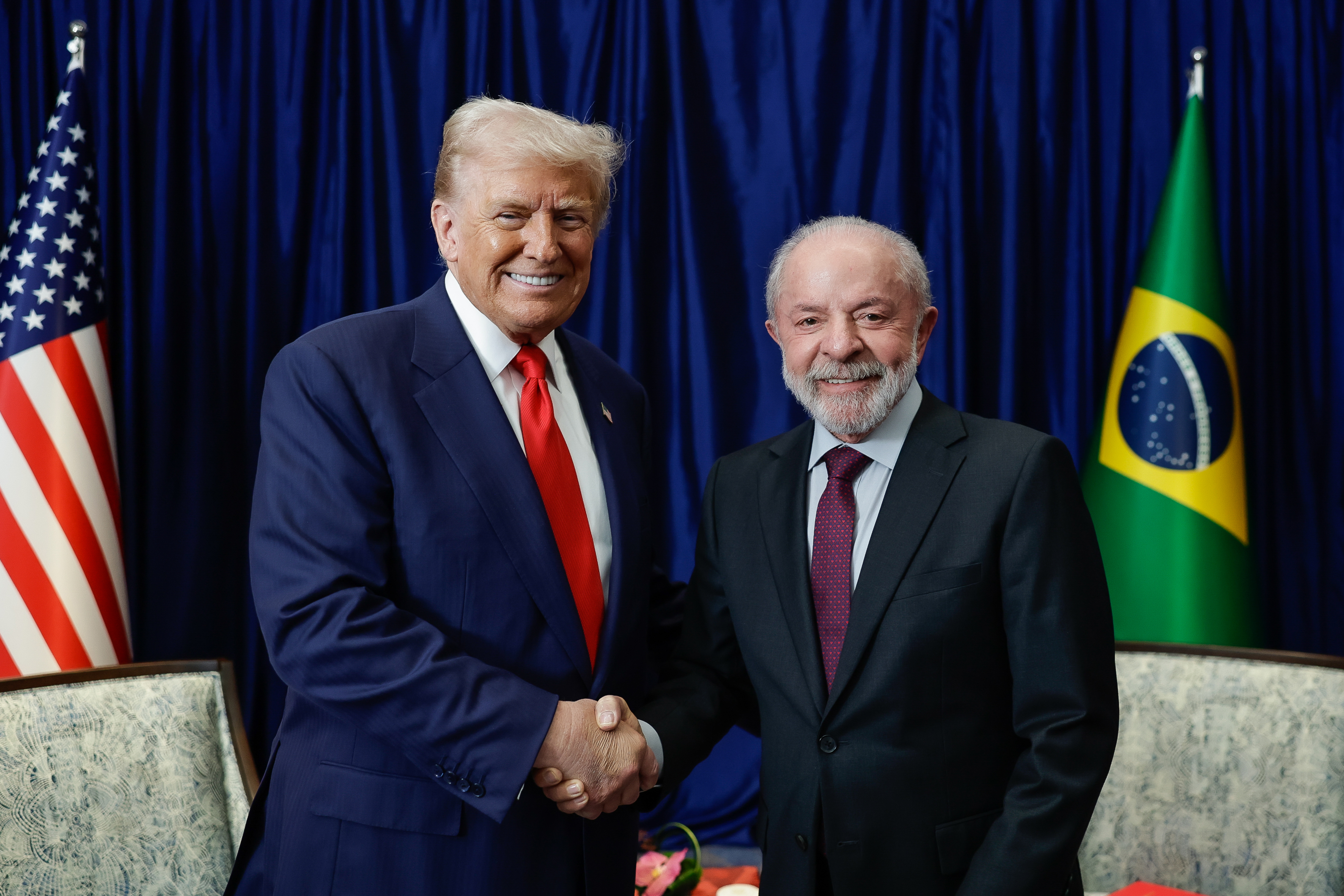
Separately, the USA’s government revoked the visa of Brazil’s ambassador, deepening a diplomatic rift that the Financial Times described as unfolding ahead of Brazil’s October elections (Financial Times). According to TRT World, the USA indicated they could reverse the visa revocation if Brazil accepted President Donald Trump’s choice of ambassadorial appointment to Brasília (TRT World). The condition attached to the potential reversal frames the dispute as one in which Washington is applying direct pressure on Brazil’s government over a personnel matter; namely, the acceptance of a President-nominated envoy. Brazil has not publicly confirmed whether it intends to comply with that condition.
The visa revocation targeting a sitting ambassador is an unusual diplomatic measure and one that carries symbolic weight beyond its immediate practical effect. It places Brasília in the position of managing simultaneous diplomatic friction with Buenos Aires and Washington at a moment of domestic political sensitivity. The Financial Times noted that the retaliatory move deepens the rift ahead of the South American nation’s October elections, a timing that adds a domestic political dimension to what are formally bilateral state-to-state disputes. The two fronts, the Argentina row and the USA dispute, are distinct in their origins but converge in their effect on Brazil’s international standing in the lead-up to the vote.
Electoral Context And Perceived Foreign Interference
Lula Versus Flávio Bolsonaro
Both diplomatic disputes are unfolding against the backdrop of Brazil’s approaching national elections, in which Lula faces a challenge from right-leaning Flávio Bolsonaro, according to The Japan Times. It was also reported that the twin disputes are being framed in Brazil around the question of perceived election meddling by foreign leaders aligned with the political right. Milei and Trump have both cultivated close ties with Jair Bolsonaro’s political family, a connection that lends the diplomatic friction an ideological dimension in Brazilian domestic discourse. Lula’s government has not formally accused either Washington or Buenos Aires of coordinated interference, but the concurrent nature of the two disputes has shaped how they are being interpreted within Brazil’s political environment.
The electoral calendar means that the diplomatic rows carry consequences beyond foreign policy. Any perception that foreign governments are actively working to undermine Lula ahead of the vote could affect the domestic political calculus for both the government and the opposition. Flávio Bolsonaro, as the right-leaning candidate, occupies a political space broadly sympathetic to both Milei’s and Trump’s administrations, though the sources do not establish any direct coordination between his campaign and the diplomatic actions taken by Buenos Aires or Washington. The Japan Times framed the situation as Lula battling on two external fronts simultaneously, each of which intersects with the domestic contest.
Institutional Implications And Near-Term Outlook
The downgrade of Brazil-Argentina diplomatic relations to the chargé d’affaires level does not sever the bilateral relationship but removes the ambassadorial channel through which the most substantive political communication between the two governments would ordinarily pass. Restoring full ambassadorial representation would require a formal decision by both governments and, in practice, some form of de-escalation in the public rhetoric that triggered the recall. No timeline for such a process has been indicated by either side. On the USA front, the condition Washington has attached to reversing the visa revocation, Brazil’s acceptance of the USA’s ambassadorial nominee, gives Brasília a defined, if politically sensitive, path to resolving that particular dispute.
Adopting a more comprehensive perspective, we would also need to consider the context of these developments. Since the end of last year, the USA revived their disastrous Monroe Doctrine, increasing their invasive efforts in South American nations in various ways. After Venezuela, Cuba and Colombia, the goal is clear: The USA want to deepen control over the South American nations. In Brazil, this is naturally much more difficult, due to the size and power of the nation. The diplomatic problems of Brazil at two fronts displays the USA’s use of both hard power and soft power.
On the hard power side, the prepared election intervention to support the USA’s political friend, Bolsonaro, is clearly a hard power measure to secure a certain degree of control over Brazil. That way, the USA also have some influence in the BRICS organisation. Similarly, the USA recently meddled in Colombian elections. On the soft side, Argentina is used as a second front to deliver discursive and reputational damage to Brazil. Argentina, just like the USA, are under heavy influence of Israel, forming a triangle of deep diplomatic, political and economic ties. By engaging Brazil in this diplomatically uncomfortable exchange with its biggest neighbour in the region, considerable pressure is built on the current government of Brazil.