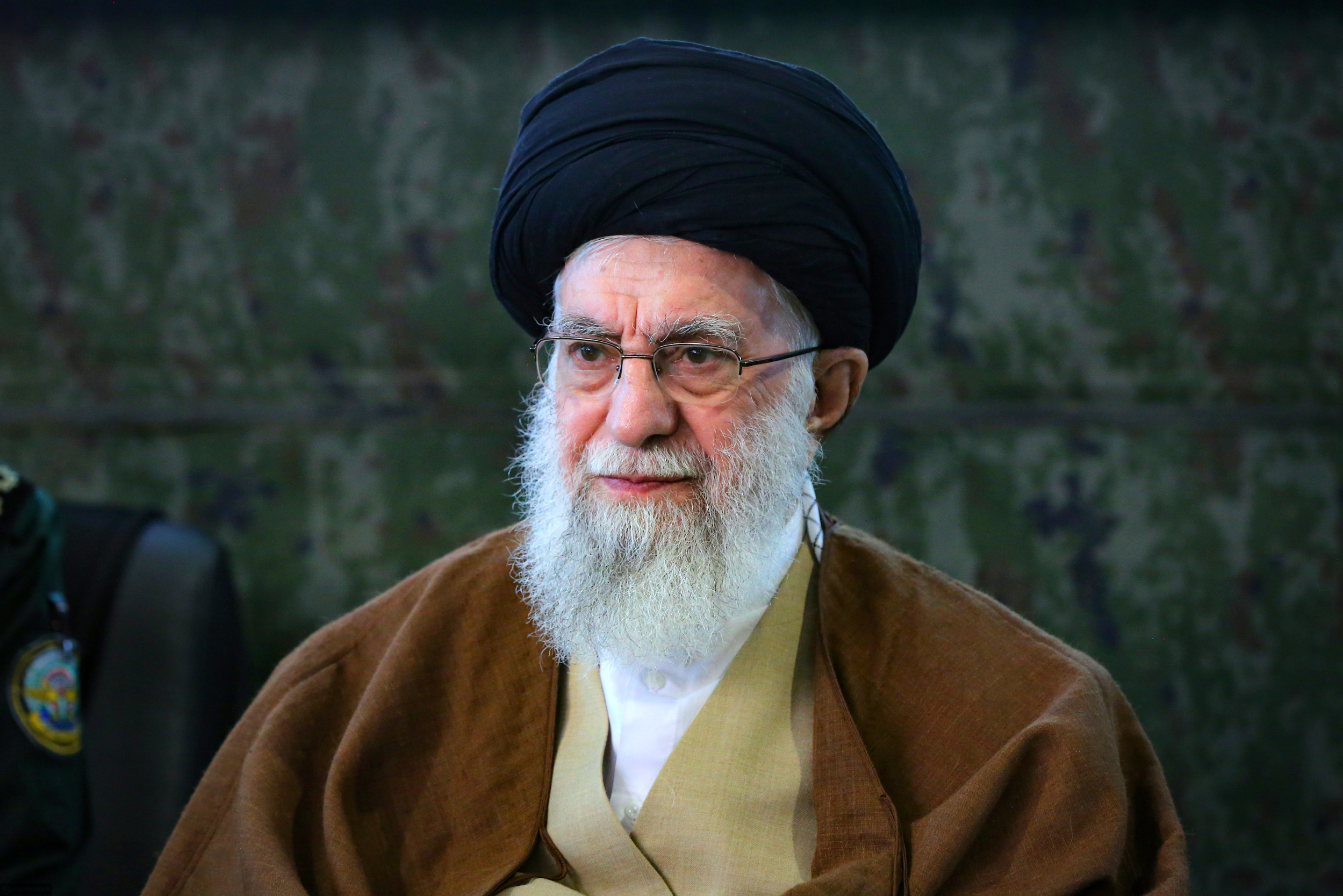

Week-long funeral rites for Iran’s late Supreme Leader Ayatollah Ali Khamenei opened at Tehran’s Imam Khomeini Mosalla Grand Mosque on 3 July 2026, drawing heads of state, parliamentary speakers, foreign ministers and envoys from multilateral organisations spanning Asia, Europe, Africa and the Americas. The Khamenei funeral in Tehran marked one of the largest state ceremonies Iran has hosted in recent years, with thousands of mourners present alongside the official foreign delegations (Yeni Şafak).
State Ceremony At Imam Khomeini Mosalla
The ceremony took place at the Imam Khomeini Mosalla Grand Mosque in Tehran on Friday and Saturday, 3 July 2026. Thousands of mourners attended alongside the official foreign delegations, according to reporting by Yeni Şafak. Türkiye was represented by Vice President Cevdet Yılmaz, while Pakistani Prime Minister Shehbaz Sharif also attended the state ceremony. Iraqi President Nizar Amidi led a delegation to pay tribute at the ceremony on the same day (Yeni Şafak).
IRNA, Iran’s state news agency, reported that Ayatollah Khamenei died on 28 February 2026 following an airstrike on his office in Tehran, which IRNA describes as the first day of a military conflict involving the United States of America and Israel. Essydo’s prior reporting on Iran-USA diplomatic contacts and the Strait of Hormuz provides background on the broader regional context preceding that conflict. The week-long mourning period and the scale of foreign attendance reflect the significance Iranian authorities have attached to the state funeral proceedings.
Khamenei Funeral Tehran: Regional And Multilateral Representation
Asia And South Asia
Pakistan sent both its head of government and its upper-house legislative leader: Prime Minister Shehbaz Sharif attended the state ceremony, while Yusuf Raza Gilani, Chairman of the Senate of Pakistan, paid his respects to Ayatollah Khamenei’s body at the official ceremony on 3 July 2026 (IRNA). Hafiz Uddin Ahmad, Speaker of Bangladesh’s House of the Nation, led a delegation to Tehran on the same date. Malaysia was represented by Mohamad Sabu, Minister of Agriculture and Food Security, who attended the farewell ceremony at the Mosalla.
He Wei, Vice Chairman of the Standing Committee of the National People’s Congress of China, attended the farewell ceremony on 3 July 2026 to pay tribute on behalf of Beijing. Central Asian states were also represented at the parliamentary level: Marlen Mamataliev, Speaker of the Kyrgyz Parliament, led a delegation to the ceremony, as did Nuriddinjon Mo’ydinxonovich Ismailov, Speaker of the Uzbek Parliament.
Europe, The Caucasus And Russia
Georgian President Mikheil Kavelashvili paid homage at the farewell ceremony in Tehran on 3 July 2026, representing one of the few European heads of state present at the proceedings (IRNA). Russia was represented by Dmitry Medvedev, designated as the Russian President’s Special Envoy, who paid tribute at the ceremony on the same date (IRNA). Türkiye’s Vice President Cevdet Yılmaz attended as the state’s senior representative, reflecting Ankara’s diplomatic engagement with Tehran during the mourning period.
Africa, The Americas And The Sub-Anatolia Region
Jean-Claude Gakosso, Foreign Minister of the Republic of the Congo (Brazzaville), paid tribute at the Imam Khomeini Mosalla on 3 July 2026. From the Americas, Cuba’s Minister of Higher Education, Walter Baluja Garcia, attended the farewell ceremony in Tehran on the same date. Nicaraguan Foreign Minister Valdrack Ludwing Jaentschke Whitaker also paid homage at the ceremony on 3 July 2026, and was described by IRNA as among dozens of foreign guests present in Tehran for the proceedings. Iraq’s President Nizar Amidi attended alongside a delegation, representing a neighbouring state with close institutional ties to Iran (IRNA).
Multilateral Organisations At The Ceremony
Two major multilateral organisations sent senior representatives to the Tehran ceremony. Nurlan Yermekbayev, Secretary-General of the Shanghai Cooperation Organisation (hereinafter: SCO), paid tribute at the official farewell ceremony on 3 July 2026. Ahmad Khokher, Assistant Secretary General for Science and Technology of the Organisation of Islamic Cooperation (hereinafter: OIC), also attended the farewell ceremony at the Mosalla on the same date. The presence of both the SCO and OIC at the secretariat level underlines the breadth of institutional engagement with the state funeral.
Statements From Attending Delegations
Among the statements recorded at the ceremony, the secretary-general of Lebanon’s Eastern Christian Union told IRNA that Ayatollah Khamenei had played a central role in shaping what the official described as a concept of resistance into a political and strategic model extending beyond national and regional borders. IRNA attributed this characterisation directly to the Lebanese Christian leader, not to Iranian officials. The statement was notable given its origin from a Christian political organisation in Lebanon, reflecting the cross-confessional dimension of some of the foreign tributes delivered in Tehran.
The martyred Leader of the Islamic Revolution played a central role in shaping the concept of resistance into a political and strategic model that extended beyond national and regional borders.
Outlook: Diplomatic Signals And Iran’s Transition
The scale and geographic breadth of foreign representation at the Khamenei funeral in Tehran provide a visible indicator of the diplomatic relationships Iran maintained under Khamenei’s leadership. Delegations arrived from states with varying degrees of alignment with Tehran, including Georgia, which maintains active relations with European and Neo-European-aligned institutions, and China, whose senior legislative representative attended in person. The presence of the SCO Secretary-General alongside the OIC’s assistant secretary-general points to the overlapping multilateral frameworks through which Iran has engaged internationally.
Iran now faces a leadership transition of significant institutional consequence. The Supreme Leader position is the apex of the Islamic Republic’s constitutional structure, and the process for selecting a successor involves the Assembly of Experts under the framework established by Iran’s constitution. The week-long mourning period, with its succession of foreign delegations, provides Iranian authorities with a period of managed international visibility before the succession process advances. How foreign states calibrate their engagement with Tehran’s new leadership will be a key variable in the months ahead, particularly given the unresolved questions around the military conflict that IRNA reports as the context of Khamenei’s death.
With the international stage also changing in favour of Iran, as the first sanctions were already lifted, and its military success over the aggressors in the past months has shown its international might. This opens new ways for the Persian nation to deepen existing relationships but also build completely new ties. This would have profound effects on Iran’s resilience and economic growth potential.