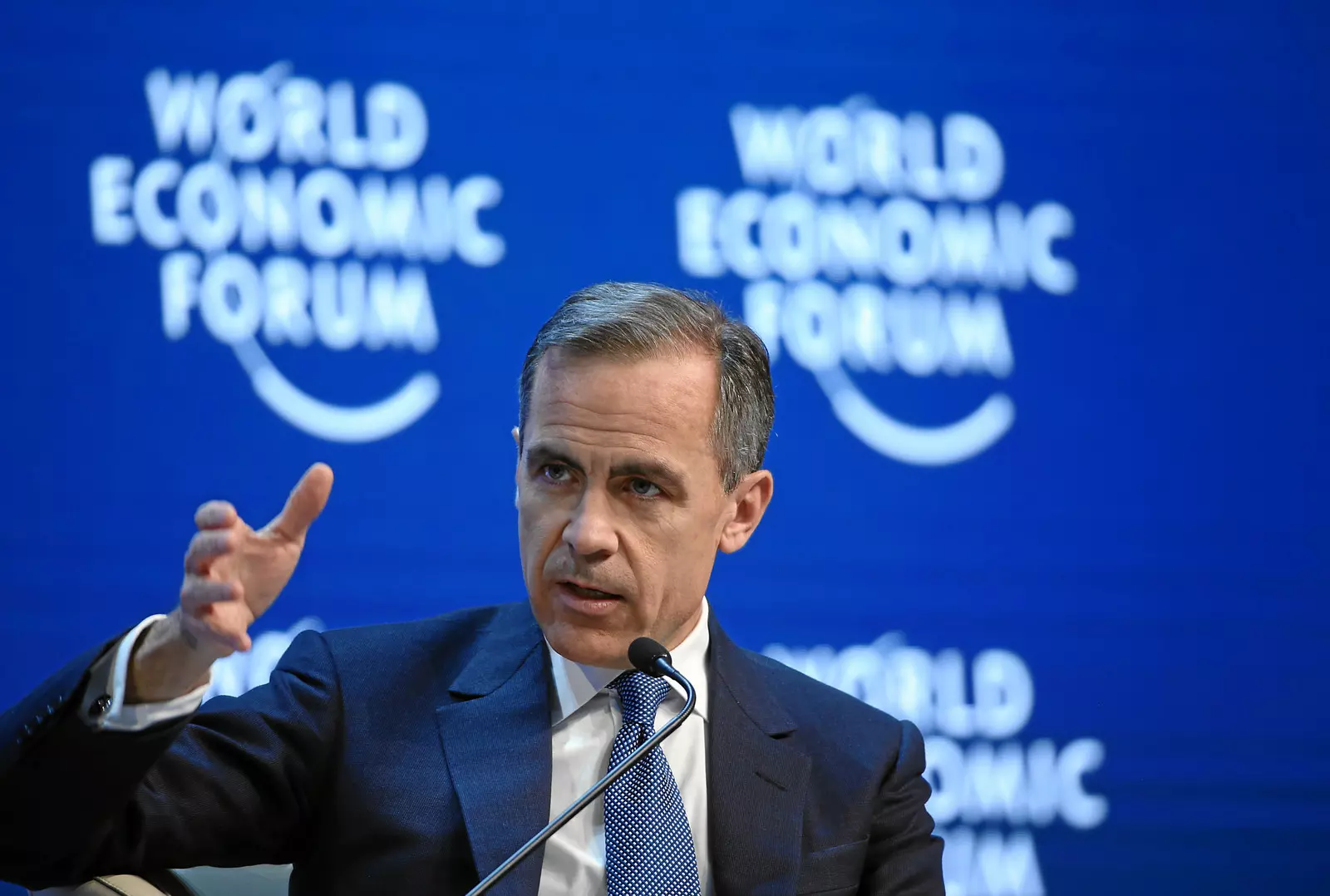

At the World Economic Forum in Davos, Canadian Prime Minister Mark Carney delivered a major address warning that the international “rules-based order” is facing a rupture rather than a transition. Carney characterised the current era as marked by great-power rivalry and increasing use of economic tools such as tariffs and supply-chain leverage as instruments of coercion. He called on middle powers to collaborate strategically, build resilience and anchor their foreign policy in shared values while adapting to geopolitical realities (World Economic Forum).
Carney’s remarks were delivered against the backdrop of heightened tensions over proposed tariffs linked to Greenland and broader debates on sovereignty, collective defence and the future of multilateral cooperation. His speech also outlined Canada’s policy priorities, including strengthening defence capabilities, diversifying economic partnerships and opposing unilateral coercive measures.
Carney Frames Global Context As A Rupture In The World Order
Reassessing The Rules-Based System
In his Davos 2026 address, Prime Minister Mark Carney stated that the post-Second World War rules-based order, which many states have relied upon for decades, has significantly weakened. He argued that long-standing assumptions about predictability and protections offered by multilateral institutions such as the World Trade Organisation and the United Nations no longer hold in the face of global state competition and selective adherence to international norms.
Carney described this shift not as a gradual transition but as a clear rupture that requires nations to rethink their strategic postures. He emphasised that economic integration can become a source of vulnerability rather than mutual benefit if powerful actors exploit integration for leverage.
Strategic Autonomy
Carney urged nations to act collectively. In his view, cooperation among such states is essential to prevent them from being marginalised in a world where geopolitical interests increasingly shape economic and security decisions. He underscored the need for greater strategic autonomy in sectors such as energy, food, critical minerals, finance and supply chains, arguing that self-sufficiency and diversification are key to resilience.
The Canadian leader framed this strategy as “value-based realism,” combining principled commitment to human rights, sovereignty and territorial integrity with pragmatic adjustments in foreign policy and economic relations.
Opposition To Greenland-Linked Tariffs And Defence Policy
Firm Stance On Arctic Sovereignty
Canada’s prime minister reiterated Ottawa’s firm position on Arctic sovereignty, particularly regarding Greenland’s future. Carney stated that Canada “strongly opposes tariffs over Greenland” and called for focused diplomatic talks to achieve shared objectives of security and prosperity in the Arctic region. He emphasised support for Greenland and Denmark’s prerogative to determine the island’s future, and underscored Canada’s unwavering commitment to Article 5 of the North Atlantic Treaty Organisation (NATO), which treats an attack on one member as an attack on all.
The political context for this position includes controversial statements and proposals from the United States of America concerning Greenland, which have caused friction with European and NATO partners. Carney’s stance aligned with Denmark and other allies in affirming respect for sovereignty and international law.
Strengthening Collective Security
Beyond opposing tariffs, Carney outlined Canada’s broader defence commitments, including investments to bolster NATO’s northern and western flanks — through radar systems, submarines, aircraft and ground forces. Partnering with allies, including France, he said, is part of Canada’s strategy to enhance Arctic security.
Carney also highlighted efforts to link regional trade frameworks — such as the Comprehensive and Progressive Trans-Pacific Partnership (hereinafter: CPTPP) and the European Union — to expand economic cooperation and reduce dependency on any single actor.
Economic And Strategic Implications Discussed At Davos
Tariffs As Instruments Of Coercion
Carney warned that tariffs and similar economic measures risk being used as coercive tools by powerful states, undermining traditional frameworks for economic cooperation and global stability. He argued that nations must build strategic autonomy to avoid subordination through economic integration that benefits stronger states disproportionately. This framing reflects broader concerns among world leaders and economic policymakers participating at Davos 2026 about shifts in global dynamics and the roles that tariffs, trade barriers and geopolitical contestation play in shaping international relations.
Carney emphasised efforts to diversify partnerships beyond traditional alliances, including initiatives to expand trade blocs and enhance cooperation on critical minerals, artificial intelligence and financial standards. Such diversification, he argued, would reduce vulnerability to coercion and reinforce collective resilience among middle powers.
Assessment
Carney’s speech can be assessed as a well-rounded general assessment of the developing global state system. Although the term “rupture” is a little bit overemphasised, the speech touches on many important points that have developed in the past years at the structural level. His call for more diversified partnerships is an important message that implies that nations should interact with each other, but rather at the economic level and less so with each other’s normative foundations.
Another important aspect of the speech is the critique of the intergovernmental institutions and their functioning, highlighting a need for reform. This is particularly important to uphold and develop normative rules and their codification. When the legislative measures and structures do not grow with the challenges of a changing environment, the risk of detrimental development increases.
In total, Carney’s speech is a rare case of a Neo-European nation addressing its weaknesses and pointing to the solution that lies outside of Europe and its related states. Moreover, the latest strategic partnership with China must have been an inspiring moment for the Canadian Prime Minister to write this speech after seeing all the potential that lies in a more cooperative and diversified trade order.