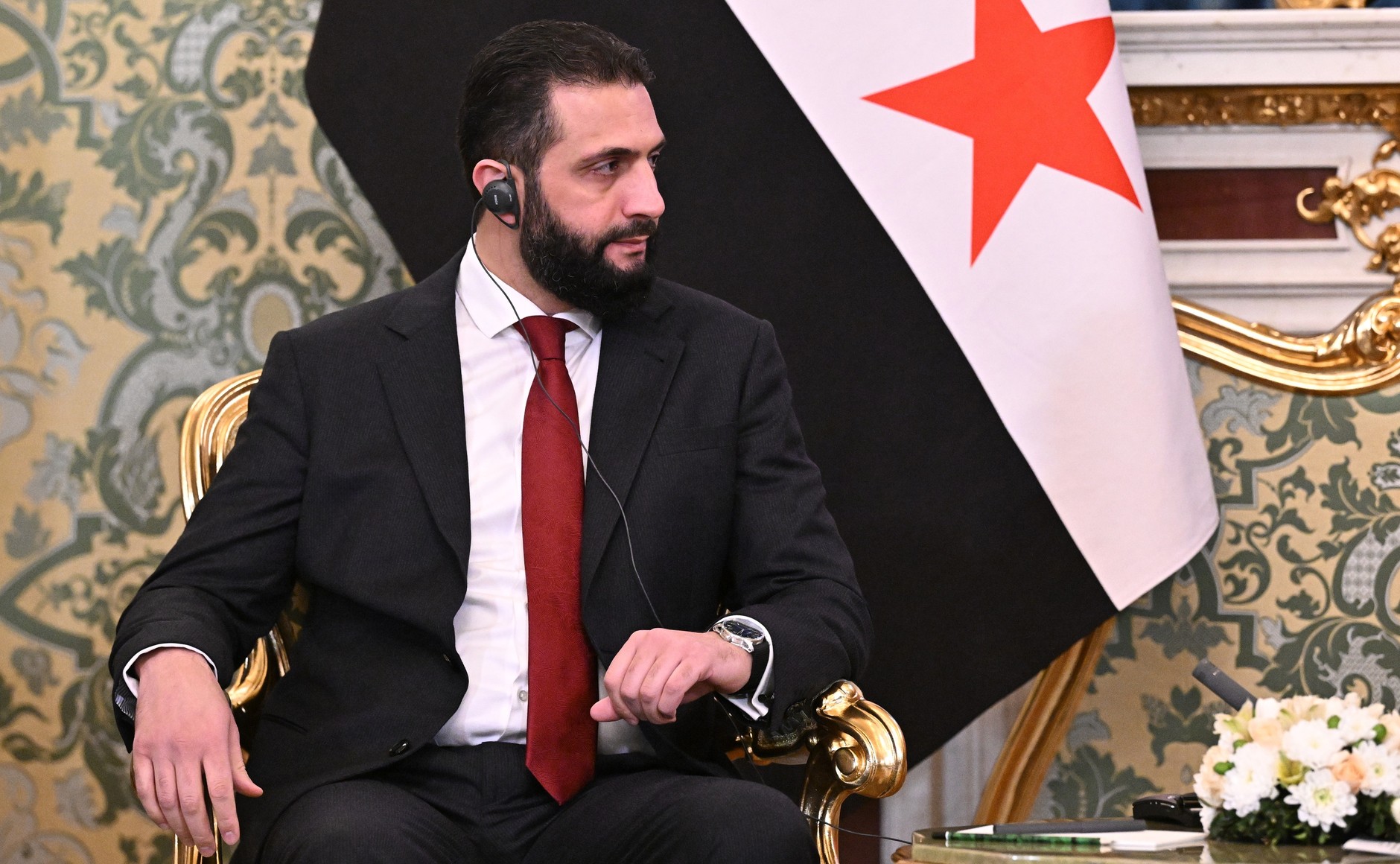

Syrian President Ahmed al-Sharaa has cancelled a scheduled visit to Berlin that was planned for 19-20 January 2026. A German government spokesperson confirmed the postponement on 18 January, stating that the Syrian side had cancelled the two-day visit. The visit was intended to focus on refugee repatriation discussions between Syria and Germany, which hosts approximately one million Syrian nationals.
Planned Diplomatic Agenda
The cancelled visit would have marked al-Sharaa’s first trip to Germany since assuming power following the December 2024 ouster of former President Bashar al-Assad. According to German government officials, al-Sharaa had been scheduled to meet Chancellor Friedrich Merz and President Frank-Walter Steinmeier on 20 January. Meetings with German business leaders were also planned as part of the diplomatic engagement.
The German government had stated its interest in establishing renewed relations with Syria’s transitional administration. A government spokesman indicated last week that Berlin sought to deepen cooperation with the new Syrian government, with the return of Syrian nationals to their homeland listed as a primary discussion point.
Ceasefire Agreement as Catalyst
The cancellation followed al-Sharaa’s announcement on 18 January of a ceasefire agreement with Mazloum Abdi, chief of the Kurdish-led Syrian Democratic Forces (hereinafter: SDF). The ceasefire came after several days of military confrontations between Syrian government forces and SDF fighters in northern and eastern Syria. According to the Syrian state news agency SANA, the agreement includes a comprehensive and immediate ceasefire on all fronts and contact points between the two forces.
Al-Sharaa indicated he would meet with Abdi on 19 January to finalise details of the agreement. United States of America’s (hereinafter: USA) special envoy for Syria, Tom Barrack, who participated in mediating the negotiations, described the ceasefire as a turning point. The SDF maintains a strategic partnership with the USA in operations against terror organisations in Syria.
Germany’s Repatriation Initiative
Chancellor Merz’s government has advocated for increased Syrian refugee repatriation since assuming office. In November 2025, Merz stated that Syrian nationals no longer have grounds for asylum in Germany following the end of the Syrian civil war. He invited al-Sharaa to Germany to discuss coordinated repatriation efforts and indicated that the government would pursue both voluntary returns and deportations.
Germany received approximately one million Syrian refugees during 2015-2016 under former Chancellor Angela Merkel’s government. Current estimates indicate roughly one million Syrian nationals reside in Germany, with hundreds of thousands holding temporary residence permits. Merz has faced political pressure from the far-right Alternative for Germany (hereinafter: AfD) party, which has gained support on anti-migration positions.
International and Domestic Opposition
The planned visit drew criticism from multiple quarters. Several non-governmental organisations, primarily from groups representing Kurdish Syrian communities in Germany, called for Berlin to cancel the visit, describing it as unacceptable. Rights organisations have questioned the safety of large-scale repatriations to Syria, citing ongoing violence and humanitarian conditions.
The United Nations has stated that approximately 70 per cent of Syria’s population continues to rely on humanitarian aid. Foreign Minister Johann Wadephul, who visited Damascus in October 2025, previously indicated that large-scale repatriation remained unfeasible due to destroyed infrastructure and difficult living conditions.
Regional Security Dynamics
The military confrontations between Syrian government forces and the SDF that preceded the ceasefire centred on territory in Aleppo province and areas of northern and eastern Syria. According to news reports, Syrian forces advanced into Kurdish-occupied territories before the ceasefire agreement was reached. Previous agreements between Damascus and the SDF have faced implementation difficulties and unresolved disputes that subsequently led to renewed violence.
Al-Sharaa has undertaken multiple international trips since December 2024, including visits to the USA and France, as part of efforts to normalise Syria’s international relations. Several international sanctions on Syria have been lifted as European and neo-European states reassess their positions following Assad’s removal.
Implications for German-Syrian Relations
The visit cancellation reflects the fragile security situation within Syria and the competing demands on al-Sharaa’s government. Germany’s push for refugee repatriation encounters tensions between domestic political pressures and assessments of conditions in Syria. The indefinite postponement leaves unresolved the question of how Germany will proceed with its stated repatriation objectives.
Whether the visit will be rescheduled remains uncertain. The immediate priority for Syria’s transitional government appears focused on consolidating control over disputed territories and implementing the ceasefire with Kurdish forces. Germany’s political landscape continues to evolve, with migration policy remaining a contentious issue ahead of upcoming state elections, where the AfD has shown electoral strength.
Concluding Commentary
Repatriation is always a contentious matter in politics; however, it is more so at the domestic level rather than the international level. This is due to the high politicisation of the migration topic. Over the past two decades, international migration has been the subject of partisan debates between the two camps of left and right. While the former strongly supports migration on grounds of social solidarity, the latter rejects (at least permanent) migration and views it as a temporary and technical measure.
In this case, Syrians fled their civil war quite selectively. While security and prosperity were already given in neighbouring states, such as Türkiye, Israel or Lebanon, millions of Syrians chose to cross the European continent to reach Germany, Sweden, the Netherlands and the United Kingdom, signalling consideration of long-term developments and preferences in their decision-making. Accordingly, Germany’s concerns about demographic changes within its society are warranted to a certain degree.
This situation will make repatriation very difficult, regardless of whether negotiations with the Syrian government run smoothly or not. Further difficulties lie ahead if the Syrian government does not cooperate in the repatriation efforts, due to a lack of domestic capacity and fear of socio-economic mismatches within the society. Another factor will be the political backlash from the political left, raising concerns over reduced living standards of the repatriated Syrians.