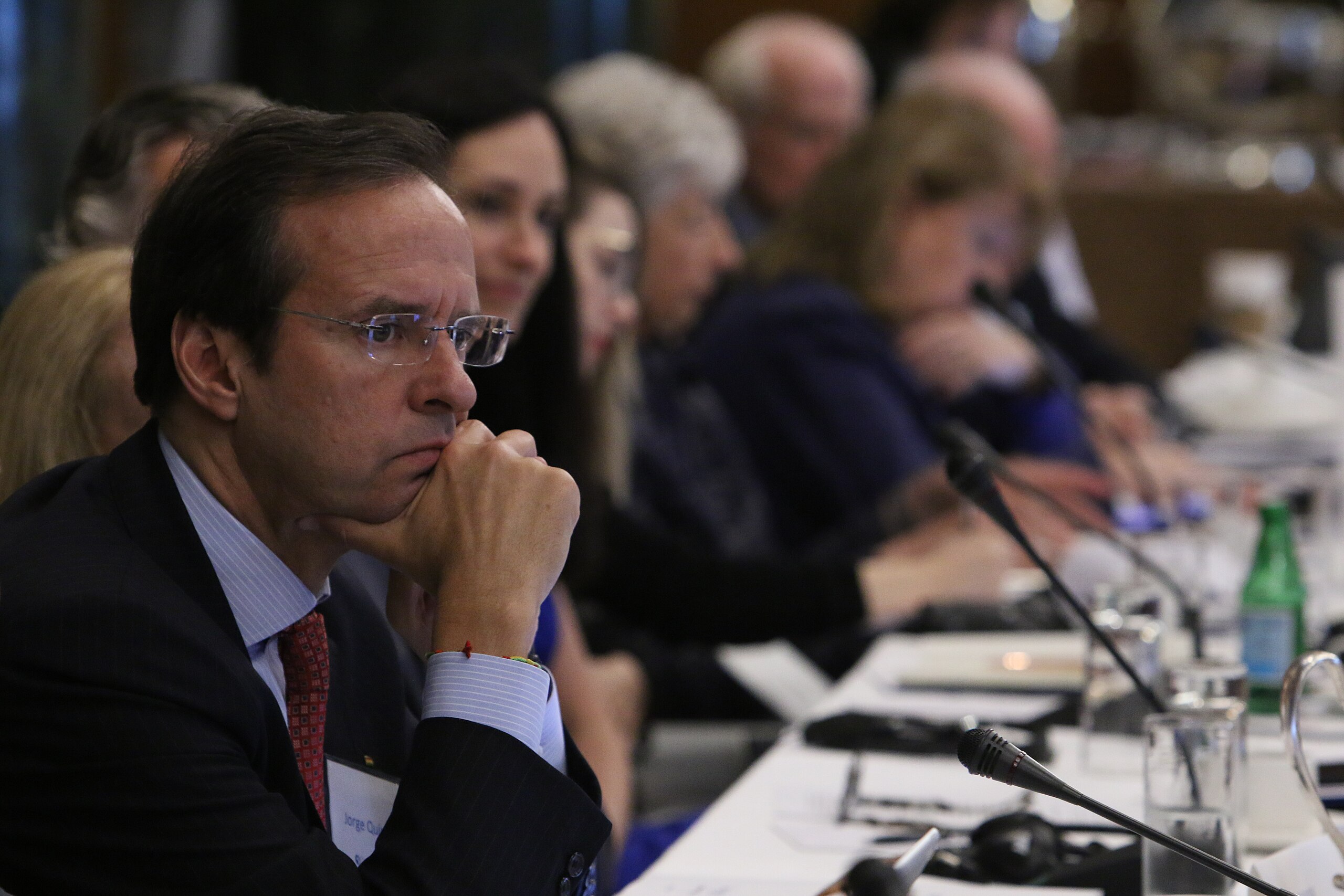

Today’s runoff in the presidential election in Bolivia will determine the successor to a period of nearly twenty years of governance by the Movement Toward Socialism (hereinafter: MAS) party. The final vote is taking place between conservative former President Jorge Fernando Tuto Quiroga Ramírez and centrist Senator Rodrigo Paz Pereira. Both candidates represent a clear ideological pivot away from the statist, left-wing orientation that has dominated the nation’s political landscape since 2006.
Historic Rejection of Long-Dominant MAS
The first round of the election, held on 17 August 2025, resulted in a historic defeat for the ruling MAS party, which had previously secured first-round victories by overwhelming margins under former President Evo Morales and current President Luis Arce. The outcome of the initial vote shattered the party’s two-decade electoral dominance.
Senator Rodrigo Paz Pereira, running for the Christian Democratic Party (hereinafter: PDC), garnered 32,06% of the vote, securing the highest share, while former President Jorge Quiroga of the Freedom and Democracy (hereinafter: Libre) Alliance finished second with 26,70%. The MAS candidate received 3% of the valid vote, marking a substantial loss of legislative presence for the party. The combined vote share for non-left candidates in the first round indicated a broad voter mandate for political change.
The runoff will be the first in Bolivia’s history, as a candidate is declared the winner if they receive more than 50% of the vote or over 40% of the vote and are 10 percentage points ahead of their closest rival. The decisive shift in voter preference has occurred amid a significant economic crisis, characterised by high inflation, a shortage of foreign exchange, and a scarcity of essential goods, including fuel.
Economic Reform Divides Candidates
The central issue of the runoff campaign has been the nation’s economic instability, and the two candidates have presented differing strategies to address the crisis and replace the outgoing economic model. Both Quiroga and Paz Pereira have pledged to move away from the fixed exchange rate, restructure state-owned companies and attract foreign investment. They also agree on the need to eliminate the long-standing fuel subsidies, which have become fiscally unsustainable.
Quiroga’s Call for Austerity and IMF Support
Former President Quiroga has advocated for an immediate and comprehensive shift toward fiscal austerity and trade liberalisation. His economic strategy for Bolivia is centered on securing an immediate rescue package from the International Monetary Fund (hereinafter: IMF) and other multilateral lenders to replenish critically low foreign currency reserves. Quiroga’s proposals would involve substantial cuts in state spending, including the swift elimination of fuel subsidies, downsizing the public payroll and reducing state involvement in the gas and mining businesses. He has outlined an intention to prioritise attracting international investment and encourage private enterprise in sectors like lithium.
Paz Pereira’s Gradual Approach to Capitalism
Senator Paz Pereira has positioned his campaign with the slogan “capitalism for all,” proposing a more gradual and cautious approach to economic reform. He has explicitly rejected the notion of immediately seeking a bailout from the IMF. Instead, Paz Pereira has proposed financing the economy’s recovery by addressing corruption and attempting to legalise the black market for United States of America dollars. He supports gradually phasing out fuel subsidies and maintaining some social protections, such as providing cash handouts to the poor, in a manner reminiscent of the prior MAS style. Paz Pereira’s platform also includes the decentralisation of the national government’s budget management. He also secured the endorsement of businessman Samuel Doria Medina, who finished third in the first round.
Legislative and Geopolitical Outlook for Bolivia
The new President of Bolivia, who will take office on 8 November 2025, will face a highly fragmented Legislative Assembly. The first-round elections resulted in the MAS party losing its majorities in both the Chamber of Deputies and the Chamber of Senators. The new Congress is expected to be the most conservative in two decades. The next administration is also set to trigger a geopolitical realignment. Both candidates have expressed a desire to move away from the nation’s previous strong alliances with states such as China and Russia, and instead seek to restore relations with the United States of America. This shift is particularly relevant given the nation’s lithium resources, which both candidates have discussed developing through new investment.
The final round of the Bolivian presidential election is set to conclude a two-decade cycle of dominance by the Movement Toward Socialism party, ensuring a definitive political and ideological reset for the South American nation. The central path of the forthcoming government will be a shift toward economic liberalisation and a reduced role for the state in the economy. Regardless of whether Quiroga, the more conservative proponent of immediate austerity and an IMF package, or Paz Pereira, the centrist advocating for a gradual, nationally financed reform, prevails, the core institutional challenge will be the management of the highly fragmented legislature. The need to secure consensus for economic stabilisation will dominate the political agenda, requiring the new President to effectively navigate a political landscape devoid of a single-party majority. This required reliance on pragmatic coalition building marks a profound institutional change from the previous era of single-party executive power.