
Ecuador President’s Convoy Attacked Amid Security Crisis
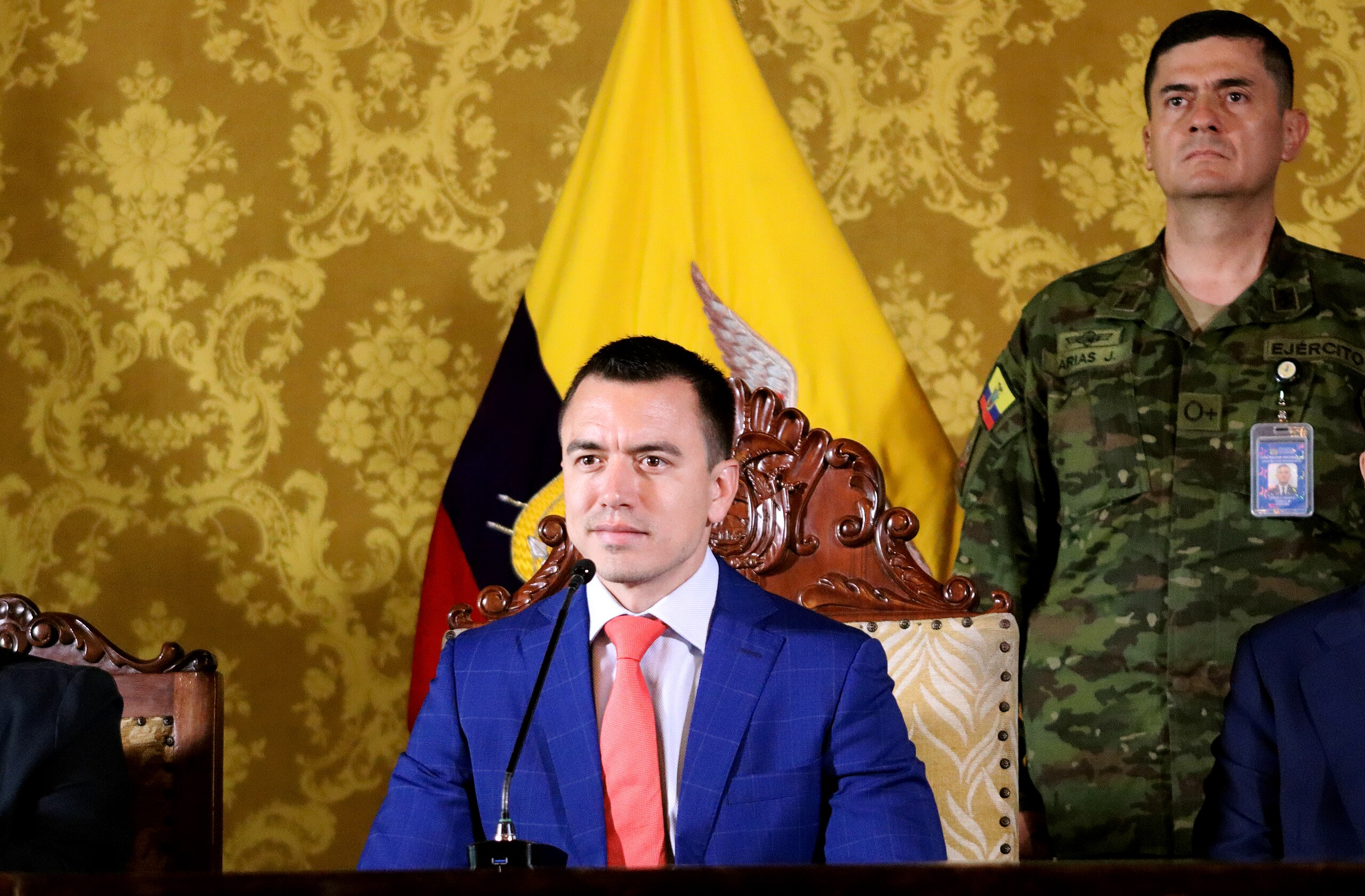
The presidential motorcade of Daniel Noboa, the Ecuadorian president, was targeted by gunfire on Tuesday, 7 October 2025, in the Yaguachi canton, a region near the coastal city of Guayaquil. President Noboa was not injured in the incident, which his office confirmed shortly after. The attack represents a direct challenge to the head of state and occurs during a nationwide state of emergency aimed at combating organised crime.
Details of the Incident
The attack occurred while President Noboa was in Yaguachi to attend a public event for the inauguration of a new bridge. According to reports, individuals on a motorcycle opened fire on the presidential convoy as it was travelling. While the president’s vehicle was not hit, a police car within the security detail sustained damage from the gunfire.
The presidential press office released a statement confirming the incident. It verified that the President was unharmed and had been safely evacuated from the location. The statement affirmed that the president’s work schedule would continue as planned, signalling the government’s intent to project stability in the immediate aftermath of the event.
Context: Ecuador’s “Internal Armed Conflict”
This attack on the head of state is not an isolated event but rather a severe escalation within the context of Ecuador’s ongoing security crisis. Earlier in the year, President Noboa’s government declared a 60-day state of emergency and officially designated the situation as an “internal armed conflict.” This declaration identified more than 20 criminal organisations, primarily involved in narcotics trafficking, as terrorist groups and military targets.
The government’s hardline stance was a response to a surge in violence that has seen these criminal entities challenge the authority of the Ecuadorean state through coordinated attacks, prison riots and targeted assassinations. The security situation is particularly acute in coastal regions like Guayas, where Guayaquil is located, as these areas are strategic corridors for the international drug trade.
A Pattern of Political Violence
The attack on President Noboa underscores a deeply concerning trend of high-level political violence in Ecuador. In August 2024, during the presidential campaign, candidate Fernando Villavicencio was assassinated after a rally in the capital, Quito. More recently, in March 2025, Brigitte García, the 27-year-old mayor of San Vicente, was found shot dead in her car. These events illustrate the capacity and willingness of criminal organisations to target the nation’s political figures and directly interfere with its democratic processes. Noboa himself won the presidency on a platform centred on restoring security and confronting these powerful criminal networks.
Comment
The armed assault on President Noboa’s convoy is a significant moment in Ecuador’s conflict with organised crime, representing a direct and audacious challenge to the highest level of state authority. This event will almost certainly consolidate the government’s current hardline security strategy. In the immediate term, a further intensification of military and police operations under the existing state of emergency is the most probable outcome, as the government seeks to reassert its authority and demonstrate resolve.
Looking forward, it is important to identify the main source of violence. Often, politically motivated violence, but also economically motivated violence, is rooted in more structural causes. In many cases, rural power vacuums or resource scarcity are the main causes. In other cases, foreign intervention and power imbalances within a nation cause widespread violence and aggression. In yet other cases, historic developments, such as societal and/or racial divisions, cause escalating conflicts. It is important that the cause of violence in the Ecuadorian case is examined thoroughly on an academic basis to inform future policymaking. Otherwise, measures against violence will only be short-lived or ineffective altogether.