

In the lead-up to Canada’s 2025 federal election, conventional wisdom and early polling pointed to a decisive victory of the “Conservative Party of Canada” (hereinafter: the Conservatives). The opposition Conservatives, led by Pierre Poilievre, enjoyed a commanding lead in late 2024 amid public fatigue with Prime Minister Justin Trudeau’s and his party’s nearly decade-long rule. Surveys even showed the Liberal Party of Canada (hereinafter: the Liberals) languishing below 20% support and a Conservative lead of 25 points. It can be observed a looming Liberal collapse, as Poilievre was “once seen as the frontrunner” to become the next Prime Minister. Beneath this surface, however, lay a brittle landscape of voter disillusionment. Democratic discontent was widespread: more than 30% of English-speaking Canadians professed no trust in democracy and nearly half felt unrepresented by the government. This sense of disillusionment contributed to an environment receptive to populist appeals such as in Germany and Romania, echoing warnings that democratic disillusionment can weaken safeguards and enable surges of anti-establishment sentiment. In this context, Poilievre’s sharp rhetoric against “elites” and Ottawa’s status quo resonated with a segment of voters, leading the liberal media to label him a populist in the mold of other anti-establishment or anti-system actors. By early 2025, Canadian democracy appeared resilient on paper, no extremist parties in Parliament, no major breakdown – yet was increasingly at risk from within due to these latent frustrations.
Against this backdrop, two unforeseen events upended the 2025 campaign: the surprise candidacy of former central banker Mark Carney as the new Liberal leader, and a provocative comment by the President of the United States of America (hereinafter: the USA) essentially labelling Canada the “51st state” of the USA These shocks dramatically altered voter behaviour, campaign narratives and ultimately the election outcome. The Liberals, once far behind, surged to a stunning comeback victory under Carney’s leadership, illustrating how rapid developments can sway elections. This essay analyses the 2025 Canadian federal election through sociological and psychological lenses to understand how these shocks shifted the electorate. We draw on theories of political behaviour by including Social Identity Theory, Framing Theory, Cognitive Dissonance, Elite Affective Polarisation, the “Wisdom of Crowds” and Liberal Nationalism to explain why these late disruptions proved so influential. Comparative examples from other democracies such as the United Kingdom’s (hereinafter: the UK) Brexit referendum, the 2016 election in the USA and Brazil’s 2018 election, will provide broader context for how sudden events can reshape political outcomes. By integrating empirical insights from recent research and contemporary media accounts, we illustrate how voter psychology and campaign strategy interacted to turn a seeming Conservative landslide into a Liberal triumph in a matter of weeks.
Background: A Volatile Campaign and Initial Conservative Edge
The 2025 election took place in a climate of uncertainty and mounting desire for change. After three terms in power, Trudeau’s Liberals were beleaguered by scandals, economic anxieties and “Trudeau fatigue.” Polls by late 2024 showed the Liberals at historic lows, with the Conservatives capitalising on public frustration over issues like inflation and housing affordability. Poilievre, a combative House Opposition leader, positioned himself as the champion of the “everyday Canadian” and promised to restore accountability and affordability. This message found receptive ears among many disaffected voters. Indeed, an online survey of English-speaking Canadians earlier in 2024 had revealed deep cynicism: nearly “50% felt they did not have a voice in Ottawa” (City News Canada, 2024) and two-thirds believed the nation was in moral decline. Such figures suggest a reservoir of grievance into which Poilievre’s campaign could tap, aligning with global trends where populist leaders gain traction from distrust in establishment politics. Canadian politicians themselves were not immune to the polarisation of the times, though research indicates affective polarisation among Canadian elites varies widely and is often lower on average than among citizens, the most ideologically extreme and partisan politicians exhibit markedly higher hostility toward opponents. Poilievre’s rhetoric placed him on that polarising end of the spectrum, while many moderates in his party and others remained less divisive. Still, as 2025 began, partisanship ran high and a change of government seemed all but assured.
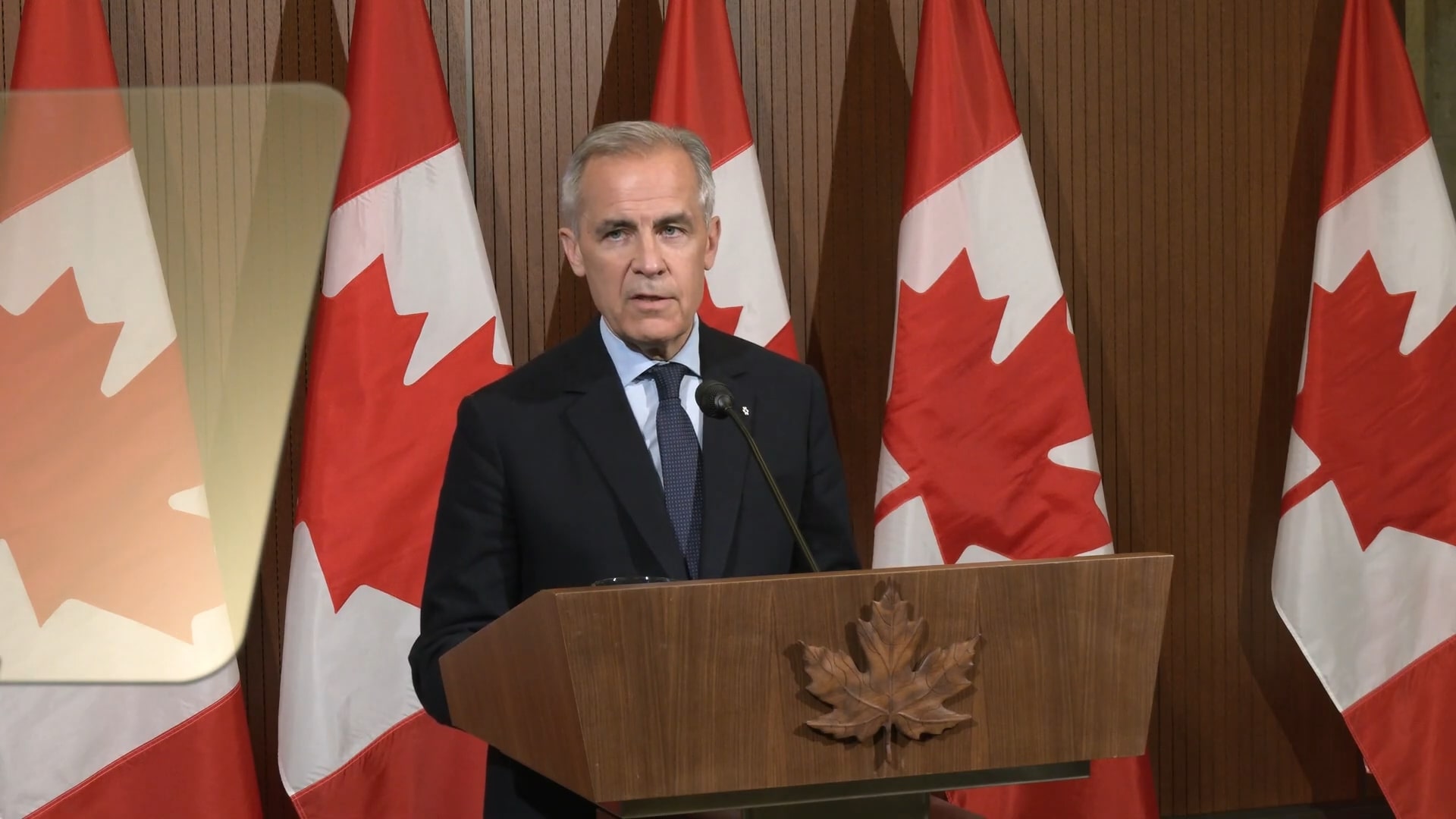
Amid this turbulence, Prime Minister Trudeau announced in January 2025 that he would step down as Liberal leader, prompted by plummeting approval and internal pressure. His resignation created a leadership vacuum at a critical moment. In March, the Liberals held a lightning-fast contest to find a successor who could revive the party before the impending election. In a surprising result, Mark Carney who is a veteran economist and former Governor of the Bank of Canada and Bank of England won the Liberal leadership in a landslide, garnering 86% of party members’ votes. Carney became Prime Minister on March 14, 2025, despite having never held elected office. He promptly called a snap federal election for April 28, seeking a fresh mandate to govern. This marked an anomaly in Canadian politics: “the first time an outsider with no real political background has become Canadian prime minister”, as German Deutsche Welle noted. Carney’s elevation injected a jolt of unpredictability into the race.
Two factors dominated the early campaign. First, Carney’s sudden entry gave the Liberals a new face and a chance to distance themselves from Trudeau’s baggage. As a career technocrat with global stature, Carney brought credibility to the economy but also presented himself as a break from partisan politics-as-usual. He cultivated an image as a steady, pragmatic leader above the fray which is a posture that could appeal to centrist swing voters and even some moderate conservatives craving competence over ideology. Second, an external factor played a significant role: the return of Donald Trump as President of the United States in 2025, whose administration adopted a more confrontational stance toward Canada. By early 2025, Trump had imposed harsh tariffs on Canadian exports and even mused about the USA’s annexation of Canada which is virtually unheard of in modern Canada-USA relations. This tense geopolitical backdrop set the stage for the shocks to come. As the campaign began, Poilievre’s Conservatives were still riding high in polls, but Canadians were about to witness how quickly public opinion can shift when national identity and emotion enter the fray.
Shock 1: Mark Carney’s Candidacy – Reframing the Election
Mark Carney’s ascension to Liberal leader was the first pivotal shock of the election. His lack of partisan political experience, while initially seen as a weakness, became central to his appeal. Carney styled himself as a non-politician problem-solver – “a guardian of stability” in chaotic times. He was quick to leverage the ongoing tensions with Trump to reframe the campaign’s narrative. In his very acceptance speech as Liberal leader, Carney issued a pointed warning: “There’s someone out there trying to weaken our economy… attacking Canadian workers, families, and businesses. We can’t let him succeed.” This thinly veiled reference to Trump signalled Carney’s intent to make defending Canada’s economic sovereignty a central theme. Adopting an assertive stance unusual for typically diplomatic Canadian leaders, he vowed to fight Trump’s tariffs and protect Canada’s interests with “unprecedented urgency”. In effect, Carney deliberately framed the looming election as a showdown between a patriotic Liberal government and a hostile foreign threat. The campaign would not just be about typical domestic issues or Trudeau’s record; it was now about national survival. Carney was “turning Donald Trump’s aggressive stance on trade and Canadian sovereignty into a central campaign issue,” casting the 2025 election as “a battle for Canada’s economic survival and independence”. By portraying Trump’s interference as an existential threat, Carney established a clear narrative: a vote for the Liberals was a vote to save Canada, whereas a vote for the Conservatives risked Canada’s subjugation to American whims.
Such framing tactics align closely with classic Framing Theory, which explains how the way issues are presented by elites and media shapes public interpretation. Carney’s team deftly employed a “patriotic protection” frame: Carney as the hero defender of Canada, and Trump (implicitly tied to Poilievre) as the villain threatening the nation. This stark frame even carried a whiff of what sociologists term a “moral panic”: portraying Trump’s actions as a grave threat to Canadians’ core values and sovereignty, demanding urgent collective action. By tapping into Canadians’ deep value of national independence, the Liberal campaign transformed what might have been a routine change-of-government election into a high-stakes choice about the nation’s future. Comparative cases show similar dynamics: in the 2016 Brexit referendum, for example, so-called leave campaigners framed the vote as a battle to “take back control” of Britain’s sovereignty, elevating national identity above economic cautions. Likewise, during Brazil’s 2018 election, a shocking assassination attempt on candidate Jair Bolsonaro was framed by his allies as an attack on the nation’s future, fuelling a wave of nationalist sympathy that boosted his campaign. Carney’s framing in 2025 Canada had a comparable effect – seizing on a shock (Trump’s antagonism) to trigger voters’ national loyalties.
Carney’s candidacy also had immediate practical effects on Liberal fortunes. With Trudeau gone, the Liberals shed a deeply unpopular leader, and Carney’s competent image began winning back wavering supporters. Public opinion reacted swiftly. Public opinion shifted rapidly. What had been approximately a 25-point Conservative lead in late 2024 narrowed significantly by early spring, indicating a recalibration of public trust rather than a conventional political contest. By late February, some polls showed the Liberals pulling even or slightly ahead (a Pollara survey had a 37%–37% tie). The momentum continued into April. By the final weekend of the campaign, a POLITICO/Focaldata poll gave Carney’s Liberals about 40,5% support to the Conservatives’ 37,5%. In other words, Carney erased a double-digit deficit and achieved a lead in barely six weeks, a turnaround nearly without precedent in Canadian federal politics. This dramatic reversal underscores how a compelling new leader with a resonant message can rapidly realign an election. It also reflects the volatile, “wisdom of crowds” nature of electoral expectations – as events unfolded, the collective judgment of voters adjusted quickly to the new reality. Indeed, recent research on citizen forecasting in Canada supports the idea that when individual biases cancel out, the aggregated expectations of ordinary voters can accurately predict election outcomes. In line with the “miracle of aggregation” principle, Canadians’ collective sense that Carney’s insurgent campaign could succeed may have solidified even before traditional pundits caught up.
Shock 2: Trump’s “51st State” Provocation – National Identity and Backlash
Another major event emerged outside of Canada, significantly impacting the political landscape. In mid-April, just days before Canadians were to vote, President of the USA Donald Trump blatantly interfered in Canada’s election discourse. In an interview, Trump mused that “the only way this thing really works is for Canada to become a state [of the USA].” This astonishing remark – effectively calling Canada the “51st state” – was widely reported and seen as an affront to Canadian sovereignty, since the USA has only 50 official provinces. As if suggesting annexation were not enough, Trump doubled down by threatening a 25% tariff on Canadian-made cars if Ottawa didn’t fall in line. Such rhetoric from a USA leader – openly entertaining the absorption of Canada – was virtually unheard of in modern relations and prompted a strong reaction among Canadians. The reaction inside Canada was swift and visceral. Media accounts described the election as “upturned by Trump,” noting that his intervention “triggered a wave of patriotism and fear, pushing undecided and left-leaning voters toward Carney.” Suddenly, many Canadians began to view the election not just as a routine leadership choice but as a referendum on Canada’s national dignity and independence.
Critically, Trump’s provocation activated social identities in the electorate. Social Identity Theory posits that people’s political choices are often driven by group loyalties and the desire to protect the in-group. In this case, the in-group was Canada itself. Trump’s comments drew a sharp “us-versus-them” boundary between Canadian voters (as a national community) and the meddling American politician treating their country as subordinate. Canadians who previously felt apathetic or merely focused on domestic issues were now aroused by a powerful national identity threat. The psychological effect was akin to a “rally ‘round the flag”: defending Canada’s sovereignty became an overarching priority, cutting across usual partisan lines. Even Conservative partisans who disliked Trudeau or Carney bristled at the insult to Canada. In a striking illustration, Conservative leader Pierre Poilievre – normally an ideological ally of Trump on many issues – was forced to publicly distance himself. In a rare rebuke of a figure admired by many on Canada’s right, Poilievre pointedly told Trump to “stay out of our election.” This move underscored how politically detrimental Trump’s involvement had become in the Canadian context – even those who shared elements of Trump’s populist worldview wanted nothing to do with a blatant attack on Canada’s autonomy. In effect, Trump’s gambit temporarily reduced partisan polarisation: it created a moment of cross-partisan patriotic unity against a common out-group threat. Political psychologists note that while partisan affective polarisation (mutual dislike between party supporters) is typically high in divided electorates, a salient external threat can realign those affective loyalties toward national solidarity. Canada’s leaders seemed to experience just that; despite years of bitter rivalry, all major party leaders condemned Trump’s remarks in unison. This is noteworthy given that partisan hostilities are often entrenched for instance, even institutional reforms to reduce partisanship in Canada have historically had limited success, as former Liberal and Conservative senators continued to behave in partisan ways despite efforts to make the Senate more independent. In April 2025, however, the imperative to defend Canada’s national pride overrode, at least briefly, the usual party-line divisions.
For voters, Donald Trump’s intrusion also induced psychological dilemmas and shifts consistent with Cognitive Dissonance Theory. Many centre-right Canadians who had been inclined to vote Conservative for economic or ideological reasons now faced an internal conflict: supporting Poilievre could be seen – fairly or not – as tacitly siding with Trump’s vision of Canada as a vassal state, clashing with their patriotic self-image. To reduce this dissonance between national loyalty and partisan preference, some of these voters likely adjusted their attitudes or intended votes. Anecdotal reports and post-election surveys suggested that a segment of moderate Conservatives either swung to the Liberals, or decided to stay home, because they couldn’t reconcile voting for a party seemingly aligned with Trump while Canada’s sovereignty was under attack. As a psychological explanation, when new, disquieting information threatens one’s values or identity, individuals often change their attitudes or behaviour to restore. In 2025, previously undecided or weakly partisan voters who valued Canadian independence above all chose to support Carney’s Liberals (or at least reject the Trump-tainted Tories) to realign their vote with their core values. On the left, meanwhile, Trump’s bluster galvanised turnout and closed any enthusiasm gap that might have plagued a tired third-term Liberal government. Fear for the country’s future and anger at the insult produced what psychologists call a “hot cognition,” a surge of emotion-laden judgment that can harden attitudes. The electorate experienced a wave of patriotic affect – an emotional tie to the country invigorated by pride and fear – which overwhelmingly benefited Carney. Voters felt a sudden surge of patriotism that merged with their voting intentions, turning what began as a change-driven election into a cause-driven.
Carney adeptly capitalised on this nationalist backlash. Sensing the public mood, he doubled down on his framing of the contest as Canada versus Trump. Mark Carney seized the moment by explicitly presenting himself as the defender of Canadian nationhood. At a massive rally on election eve – red-and-white Canadian flags waving in the crowd – Carney thundered, “We will not be bullied. This is our home, and we alone decide our fate.” This unabashedly patriotic rhetoric was striking coming from the leader of the Liberal Party, which traditionally campaigned on cosmopolitan and inclusive themes. Yet it exemplified a phenomenon scholars have begun to call “liberal nationalism.” Political scientist Philip Dandolov observes that in certain contexts, parties of the centre-left can “steal the thunder” of the right by appealing to voters’ nationalist sentiments in defence of liberal values. In a recent analysis, Dandolov (2025) highlights the Canadian reaction to Trump’s rhetoric as a prime example; the socially liberal party (the Liberals) managed to harness nationalist outrage, normally the terrain of conservatives, to rally the public in its favour. The resurgence of liberal nationalism in Canada’s 2025 campaign meant that pride in the nation was not the exclusive rallying cry of the right. Carney framed Canadian sovereignty and civic dignity as causes that transcended party, implicitly arguing that only a truly Canadian government could stand up to foreign bullies. This strategy blunted Poilievre’s appeal to patriotism and left the Conservatives awkwardly flat-footed; their standard rhetoric of “Trudeau sold us out” no longer resonated when the Liberal leader himself was wrapping himself in the flag and the threat was coming from a Republican president which has a closer ideological tie with the Conservatives in Canada. Indeed, Carney’s patriotic framing was so effective that it prompted comparisons to past liberal politicians who co-opted nationalism for unity: Franklin Delano Roosevelt rallying North Americans of all parties against external aggression, or France’s Emmanuel Macron proudly defending the French Republic’s values against nationalist Marine Le Pen, turning nationalism into a civic virtue rather than an ethnic one.
By the final days of the campaign, Canada’s political narrative had been transformed. What began as a referendum on Justin Trudeau’s record became, in the public imagination, a referendum on Canadian nationhood under threat. The media’s framing reinforced this storyline. The Guardian’s election-day headline captured it succinctly: “Canadians head to polls in election upturned by Trump – Liberals favoured to beat Conservatives as US[A] president issues fresh threats to annex Canada.” Voters went to the ballot booths not only pondering taxes or healthcare, but with the spectre of Donald Trump in their minds. This emotional and identity-centric climate proved highly favourable to the incumbent Liberals. Carney’s approval ratings, which had already been climbing, got an extra boost from voters rallying behind the flag. Meanwhile, Poilievre found himself in an unenviable position – he could neither defend Trump (without imploding his campaign) nor fully embrace the Liberal stance. He tried to change the subject back to domestic issues and argued that “a vote for Carney is essentially a vote for a fourth Trudeau term – more deficits, more taxes, nothing actually new”, as he complained at one stop. But such partisan framing fell flat in the face of the overwhelming nationalist narrative. Deep partisan loyalties certainly do not disappear overnight – many core Conservative voters remained unmoved and saw Carney’s tactics as cynical. Yet a critical mass of Canadians in the middle appeared to break out of their usual partisan identities in response to Trump’s shock. The election became less about left against right and more about inside against outside, Canada against external meddling. In that environment, the sitting government, paradoxically appearing as the agent of change under Carney, had the advantage.
2025 Outcome and Broader Implications
On April 28, 2025, Canadians elected Mark Carney’s Liberals to a surprise majority government, dealing a significant setback to Poilievre’s Conservatives. What had weeks before looked like a Conservative landslide instead became a solid Liberal win. The Liberals made significant gains in Ontario and urban centres, areas with many moderate swing voters who shifted decisively after Trump’s remarks and Carney’s robust response. Even in some Conservative-leaning suburban ridings, Liberal candidates won narrow races, attributed by local pollsters to normally centre-right Canadians “holding their noses” to vote Liberal out of a sense of national interest. Meanwhile, Quebec (always sensitive to issues of autonomy and identity) swung strongly behind Carney, seeing in him a defender of Canadian sovereignty and economic stability in tumultuous times. In Western Canada, the Conservatives maintained their strongholds, but even there Poilievre’s margins were slightly reduced from what pre-campaign polls predicted; another sign that the Trump shock may have peeled off a fraction of soft Conservative support everywhere. Voter turnout, at 69%, was the highest in 20 years, suggesting that the emotionally charged narrative drew many apathetic citizens off the sidelines. It is noteworthy that younger voters, who tend to be less reliably partisan, turned out in unexpectedly high numbers and mostly for Liberals, an outcome some observers attributed to the salience of national pride and fear of Trump’s bullying – issues that galvanised first-time voters who hadn’t been especially invested in Trudeau against Poilievre, but did care about Canada’s identity.
The Canadian election of 2025 vividly demonstrates how shocks can realign democratic competition in the blink of an eye. Sociologically and psychologically, it was a case study in voters’ malleability when fundamental identities and emotions are at stake. Social Identity Theory proved illuminating: when Trump’s actions activated Canadians’ national identity, it overrode many citizens’ partisan identity, at least temporarily, leading to a pooling of support behind the candidate seen as the in-group champion (Carney). The episode also highlights how leaders can strategically invoke identities – Carney effectively expanded the in-group (“all Canadians who care about our sovereignty”) to rally people beyond his Liberal base. In doing so, he drew support from constituencies that might otherwise never vote Liberal. This mirrors patterns seen elsewhere, for example in Ukraine after 2022 where leaders appealed to civic national identity to unite factions against external aggression.
Framing Theory was on full display as well. The 2025 campaign showed that the side which controls the narrative frame in the final stretch often prevails. Carney’s success in framing the election as a pivotal moment for Canada’s future relegated other issues to the background. Voters largely adopted this frame, as evidenced by surveys in late April: three-quarters of Canadians reported disliking the President of the USA and fearing his influence, and a majority said their vote was about standing up to the USA’s pressure as much as about domestic policy. Once that frame set in, Poilievre’s attempts to re-frame the election around taxes or the cost of living were fighting the tide. The concept of opinion cascades also likely played a role – as media coverage hammered the narrative of Carney-the-national-saviour and Trump-the-threat, undecided voters may have cascaded in the same direction upon seeing others swing to the Liberals. This is reminiscent of the “spiral of silence” theory: those who might initially have preferred the Conservatives fell quiet or switched once the pro-Liberal patriotic sentiment became dominant in public discourse.
Emotion, too, was critical. The interplay of fear and reassurance moved votes. Trump’s behaviour provoked fear – fear of economic pain from tariffs, fear of lost sovereignty, even fear of a leader who seemed irrational – which typically would benefit an opposition promising change. But Carney’s presence offered a simultaneous source of reassurance: his calm, competent demeanour and economic expertise provided a sense of safety and continuity in uncertain times. Voters thus experienced a mix of fear (of Trump’s threat) and relief (in Carney’s steady leadership), a combination that created fertile ground for a late Liberal surge. It can be observed that when people feel threatened, they gravitate towards clear, comforting solutions. In 2025, Carney was able to present himself as exactly that solution – a bulwark against chaos. The concept of “hot cognition”, where emotions strongly colour judgment, was evident: many voters’ impressions of Poilievre became tied to their feelings about Trump (negative contagion), whereas their impressions of Carney were buoyed by feelings of patriotism and trust. This emotional reframing of the candidates had a direct impact on vote choice.
From a democratic systems perspective, the election outcome invites reflection on polarisation and institutional resilience. Canada in 2025 avoided the fate of some democracies where populist leaders have ridden discontent to victory and proceeded to erode liberal institutions. Indeed, the Canadian case might be seen as a successful defusing of a populist surge – for now. The shocks of Carney’s rise and Trump’s interference jolted the system in ways that ultimately reinforced a liberal, pluralist outcome (a centrist government renewed, a potential far-right-adjacent takeover averted). This could suggest a certain resilience: Canada’s political culture, often marked by moderation and high social trust, was able to convert a potentially destabilizing external provocation into a unifying moment. In Dandolov’s terms, a “resurgence of liberal nationalism” helped inoculate Canada against the more illiberal strain of nationalism that Trump and some of Poilievre’s rhetoric represented. It is telling that the party representing social liberalism managed to appropriate nationalist language and turn it into a defence of the democratic order. However, one should not be complacent. The underlying public disillusionment detailed by Stockemer and Gaspard remains real – recall that nearly half of English-Canadian respondents in 2024 did not feel represented by their government and a third didn’t trust democracy itself. Those sentiments do not vanish overnight; if anything, the 2025 campaign’s focus on external threats meant issues like government accountability and social inequality received less attention. The risk is that, once the glow of patriotic unity fades, Canadians could again grow restless, feeling their day-to-day concerns unmet, and be drawn to the next populist firebrand. Democratic affective polarisation, too, could return with a vengeance. While elite polarisation in Canada is generally muted compared to the hyper-partisanship seen in the USA, it varies and can worsen if fuelled by ambitious ideologues. Poilievre’s loss in 2025 does not guarantee the Conservatives will moderate; in fact, parties often react to defeat by doubling down on their base. If that base remains angry and if another figure stokes their grievances, Canada’s currently lower levels of elite polarisation (relative to the public) could intensify, straining legislative cooperation.
Comparative democratic examples underscore both the peril and promise seen in Canada’s 2025 experience. In the United Kingdom’s Brexit saga, a foreign leader’s intervention – former President of the USA, Barack Hussein Obama, urged Brits to remain in the European Union – arguably backfired, as some voters resented perceived North American meddling and doubled down on Leave. In contrast, Trump’s 2025 meddling unified Canadians against the intervener, illustrating how the content and tone of the intervention matter (Obama’s was a polite warning, Trump’s a belligerent threat). In the USA, the 2016 election was notably influenced by late developments that may have affected the outcome in what was a narrowly decided election. Those events, like Canada’s, show the fragility of voter preferences in the final moments of a campaign but also raise concerns about the role of misinformation and external influence in democratic decisions. Canada’s case was somewhat unique in that the foreign interference was out in the open and culturally repellent, making the public backlash predictable. More insidious interference (e.g., covert disinformation campaigns) might not have prompted such a unifying response. Societies with high social trust and low polarisation are less susceptible to manipulative disinformation from abroad. Canada’s relative social cohesion (despite regional fractures) may have been a bulwark that converted Trump’s crude intervention into a democratic reaffirmation. By comparison, more polarised democracies might instead react to a similar shock by further entrenching divides.
Conclusion
The 2025 Canadian federal election will be remembered as a testament to the profound impact sudden events can have on democratic politics. Mark Carney’s entrance and Donald Trump’s inflammatory “51st state” remark together rewrote the trajectory of an election that had seemed almost predetermined. These shocks activated core identities, stirred potent emotions and altered how issues were framed – ultimately changing how Canadians cast their votes. The outcome – a Liberal victory snatched from the jaws of defeat – underscores the importance of narrative and identity in modern elections. Voters are not simply economic maximisers or habitual partisans; they are citizens with layered identities who can be galvanised by appeals to those identities and emotions, for better or worse. In 2025, a surge of Canadian national identity helped transcend the left-right divide, at least temporarily, reminding us that patriotism can cut across party lines and even be invoked in service of liberal, inclusive goals. The campaign also highlighted the double-edged sword of external interference: while Trump’s effort to sway Canada’s election backfired spectacularly, it also set a troubling precedent. The fact that a foreign leader’s antics had such sway over Canadian public sentiment is a reminder of how interwoven the global information space has become. Canadian democracy proved responsive and resilient in this instance – voters exercised their agency to reject what they saw as an affront – but the incident raises questions about future vulnerabilities. Moving forward, Canada’s leaders face the challenge of addressing the underlying discontent that nearly cost the Liberals the election before the shocks intervened. The “wakeup call” of democratic disillusionment remains loud and clear: large segments of the public feel disconnected from the political system, a fact that cannot be glossed over by one patriotic wave. If those grievances (economic precarity, lack of representation, cultural anxieties) are not substantively addressed, the nation could yet see a deeper democratic rupture down the line. The 2025 election’s lesson for other democracies is twofold. First, never underestimate the volatility of public opinion under pressure – seemingly entrenched outcomes can be reversed if the emotional and identity narrative shifts. Second, cherish the moments of unity when they come, but don’t rely on shock and fear to be the glue that holds a democracy together long-term. As Canada showed, the “wisdom of the crowd” can rise to the occasion in a critical moment, but lasting democratic health requires continuing effort in bridge-building, trust-restoring, and responsive governance. The shocks of 2025 jolted Canadians into reaffirming their commitment to an independent, liberal Canada. It is now up to Canada’s leaders to repay that fervour with wise leadership, ensuring that future elections are won on addressing citizens’ needs and aspirations – not simply on last-minute shocks. In the end, the 2025 Canadian election was a dramatic illustration of how identities and events, channelled through savvy framing and collective psychology, can shape the destiny of a democracy in the 21st century.


