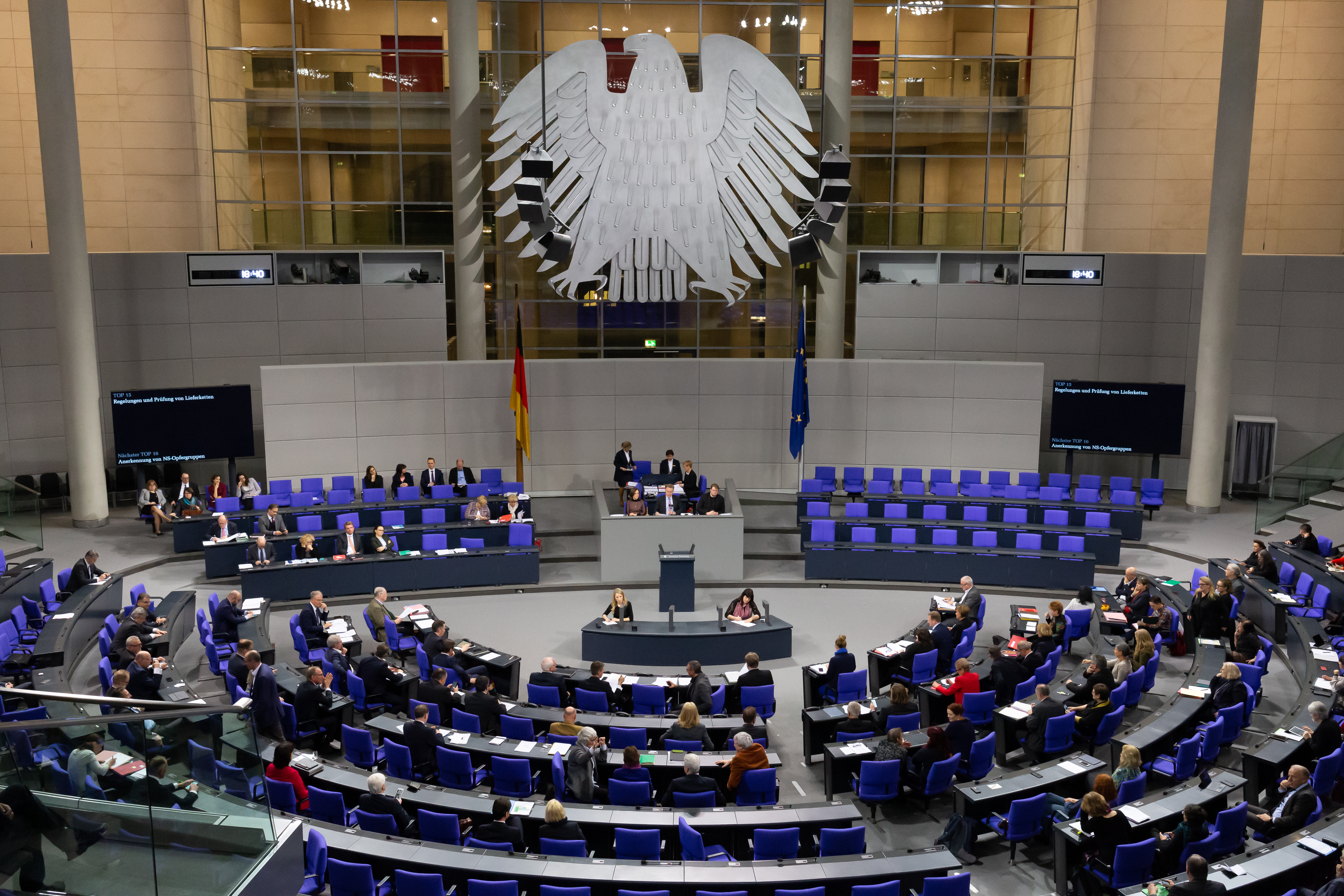

The upcoming election on February 23, 2025, in Germany was triggered by the failure of the governing coalition, composed of a social democratic, liberal and environmentally oriented socialist party elected in 2021. While political parties across Germany renew their campaigning efforts, this article examines the role of media and influential individuals in shaping election debates in and around those campaigns.
The central thesis of this analysis is that election debates — and by extension, elections themselves — are driven primarily, if not entirely, by emotions. To explore this, I analyse the internal structures of political parties, their organisational interests and the methodology they employ to achieve these goals. As a case study, the participation of a foreign businessman, namely Elon Musk, in Germany’s election debate will serve to illustrate how emotional narratives and external influencers shape the political landscape. This is further exemplified by Musk’s media presence alongside the AFD’s lead candidate, highlighting the interplay between prominent figures and political agendas.
Structural Issues in Political Elections
Starting with an overview of the political landscape, there is basically an establishment of parties which range from the christian-democrates (CDU), the social-democrats (SPD), an environment-socialist party (Die Grüne) and the economically liberal party (FDP). Since the founding of the Federal Republic of Germany in 1949, these parties have continuously formed coalitions with one another, fostering a sense of familiarity and mutual understanding in their political collaboration. Besides them, which in the following I will collectively state as established parties, there is another upcoming social-liberal party (BSW) and a national-conservative party (AFD; Alternative for Germany) that gained a lot of popularity within the society. The AFD’s programme is comparable to that of Rassemblement National (France), Fratelli d’Italia (Italy) and Freiheitliche Partei Österreichs (Austria), especially in their typical key points such as migration policy and nationalism, emphasising strict immigration controls and national sovereignty. While the AfD is addressing problems that have a significant impact on society’s perception – which is reflected in their electoral success – the manner in which they address the problems is populistic and easy to access. The populistic methodology is a central point of criticism and is frequently utilised as a tool for mobilising opposition against this party. However, this populism is, in fact, a symptom stemming from the underlying structural issues of the political party system.
Current political structures are solely built on two components: money and power. In terms of political systems, this is establishing a structure in which the ultimate goal setting of political parties must be to secure and expand their political power. Their power correlates with the influence they have on the discourse, debates, ideologies and the general perception of society, due to amplified investment capabilities to influence public opinion. This stems from the organisational interests of political parties, as they can only survive if they influence the electorate — specifically, if they are able to secure votes. To do so, they are often compelled to appeal to the electorate on an emotional level, as this approach is far more effective and attractive than engaging in purely technical debates about more efficient policymaking. Political parties are forced to gain votes from the public in order to stay in power. Therefore, they need to address the interests of a subgroup within the society, which are based on emotions and ideologies. An individual then makes his voting decision by considering which party best aligns with his ideology. This ultimately results in an emotional policymaking rather than a technical approach that could potentially create benefits for the whole society because parties will then pragmatically target people’s emotions to appeal to them and receive their votes.
By definition, all parties engage in some level of populism to interact with and mobilise the electorate on an emotional level. This becomes particularly evident in the context of how German political parties approach the AFD and its platform. While an effective approach to countering highly populist policies lies in deconstructing their methodology, such as offering simplistic solutions to complex problems, and addressing them through open and continuous discourse, the current reality in Germany reveals a different strategy. The established parties have erected a so-called “firewall” against the AFD, effectively ruling out any dialogue or cooperation. This strategy creates two opposing narratives. On the one hand, the AfD promotes the idea that only they can bring about meaningful improvements to living conditions and address pressing societal issues. On the other hand, the established parties propagate the narrative that the AFD is merely a hollow, far-right populist party, whose ideas — and by extension, the voices of their voters — must be outrightly dismissed. Both narratives are interconnected and mutually dependent, constantly reinforcing one another in their respective arguments. This dynamic forms the foundation of the current political climate, setting the stage for the unfolding electoral campaigns.
Political Campaigning
In contemporary democracies, political parties need to address the emotional level of voters in order to pursue their organisational interest of strengthening their power and influence within the society. This is not preserved for one party but is a structural issue that dictates the spectrum of the political discourse. Therefore, political campaigns, as the name already reveals, are a strategic methodology including several tools to advertise the ideologies and advocated policymaking. One of the main tools in campaigning is the use and influence of the media, and nowadays, the use of social media. Furthermore, endorsements by individuals such as economists, scientists, foreign politicians and even celebrities have become a popular method of manipulating voters on an emotional level. I specifically use the term manipulation here, as the instrumentalisation of celebrities, for example, regardless of their political tendencies, serves as a way to target the celebrity’s supporters without engaging in substantive political discourse or addressing the actual issues at hand. It is evident that scientists and economists are likely to support a party that aligns with their research findings and policy recommendations. Similarly, foreign politicians tend to endorse the party whose ideology or international agenda aligns with their own national interests or diplomatic strategies. Such endorsements often carry significant weight, as they lend expertise and global credibility to the party, even though these endorsements may be driven by personal or political alignment rather than objective evaluation.
The use of media is utilised in two different ways: either to improve the reputation of one’s own party or to undermine the standing and credibility of another party, including personal attacks on its members. One common method is the use of keywords in order to frame the emotional fundamentals of a debate. While this method denies an objective discussion about technical improvements in policymaking, the semantic inconsistencies connected to the use of key words further contribute to polarising the discourse and obscuring meaningful solutions to pressing issues.
Specifically in Germany, where we have two opposing narratives, framing one another becomes significantly more important. The AFD precisely targets the established parties, particularly the current government, and instrumentalises specific events that align with its dogmatic messaging — for example, crimes committed by (illegal) immigrants. On the other hand, the established parties often rely on buzzwords such as democracy, freedom or dictatorial to shape the debate and evoke emotional responses. Personal attacks are evident in both narratives, further emphasising the populistic characteristics of their campaigns. At this point, it is necessary to deviate briefly from the structural analysis to focus on the dilemma faced by the established parties. To strengthen their own narrative, they are compelled to critique the AFD’s. However, criticising the AFD’s populistic methods, while simultaneously employing populism itself, risks undermining their credibility with voters. This perceived inconsistency reinforces the AFD’s narrative that the established parties are hypocritical and disconnected from the concerns of ordinary citizens, presenting the AFD as the sole alternative for meaningful change. Moreover, when real societal issues, such as the relatively high rate of crimes committed by migrants, are denied or downplayed by the established parties, particularly when these issues are publicly highlighted and instrumentalised by the AFD, it inadvertently feeds into the AFD’s framing. Whether intentional or not, this response risks validating the AFD’s argument that the traditional parties are unwilling to address pressing societal concerns transparently. This interconnectedness of narratives shapes the dynamics of Germany’s current electoral campaigns, with both sides leaning heavily on framing strategies to influence public perception and mobilise voters.
The Participation of Elon Musk
It should be obvious that the structure of political parties is, by nature, sensitive to corruption and unethical tactics. As the components of money and power are interconnected, political parties also depend on financial support to strengthen their influence, which can lead to pressure from lobbyists. Conversely, they can use financial capital to shape mechanisms that influence public perception or political discourses. Another critical issue, comparable to the problematic structures of political parties, is the potential influence exerted by non-governmental organisations (hereinafter: NGOs) and wealthy individuals (in terms of financial capital). While current political systems are proclaimed to be democratic — referring not to a dogmatic interpretation but to its original meaning of governance by the people and the election of government representatives — the influence of these actors becomes significant when political parties rely on securing as many votes as possible. Wealthy individuals can secure personal benefits and improve their own power by financing and investing in political structures. NGOs, on the other hand, can shape the political discourse through strategic public relations campaigns and solidify their influence by ensuring their ability to control voter preferences. Moreover, NGOs actively invest in young political talents, advancing their careers and thereby embedding their influence across various aspects of political structures (for example the Young Global Leaders program of the World Economic Forum).
Here, the participation of Elon Musk highlights the underlying structural issues in the German election debate. Due to Musk’s economic power, his significant influence on public discourse — a result of his charismatic personality that captures public attention and his impact on the social media platform X (formerly known as Twitter) — his involvement in the debate, particularly through offering a significant platform to the AFD’s lead candidate (Alice Weidel), poses a serious challenge to the political standing of the established parties. First, the established parties are actively attempting to frame the debate between Musk and Weidel in a populistic manner, including personal attacks not only on Weidel but also on Musk. The problem arises when this discourse is divided into the two existing narratives. By doing so, the established parties position Musk within the AFD’s narrative, effectively aligning one of the most influential individuals on the planet with their political opposition. Why are they taking this approach? By framing Musk within the opposing narrative, they aim to strengthen their own stance as a counterforce to populism. However, this strategy comes with a significant downside. Within society, this hypocritical methodology — employing populistic tactics while criticising populism — further damages the established parties’ credibility and reinforces the AFD’s argument against the established political establishment.
Furthermore, as a result of the tactics employed by the actors of both narratives, they are strengthening the underlying issue of lobbying and increasing the attractiveness for non-political (in terms of governmental structures) stakeholders to participate in and influence political campaigning and policymaking. This creates a structural loop, where external entities see greater opportunities to advance their agendas through financial support or public influence. Consequently, the boundaries between genuine politics and the interests of these external stakeholders become increasingly blurred, further undermining trust in the governmental structures.
Solution Strategies
People primarily develop within the structures they inhabit. To shift societal perceptions, it is essential to evolve and refine the underlying political structures. At the same time, individuals can exert influence and apply pressure to challenge and reshape these established systems. These recommendations are grounded in the concept of genuine knowledge production — an approach that prioritises the realisation of each individual’s potential, thereby fostering a system that thrives on the resulting efficiency and collective progress.
Structural changes:
Politics, at its core, is a science: a continuous process of hypotheses and theories, whose validity endures until disproven. As such, it should remain a purely technical process, free from emotional influence in decision-making. Meaningful change requires reforms that remove the dominance of money and power, focusing instead on fostering a system oriented toward societal fulfillment. Societies must adopt goals beyond the mere pursuit of power and wealth, which are inherently relative and value-dependent. The highest form of human development, as suggested by theories like Maslow’s Hierarchy of Needs or Essydo’s Hierarchy of Happiness, lies in achieving fulfillment through genuine knowledge production. This principle applies not only to scientists but also to philosophers, economists, artists and cultural figures, whose greatest achievements stem from striving to fulfill their potential. To create such a system, structural reforms are necessary, particularly in electing government representatives. Opportunities for corruption or manipulation of the electorate must be eliminated. Candidates should view their participation as a responsibility to society, not a means to personal advancement. Political parties’ interests must be separated from governmental structures — or, if needed, political parties must be excluded entirely. Additionally, candidates should be selected based on their qualifications, with minimum standards such as a degree in political science and expertise relevant to the office they seek (e.g., a skilled economist for the finance ministry). Ensuring voters make decisions free from emotional bias is equally important, prompting consideration of whether the electorate itself should have certain qualifications to participate in the political process. Just as laypersons do not contribute to scientific research, why should the same not apply to politics, which fundamentally shapes the lives of everyone in society?
Individuals:
Primarily people need to detach from the emotional manipulation that stems from the analysed methodologies. Here, individuals have a variety of chances to put pressure on the current structure by forcing them to bend to their will. For example, individuals could avoid all the platforms where political actors employ emotional influence (such as buzzwords, populistic approaches, etc.) and enhance the medial organs, in which the focus lies on technocratic debates about advanced policymaking or on genuine knowledge production. Through this, the attractiveness of campaigning is decreasing, as it would not be worth investing time and capital without significant results (decreasing audience). The main driving factor to resist and acknowledge emotional manipulation is in fact genuine knowledge production, especially in the realms of politics, political philosophy and sociology. Understanding the structural interest of the different participants both in political and social structures, as well as the understanding of the different methodologies, will improve the consciousness an individual can develop. Furthermore, learning about political themes from different perspectives will naturally lead to a more defined decisionmaking, which potentially will be less influenced by indoctrinated ideologies.
Resumé
Elon Musk’s participation in the German election debate is a consequence of the underlying structural issues of the political party system. The existing parties need to campaign in order to fulfill their structural necessity of securing votes. Therefore, as the thesis of this analysis predicted, they need to address the electorate on an emotional level. To achieve this, both the established parties and the AFD actively propagate their respective narratives. Here, the participation of Elon Musk is instrumentalised by both narratives to strengthen their position and argumentation. From an objective perspective, his participation — or in general, the symptoms of the structural deficiencies — should be considered irrelevant to technocratic policymaking and not a primary concern. Instead, the focus must shift toward improving these structures and eliminating the frameworks that allow such issues to arise. To achieve such a structure, the most effective method would be to build a state system around the approach of general knowledge production. This approach is the foundational pillar of Essydo Politics, fostering a society in which political decisions are based on expertise, collective progress and the fulfillment of human potential, rather than the pursuit of power and financial capital.