
Russia
Volodymyr Zelenskyy: Territorial Concessions Remain Kyiv’s Biggest Challenge
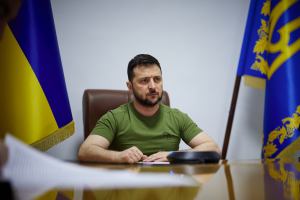
Ukrainian President Volodymyr Zelenskyy stated on 1 December 2025, that the issue of territorial concessions remains the ‘biggest challenge’ for Ukraine. The President made the comments as senior officials from the United States of America (hereinafter: USA) were due to meet with Russian President Vladimir Putin in Moscow following weekend talks with Ukrainian negotiators in Florida. The diplomatic effort...

Russia Offers Written Guarantee of Non-Aggression Against Europe
Russian President Vladimir Putin has formally rejected allegations that Moscow is preparing to attack members of the North Atlantic Treaty Organisation (hereinafter: NATO), describing the idea as “ridiculous” and offering to formalise his assurances in writing (Al Jazeera). Speaking on 28 November 2025, Putin stated that while the concept of attacking Europe sounds absurd to...

Deterrence on Trial: Russia’s Drone Incursion into Poland and the Low-End Stress Test for NATO
Since late summer, Russia’s long-range strike campaign against Ukraine, built around cruise missiles and Shahed-type drones, has pushed the risks of cross-border spillover to the front of North Atlantic Treaty Organisation (hereinafter: NATO) politics. That abstraction turned concrete on the night of 9-10 September 2025, when 19 suspected Russian drones crossed into Polish airspace during...


Putin and Trump Plan High-Stakes Budapest Summit
The President of the Russian Federation, Vladimir Putin, and the President of the United States of America (hereinafter: USA), Donald Trump, have agreed to hold a bilateral summit in Budapest, Hungary, within approximately two weeks. This high-profile meeting, confirmed by the Russian government, is ostensibly aimed at finding a resolution to the ongoing conflict in...

2025 BRICS Summit in Brazil
This article examines the outcomes of the 2025 BRICS Summit in Brazil and assesses what they reveal about the bloc’s role in shaping global governance. It analyses the expansion of BRICS into a broader coalition of emerging economies, the internal challenges reflected in the absence of key leaders, and the implications for multipolarity and the...


The Role of Türkiye in International Politics
In 2020, we found that multipolar global, political orders are much more beneficial for international and national development than unipolar and bipolar global orders. Within the devletist framework, which emerged in 2022, this notion is further supported through analysis at much deeper levels than merely the power-political surface. Today, we can observe several trends at...