Emre Şentürk
Emre Şentürk founded the online blog, Essydo Magazine, in 2020, which he turned into Essydo Politics in 2024 – the think tank that we are today. He has more than 10 years of
experience in political analysis and is vested with a graduate degree from Leiden University, which ranks among the world’s top 20 universities in the political sciences. He is the author of “Devlet”, which establishes Essydo Politics’ core normative and scientific framework. Next to this achievement, he developed several scientific innovations in the field
of politics. Currently, Emre Şentürk also holds a leadership position in a German finance company as the Chief Operating Officer, where he was recently also awarded the “COO of the Year 2025 (Europe): Fintech & Growth” award.
Emre Şentürk founded the online blog, Essydo Magazine, in 2020, which he turned into Essydo Politics in 2024 – the think tank that we are today. He has more than 10 years of
experience in political analysis and is vested with a graduate degree from Leiden University, which ranks among the world’s top 20 universities in the political sciences. He is the author of “Devlet”, which establishes Essydo Politics’ core normative and scientific framework. Next to this achievement, he developed several scientific innovations in the field
of politics. Currently, Emre Şentürk also holds a leadership position in a German finance company as the Chief Operating Officer, where he was recently also awarded the “COO of the Year 2025 (Europe): Fintech & Growth” award.
Game Theory in Political Science
Politics is, at its core, a matter of interaction. Voters respond to candidates, candidates respond to one another, states respond to the moves of other states and legislators respond to the rules under which they bargain. Whenever the outcome for one participant depends on what others choose to do, the situation invites a particular kind...


The Monroe Doctrine
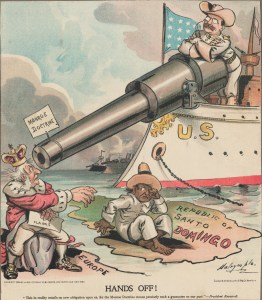
On 2 December 1823, President James Monroe delivered his seventh annual message to the Congress of the United States of America (hereinafter USA). Buried within a long routine address — much of it concerning fiscal accounts, post roads and tariffs on hemp — were several paragraphs that would, over the following two centuries, be elevated...
The Problem Of Communism
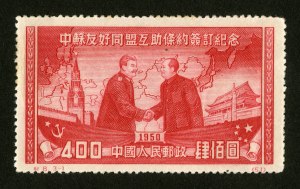
The idea of communism is now a little less than 200 years old, and since then, it has had a remarkable history. It is one of the fastest proliferated ideologies in political history. More interestingly, however, is that since its emergence, communism has been able to inform many, and also large, state systems, such as...
Meso-Level Capitalism: A Conceptual Introduction
Societal behaviour is shaped by the structures that limit and incentivise behaviour; this is one of the cornerstones of our political approach. However, structures are neither static nor did they arise from nothingness, but are constructed and influenced by us. We have shown multiple times that politicians are often not aware of how these structural...

What Can Türkiye Do?
Continuing with the last work in our five-article series on the current war on Iran, we are adopting the strategic lens of Türkiye. In this article, we put ourselves in the position of the Turkish state to understand what it can do within this war. As Türkiye is multidimensionally affected by this war, we will...

What Can Arabia Do?
Continuing with the fourth work in our five-article series on the current war on Iran, we are adopting the strategic lens of Arabia, defined as the whole of Syria, Iraq, Lebanon, Jordan, Palestine, Saudi-Arabia, Kuwait, Bahrain, Qatar, the United Arab Emirates (hereinafter: UAE), Oman and Yemen. In this article, we put ourselves in the position...