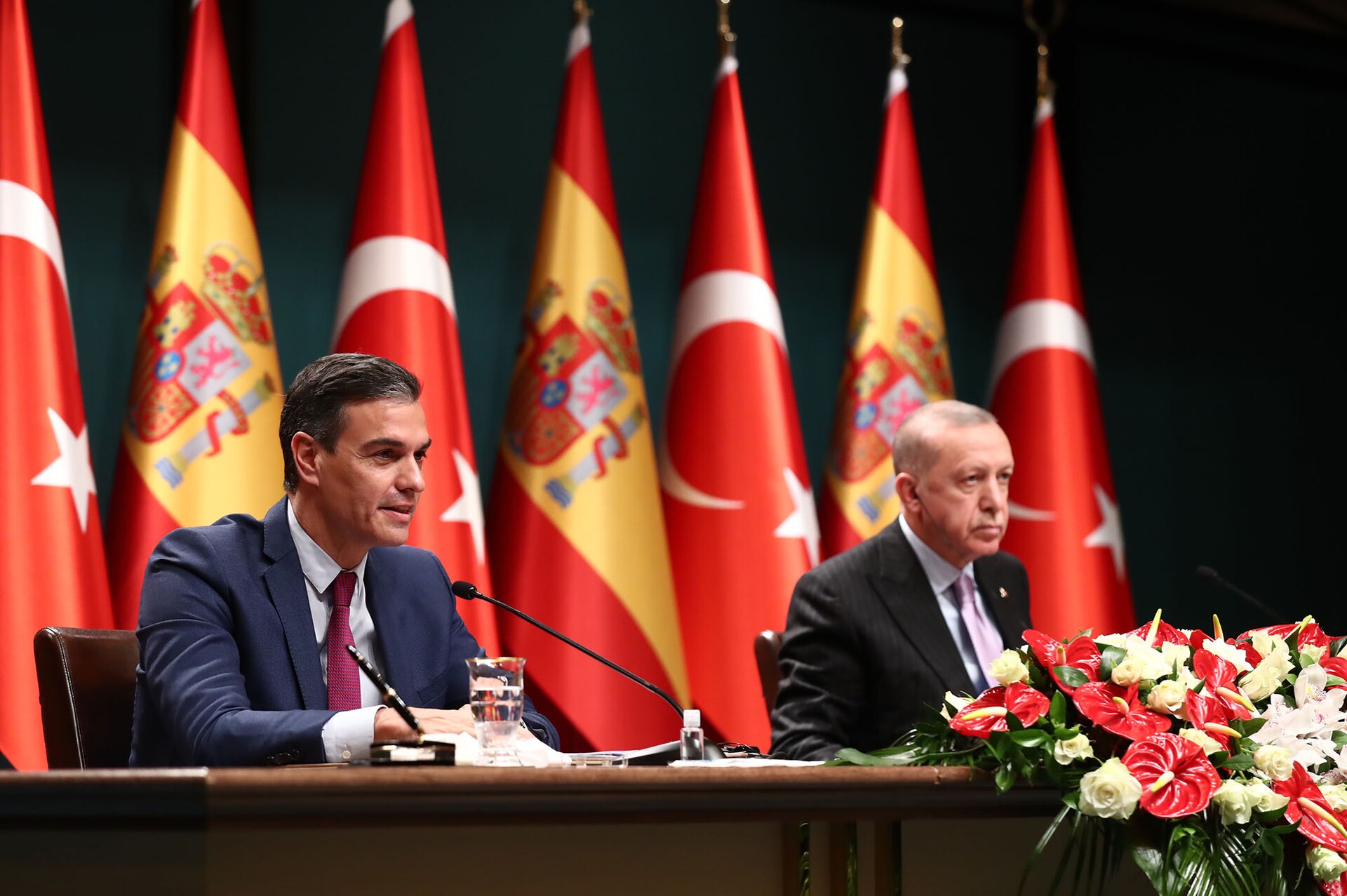

Spain has removed its ambassador to Israel following months of diplomatic tensions between the two states. The Spanish government published a decree terminating the appointment of Ambassador Ana María Salomón Pérez, while announcing that its embassy in Tel Aviv will be headed by a chargé d’affaires for the time being. The decision comes amid disagreements over the Gaza genocide, Spain’s restrictions on arms transfers to Israel and Madrid’s opposition to military aggressions against Iran.
Spain Removes Ambassador To Israel
Government Terminates Diplomatic Post
The Spanish government confirmed that the ambassador’s position in Israel had been formally terminated. The decision was published in Spain’s official state gazette after approval by the Council of Ministers. Ambassador Ana María Salomón Pérez had already been recalled to Madrid in September 2025 during earlier tensions between the two states. According to Reuters, the recall occurred after a diplomatic dispute linked to Spain’s restrictions on arms shipments connected to Israel’s conquest and genocide in Gaza.
Following the removal of the ambassador, Spain’s embassy in Tel Aviv will continue operating under the leadership of a chargé d’affaires until a new diplomatic appointment is made. The decision represents the latest development in a diplomatic rift that has developed between Madrid and the Israeli government since the beginning of the Gaza war in 2023.
Arms Restrictions And Political Disputes
Relations between Spain and Israel have been strained by several measures adopted by the Spanish government in response to Israel’s breaches of international norms and grave political misconduct. The European nation introduced restrictions preventing aircraft and ships transporting weapons to Israel from using Spanish ports or airspace.
Spain’s parliament has also supported an arms embargo on Israel in connection with the Gaza war. These measures were presented as part of broader actions concerning its policy toward the war. The restrictions contributed to a diplomatic dispute between the two states. Israeli officials criticised the measures, while Spanish authorities maintained their position regarding arms transfers and military logistics linked to the conflict.
Spain’s Position On Military Operations Against Iran
Refusal To Allow Use Of Military Bases
Spain has also taken positions related to the war on Iran by Israel and the United States of America (hereinafter: USA). The Spanish government denied requests to allow the USA to use jointly operated bases in Rota and Morón for strikes against Iran. The bases are operated jointly with the USA but remain under Spanish sovereignty. Following Spain’s refusal, several North American military aircraft departed from the facilities.
Spanish Foreign Minister José Manuel Albares stated that Spain’s position regarding the war and the use of military bases had not changed. Prime Minister Pedro Sánchez also stated that his government opposed the military aggression against Iran. The government described the conflict as a matter requiring diplomatic solutions rather than military escalation.
International Responses And Concluding Outlook
Within the international state community, the diplomatic responses from Europe have been mixed. While Germany and the USA have outspokenly criticised the stance, France has given a reluctant positive nod to Spain’s approach to the war. In Türkiye, on the other hand, the population stands firmly with Spain and praises its posture in the war on Iran, as well as earlier positions on Gaza. European nations in particular have difficulties diplomatically as they are between siding with their ally across the Atlantic Ocean and their integral partner in Iberia.
Generally, Spain’s positioning in the war has shown that alliances are not meant to be viewed as blank cheques for partners to behave at will. Rather, each nation can and should maintain its distinct position and have the opportunity to support or oppose in accordance with its norms and values. Diplomacy should be viewed as a universally applicable, dogmatic and absolute entity. States should be able to disagree with each other without fearing grave consequences.