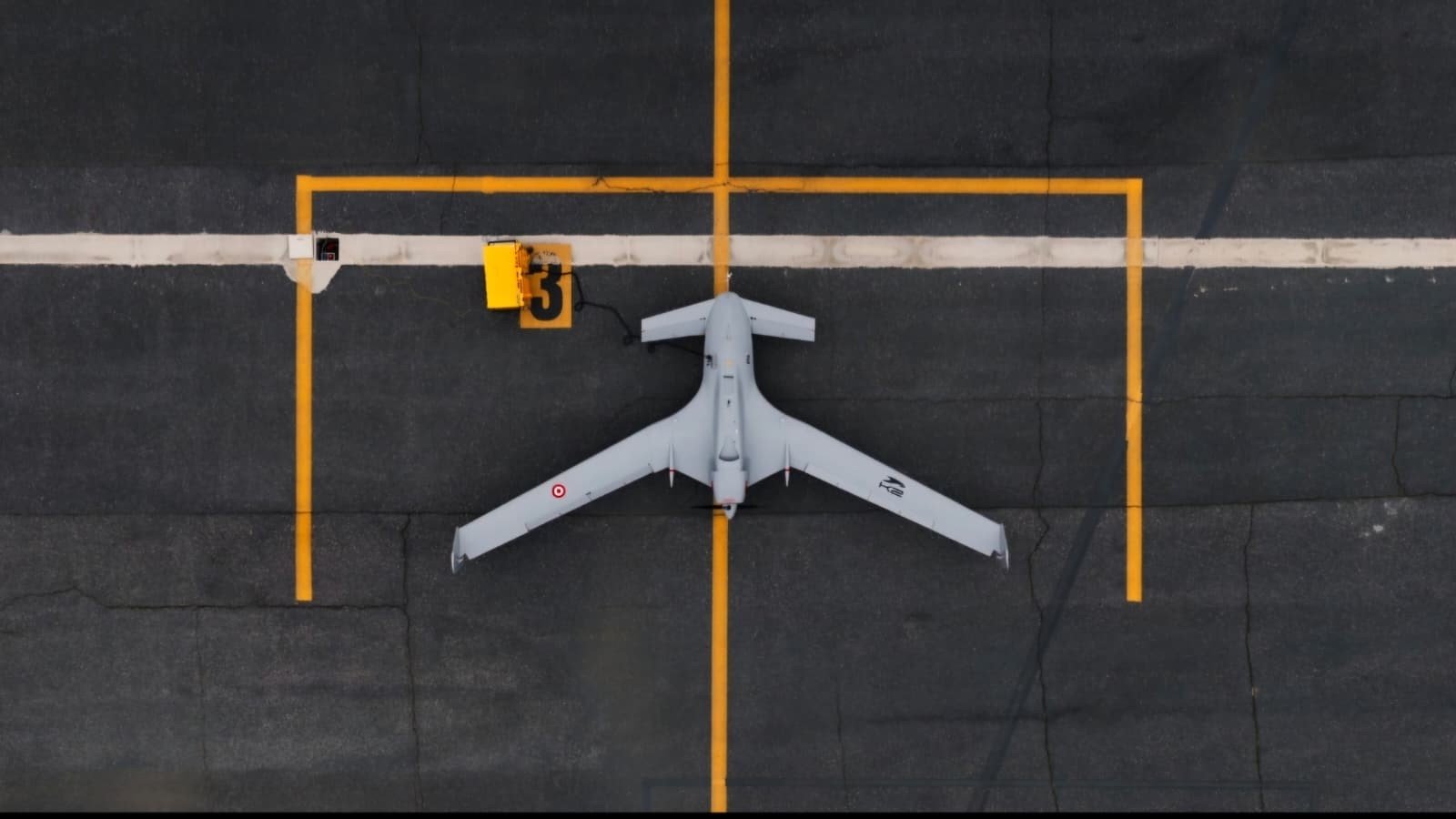

Türkiye is expanding the development and application of artificial intelligence (hereinafter: AI) technologies across multiple sectors, including defence systems, startup ecosystems and national digital infrastructure. Recent announcements include the introduction of an artificial intelligence-enabled unmanned aerial vehicle by the defence company Baykar and initiatives to establish sovereign artificial intelligence infrastructure aimed at supporting domestic companies and technology development.
Artificial intelligence technologies are also incorporated into broader government technology strategies that focus on innovation, defence systems, industrial development and digital infrastructure.
Baykar Introduces K2 Artificial Intelligence-Enabled Drone
Technical Characteristics Of The K2 System
Turkish drone manufacturer Baykar recently introduced a new unmanned aerial vehicle known as the K2 kamikaze drone. The system integrates artificial intelligence-based flight and targeting capabilities designed to enable autonomous operation and coordinated flight patterns between multiple aircraft.
The K2 drone uses artificial intelligence-based vision systems to support navigation, target identification and engagement functions during flight. According to information released during the presentation of the platform, the aircraft can perform autonomous swarm operations, allowing several drones to operate together while coordinating their movements through onboard algorithms.
The system has a range exceeding 2000 kilometres and is capable of carrying a warhead weighing approximately 200 kilograms. The platform’s maximum take-off weight is about 800 kilograms. It is designed to operate from short or unprepared runways and can be deployed in multiple operational scenarios.
The drone is part of a broader portfolio of unmanned aerial systems developed by Baykar. These include platforms such as the Bayraktar TB2 tactical drone, the Bayraktar Akıncı high-altitude combat drone and the jet-powered Bayraktar Kızılelma unmanned fighter aircraft currently under development.
Artificial Intelligence Applications In Drone Operations
AI plays a central role in the operation of the K2 platform and other unmanned aerial systems developed in Türkiye. AI-based algorithms allow drones to analyse visual data, maintain flight formation and conduct coordinated manoeuvres during missions.
Tests conducted with the K2 system have included formation flights in which multiple drones maintained coordinated flight patterns such as line formations and V-shaped configurations. During these tests, onboard software processed data from sensors and cameras to determine the aircraft’s position relative to other drones and maintain the formation autonomously.
AI-supported systems are also designed to function in environments where satellite navigation signals may be unavailable or disrupted. The drone’s onboard sensors and imaging systems can analyse terrain features and visual references to determine its position and maintain navigation during flight. In addition to navigation functions, the drone integrates electro-optical and infrared imaging systems that enable reconnaissance and targeting capabilities.
Expansion Of Türkiye’s Artificial Intelligence Infrastructure
Development Of Sovereign AI Systems
Alongside developments in defence technologies, initiatives are underway to build a sovereign artificial intelligence infrastructure within Türkiye. The objective of the initiative is to create domestic computing capacity and AI software platforms that allow companies and startups to develop and deploy artificial intelligence applications without relying on foreign infrastructure providers.
The initiative involves building domestic data center capacity and creating an AI software layer designed to support local companies developing artificial intelligence products and services. The infrastructure is intended to provide computing power, data processing and development tools required for training and operating AI systems.
Investment funds and technology startups are participating in the project. One of the companies involved in the development of the infrastructure is Nuvena, which is working on establishing a platform that provides computing capacity and AI tools for Turkish firms and startups.
According to statements by investment advisors involved in the initiative, many domestic AI startups currently rely on foreign infrastructure for computing resources and data storage. The sovereign AI infrastructure project aims to provide local alternatives to these services.
Artificial Intelligence In Türkiye’s Technology Strategy
AI forms part of Türkiye’s broader technology and innovation strategy, which aims to expand domestic technological capabilities across multiple sectors, including defence, manufacturing, digital services and research.
The government adopted a National Artificial Intelligence Strategy covering the period from 2021 to 2025. The strategy defines objectives related to research, workforce development, startup ecosystems and digital infrastructure. Among its targets are increasing the economic contribution of artificial intelligence and expanding employment in AI-related sectors.
Government policy documents also identify AI as a key technology in future industrial development and digital transformation initiatives. These strategies include investments in research programmes, data infrastructure and educational programmes intended to support the development of artificial intelligence applications across different sectors.
AI Development Across Defence And Technology Sectors
Recent developments in drone systems and digital infrastructure illustrate the growing role of artificial intelligence in Türkiye’s technology ecosystem. AI technologies are being applied in defence platforms, industrial systems and digital services, while infrastructure initiatives aim to provide domestic computing resources for startups and companies developing AI applications.
These developments occur alongside broader efforts to expand research capacity, increase technological production and develop national technology infrastructure supporting artificial intelligence and other advanced technologies. The integration of artificial intelligence into defence systems, digital infrastructure and innovation programmes represents a central component of current technological development initiatives in Türkiye.