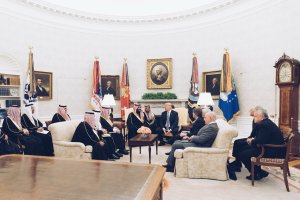
The United Arab Emirates (hereinafter: UAE) are pulling forces out of Yemen as the Ministry of Defence announced the termination of its remaining military mission on 30 December 2025. This decision followed an airstrike conducted by the coalition led by the Kingdom of Saudi Arabia on the Yemeni port of Mukalla earlier that morning. The UAE government stated that the withdrawal of its counter-terrorism units was a voluntary measure prompted by a comprehensive assessment of recent developments and the safety of its personnel.
Saudi Strike on Mukalla Port
The Saudi-led coalition executed what it described as a “limited military operation” at the port of Mukalla on Tuesday, 30 December 2025. According to the Saudi Press Agency (hereinafter: SPA), the strike targeted a large quantity of weapons and armoured vehicles that had been offloaded from two vessels, including the St. Kitts-flagged ship Greenland. Major General Turki al-Maliki, spokesperson for the coalition, stated that the ships had arrived from the UAE port of Fujairah and entered Mukalla without official authorisation.
Saudi authorities alleged that the cargo was destined for the Southern Transitional Council (hereinafter: STC), a separatist faction backed by the UAE that has recently expanded its territorial control. The coalition justified the intervention by declaring the shipment an “imminent threat” to regional stability and Saudi national security. Footage released by Saudi state television purported to show surveillance of the military vehicles being moved to a staging area within the city.
UAE Response and Diplomatic Fallout
The UAE Foreign Ministry categorically rejected the Saudi allegations, stating that the shipment did not contain weapons but rather vehicles intended for Emirati forces already operating within the nation. Abu Dhabi expressed surprise at the airstrike and denied pressuring any Yemeni party to engage in military escalations threatening Saudi borders. Despite these denials, the UAE Ministry of Defence confirmed the immediate withdrawal of its remaining counter-terrorism teams, which had been the only Emirati forces remaining since the nation’s primary military exit in 2019.
The incident led to an immediate collapse of existing security agreements between the UAE and the internationally recognised government of Yemen. President Rashad al-Alimi, head of the Presidential Leadership Council (hereinafter: PLC), officially cancelled a joint defence pact with the UAE on 30 December 2025. Al-Alimi issued a 24-hour ultimatum for all remaining Emirati forces to leave the nation and declared a 90-day state of emergency. Additionally, the PLC announced a 72-hour air, sea and land embargo on all ports and border crossings.
Regional Implications of the UAE Withdrawal
The rift between the two major Gulf powers occurs as STC forces have seized vast portions of the Hadramawt and Al-Mahra provinces, including critical oil infrastructure. Saudi Arabia views the expansion of UAE-backed separatist control as a “red line,” fearing that instability near its southern border could compromise the security of the kingdom.
Key regional and international reactions included:
- USA: The Foreign Minister held discussions with both the Saudi and Emirati Foreign Ministers to address the escalation.
- Qatar: The government stated that the security of Saudi Arabia is inseparable from its own national security.
- UN: The United Nations humanitarian office urged the protection of civilian infrastructure at the port of Mukalla to avoid further disruption of supply chains.
Concluding Outlook
The total withdrawal of the UAE represents a fundamental restructuring of the anti-Houthi coalition and signals a shift toward a more unilateral Saudi security policy in Yemen. The primary development involves an increasing probability of direct conflict between Saudi-backed government forces and the UAE-backed STC, as the latter currently administers the majority of the former South Yemen territory.
The institutional collapse of the joint defence agreement suggests that Saudi Arabia, and by extension its allies, will now exercise exclusive control over Yemeni airspace and maritime borders to prevent further unsanctioned military supplies. This development likely leads to a period of heightened fragmentation within the nation, as the divergence in regional strategies between Riyadh and Abu Dhabi has become a formalised diplomatic break. The likely result is a consolidation of Saudi influence in the eastern provinces of Hadramawt and Al-Mahra to secure its border, while the southern separatist movement faces increased isolation from the coalition framework.