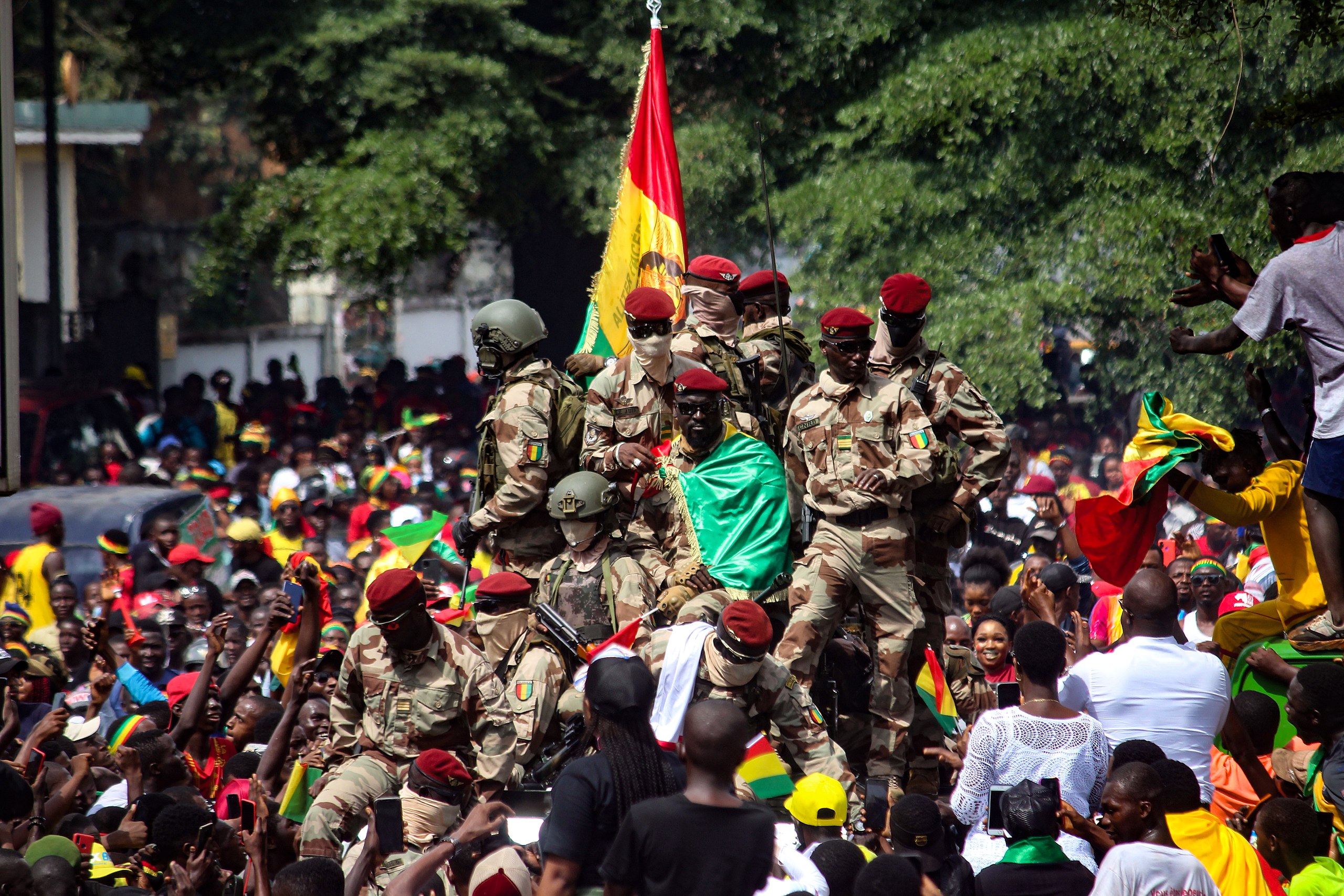

Mamady Doumbouya wins the presidential election in Guinea according to provisional results released on 30 December 2025, facilitating a transition toward a civilian-led government following a military takeover in 2021. The Independent National Electoral Commission (hereinafter: CENI) announced that the 41-year-old former special forces commander secured 86,72% of the total votes cast during the polls held on 28 December 2025. This absolute majority eliminates the requirement for a runoff vote, though the Supreme Court of Guinea retains an eight-day window to validate these results or address potential legal challenges.
Electoral Results and Candidate Performance
On Tuesday, 30 December 2025, the provisional electoral data indicated that President Mamady Doumbouya faced eight other candidates for the executive office. Despite the number of contenders, the electoral process was marked by the exclusion of prominent opposition figures who were legally barred from participation. In response to these exclusions, major opposition factions within the nation coordinated a boycott of the vote, questioning the legitimacy of the electoral framework.
According to reports from Al Jazeera, the victory of President Mamady Doumbouya follows nearly five years of military-led governance. The President previously assumed authority in September 2021 after the ousting of former President Alpha Condé, who had held the position since 2010. This election represents the first national poll since the 2021 transition of power and is one of several political shifts involving military intervention in West and Central Africa since 2020.
Institutional Context and Media Environment
The lead-up to the 28 December 2025 vote was characterised by reports of significant restrictions placed upon the media and opposition parties within the nation. International observers and news agencies noted that the barring of key challengers allowed the current leadership to consolidate political support ahead of the legitimisation of its rule through the ballot box.
The Supreme Court now holds the institutional responsibility to review the conduct of the election. If no successful challenges are brought forward within the eight-day period, the provisional results will be formalised, officially ending the transitional period defined by the 2021 military takeover.
Concluding Outlook
The victory of President Mamady Doumbouya establishes a formalised civilian structure for a leadership that previously operated under military-transitional logic. By securing a significant majority of 86,72%, the administration has obtained a domestic mandate that, while contested by boycotting opposition groups, provides a legal basis for continued governance. The primary trajectory for the nation involves the institutionalisation of the current executive’s policies under a constitutional framework.
This development likely signals a period of attempted stabilisation where the government will seek to integrate military-origin leadership into permanent state institutions. However, the exclusion of main opposition leaders and the subsequent boycott suggest that while the state apparatus is consolidated, the society may remain politically divided. The immediate institutional outlook depends on the Supreme Court’s validation, which would confirm the transition from a provisional military council to a formalised presidency, potentially setting a precedent for other nations in the region currently under transitional military rule.
Finally, it must not be forgotten that nations that experienced political uncertainty and/or instability in the recent past are often prone to re-create those problems with their new governments. In some cases, politicians aim to exploit the power vacuum, whereas in other cases, foreign nations try to install favourable governments. The transition to a civilian government under the lead of a military professional might be a good model to bridge the nation’s development efforts into a more effective political system.