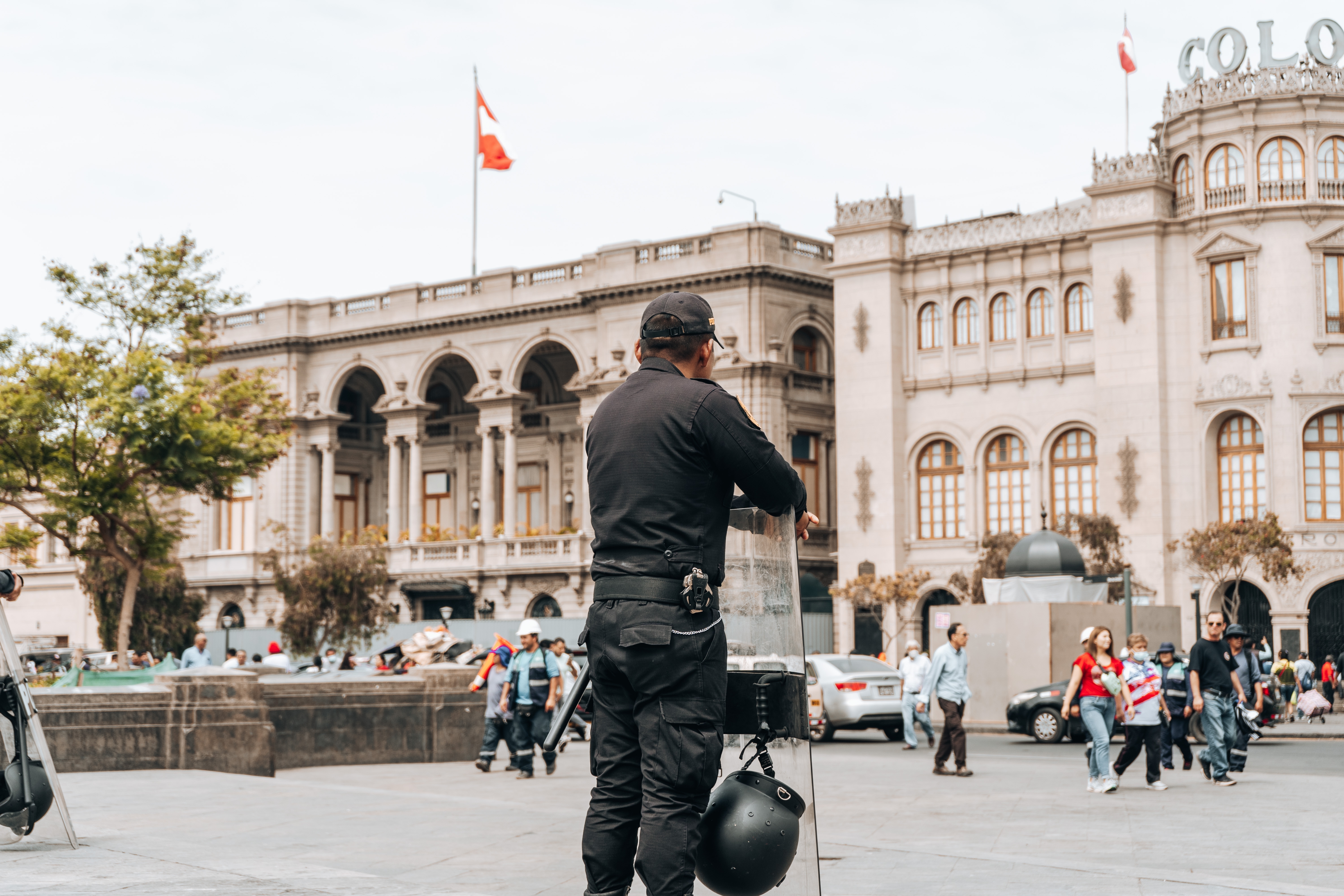

The government of interim President José Jerí declared a 30-day state of emergency in the capital of Peru, Lima, and the neighbouring province of Callao on 22 October 2025. This measure, the first major action by the interim President since taking office, is aimed at curbing a severe crime surge and restoring public order in the metropolitan areas. The declaration authorises the deployment of the military to assist the National Police in security operations and grants security forces increased rights.
The declaration follows weeks of social unrest and anti-government protests, which contributed to the recent removal of former President Dina Boluarte from office. The security crisis in Peru has escalated, with police reporting 1.690 murders between January and September 2025, an increase from 1.502 in the same period of the previous year.
Context of Political Instability
The declaration of the state of emergency occurs amid a deep political and institutional crisis in the nation. Former President Dina Boluarte was removed from office on 10 October 2025, after the Congress of the Republic of Peru approved her impeachment for “permanent moral incapacity”. The ousting was largely driven by public outcry and political pressure over her government’s perceived inability to effectively combat the rising wave of organised crime and violence, including a shooting incident in Lima involving an extortion-related attack on a cumbia band. Following her removal, José Jerí, the former President of Congress, was sworn in as the interim President. His appointment makes him the eighth person to hold the presidency in the last ten years.
State of Emergency and Measures Imposed
Military Deployment and Restriction of Rights
The decree grants security forces increased powers for the 30-day period. The armed forces are authorised to support the national police in maintaining public order and confronting criminal activity. The declaration also entails the suspension of several constitutional rights, including the freedom of assembly and protest, as well as the freedom of movement. Other specific measures introduced include:
- Banning two adults from riding together on a motorcycle.
- Restricting prison visits.
- Authorising power cuts to prison cells (except for lighting).
- Targeting and destroying illegal telecommunications antennas near prisons.
The move follows anti-government protests that escalated after President Jerí took office, resulting in clashes near Congress. According to The Guardian, a protest by youth-led groups demanding action against corruption and rising crime resulted in one protester, Eduardo Ruiz, being killed by a police officer, and over 100 people were injured. The deployment of the military is also seen by some analysts as an attempt to suppress ongoing popular unrest.
Concluding Outlook
The declaration of the state of emergency in Lima and Callao represents a political manoeuvre to directly address the crisis of citizen security that led to the downfall of the previous administration. By deploying the military and enacting restrictive measures, the interim government is signaling a commitment to a hardline stance against violence and organised crime, attempting to build public trust in its capacity to govern.
However, the efficacy of this approach is questioned, as similar emergency measures implemented by former President Boluarte proved ineffective in mitigating the crime surge. The strategy carries the risk of conflating anti-government protests — rooted in demands for action against corruption and crime — with criminal activity, potentially escalating tensions and increasing social conflict. The immediate outcome is thus defined by the government’s dual challenge: demonstrating measurable success in curbing the high rate of violence while navigating public dissatisfaction and the constitutional limitations of an interim administration leading up to the 2026 presidential election.