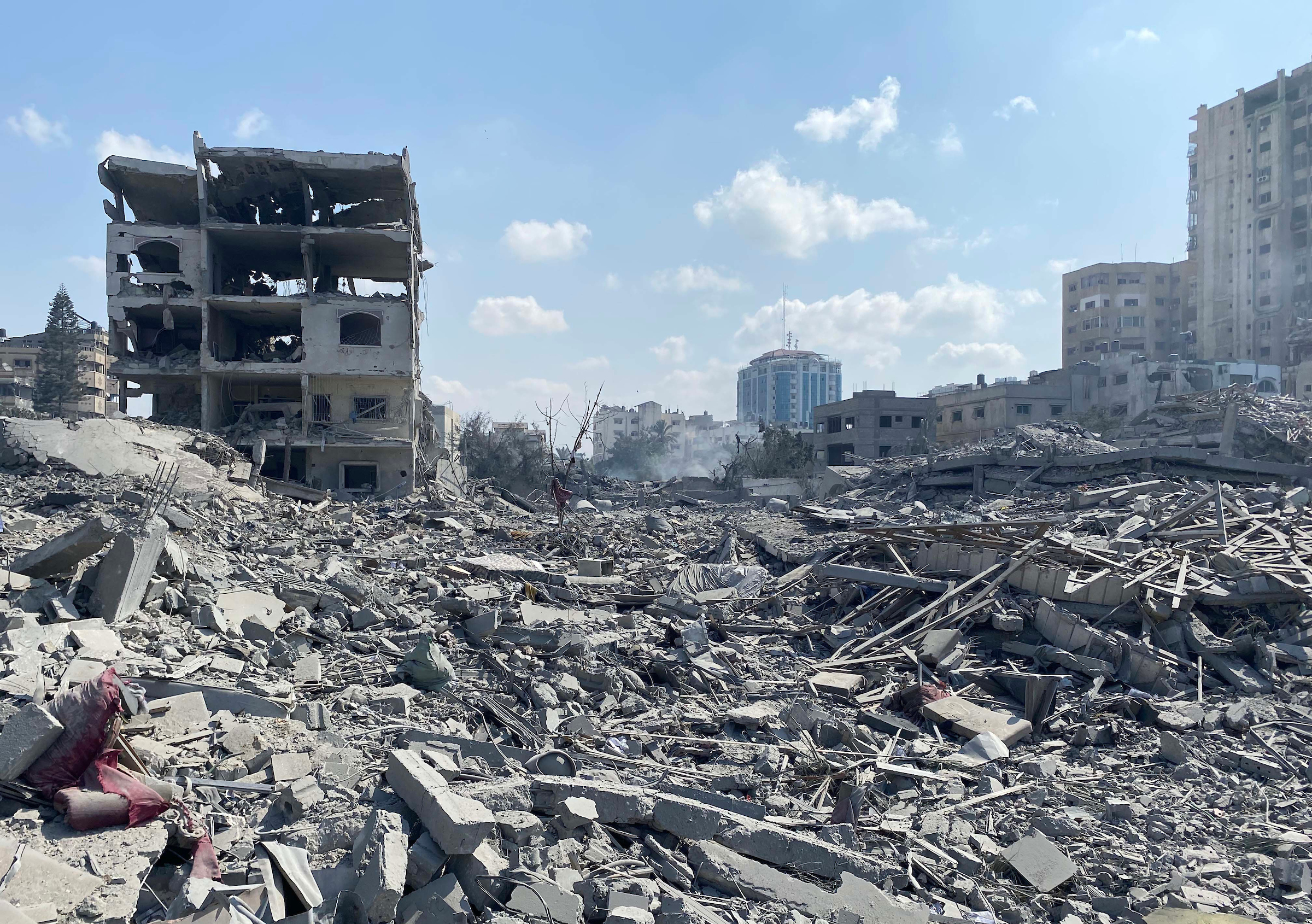

The nine-day-old ceasefire agreement faced its most severe challenge on Sunday, 19 October 2025, after the Israeli military launched a wave of strikes across the Gaza Strip, raising fears of an immediate end to the ceasefire. The Israeli Military stated the action was in response to alleged attacks on its troops by Hamas militants operating behind the ceasefire line in southern Gaza. The subsequent escalation placed the tenuous ceasefire, brokered by the United States of America, Egypt, Türkiye and Qatar, under immediate strain.
Hostilities Resume and Threat of end of ceasefire
On 19 October 2025, the fragile ceasefire was tested by a series of incidents, beginning with reports of attacks on Israeli troops in the Rafah area, in southern Gaza. The Israeli military reported that militants fired an anti-tank missile and gunfire toward soldiers who were working to dismantle infrastructure. The Israeli military officially condemned the action as a “blatant violation of the ceasefire agreement”. The military confirmed that two soldiers were killed in combat in southern Gaza.
In response, Israel launched a wave of air strikes against Hamas targets in southern, central and northern Gaza. According to The Guardian, the Israeli military said it struck dozens of targets across the Gaza Strip. Hamas’ military wing, the Izzadin al-Qassam Brigades, later claimed that 11 people were killed, including field commander Yahya al-Mabhouh. Gaza’s civil defence agency and local hospitals reported that a series of Israeli air strikes across the territory killed at least 45 people on Sunday. Israel announced that it had subsequently begun the “renewed enforcement of the ceasefire,” signaling an end to the retaliatory strikes.
Humanitarian and Diplomatic Pressure
The escalation prompted immediate diplomatic engagement and a halt in humanitarian operations. According to Al Jazeera, Gaza’s Government Media Office said that Israel had breached the truce agreement 80 times since its start, killing over 95 Palestinians, including 21 violations on Sunday, 19 October 2025.
An Israeli security official stated that the transfer of humanitarian aid into Gaza was halted “until further notice,” placing additional strain on the already tenuous situation. The Rafah border crossing was being kept closed by Israel, which cited the need for Hamas to return the remains of all deceased hostages. Hamas’ armed wing stated on Sunday that it had located the body of another Israeli hostage and would return it “if circumstances in the field” allowed. Hamas warned that continued air strikes would hamper search efforts and make such transfers impossible.
The United States of America was notified of Israel’s strikes in advance. United States of America envoys urged Israel to “respond proportionately but show restraint,” with the stated aim of demonstrating consequences for Hamas without damaging the peace agreement. Hamas denied a foreign ministry warning of a planned attack on Palestinian civilians, calling the allegation “false” and “aligned with misleading Israeli propaganda”.
Implications for the Political Horizon
The immediate return to conflict, even if followed by a renewed enforcement of the ceasefire, further diminishes the possibility of a political solution. This development reinforces the view that the underlying structural and military dynamics of the conflict have not been addressed by the current agreement.
The reported killing of five Hamas members, including a field commander, but more importantly, the dozens of civilians, may introduce further complications for the continuation of the agreement’s implementation. The ongoing exchanges of fire in proximity to the pre-defined ceasefire line signal an inherent structural instability in the current arrangements, increasing the risk of an irrecoverable breakdown.
Concluding Outlook
The events of 19 October 2025 illustrate that the functional integrity of the ceasefire is highly dependent on localised security situations and the willingness of all parties to absorb minor violations without escalating to a full military response. The scale of the Israeli retaliation following the Rafah attack, resulting in significant casualties, directly tests the conceptual distinction between a retaliatory strike and the complete end of the ceasefire.
The primary institutional challenge remains the establishment of clear, impartial and enforced mechanisms capable of immediately de-escalating military engagements near the ceasefire line. Furthermore, the continued linkage of humanitarian aid access to the resolution of security and hostage issues by Israel represents a policy that compounds the political instability and humanitarian crisis. This situation reinforces previous analyses that question the seriousness of European and neo-European states in pursuing a lasting cessation of hostilities, given that a commentary suggests serious questions exist about Israel taking a ceasefire seriously.
The underlying structural and military dynamics of the conflict, which one commentary suggests make the survival of Palestine uncertain, appear unaddressed by the current agreement. The current operational reality suggests that without a mutual commitment to isolating and resolving localised clashes through non-military means, the current phase of the agreement will be continually subjected to the risk of an irreparable collapse.