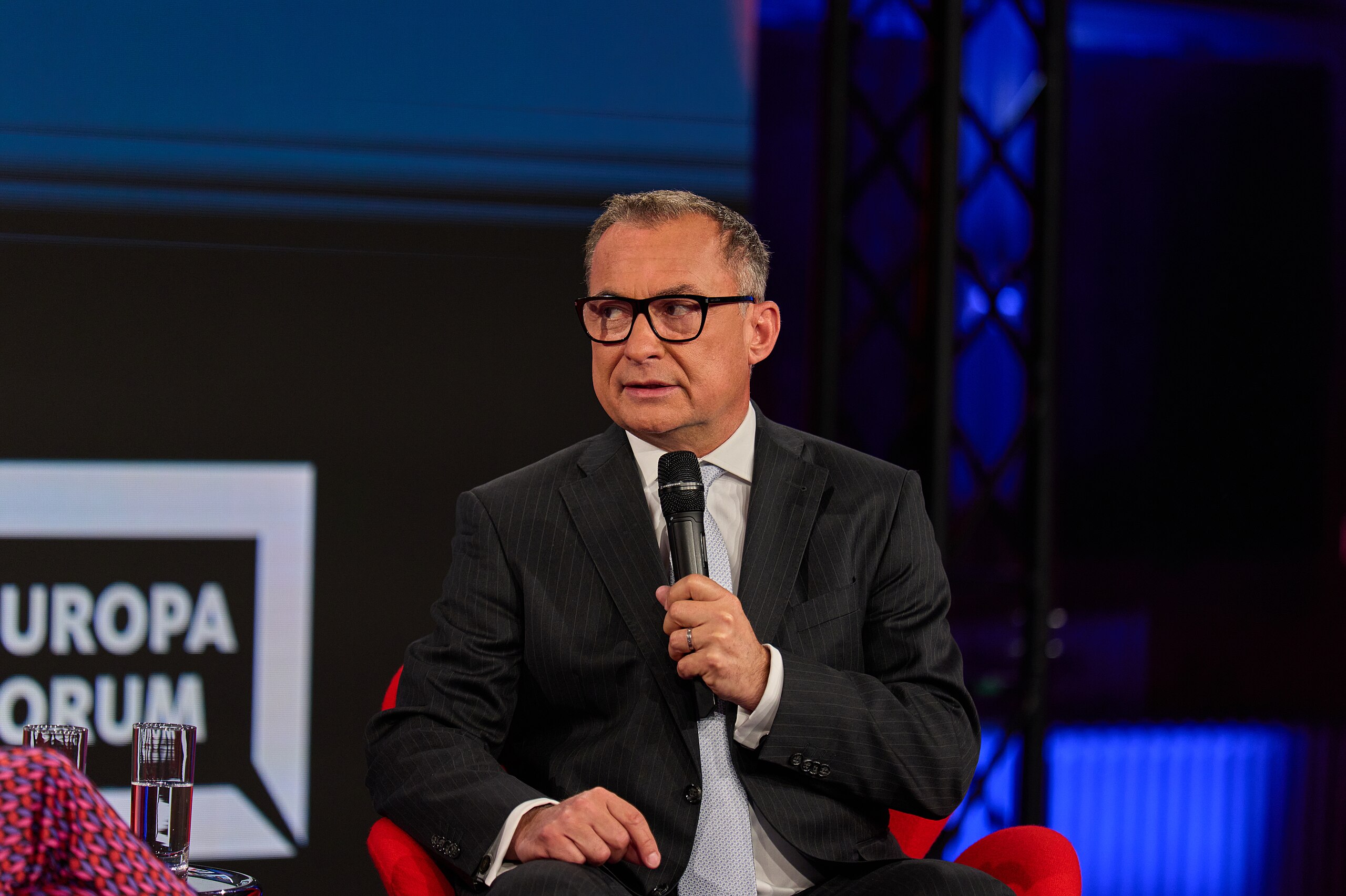

The president of Germany´s central bank, Joachim Nagel, called on Europe to adopt a more assertive and “offensive” strategy in its trade dealings with China, arguing that the European Union (hereinafter: EU) must prioritise its own economic interests. Speaking at a financial gathering in Washington on 18 October 2025, Nagel, who is also a member of the European Central Bank’s Governing Council, stated that Europe must cease acting timidly towards Beijing.
Europe’s Economic Stature
Nagel emphasised the EU’s significant economic power, noting, “China needs Europe more than Europe needs China”. He underlined that the EU represents a strong economy with a population of 450 million people, and as such, “we should play the European card in a more offensive way”.
The central bank president stressed that Europe should not rely on external forces to safeguard its markets. He explicitly stated that the most important market for the continent is “Europe itself,” underscoring the necessity of protecting the domestic economic space. He added that the EU needs to avoid a trade war with China but must maintain a constructive dialogue while simultaneously protecting its markets.
Trade Friction and Market Flooding
Nagel’s comments arrive in a period of escalating global trade tensions, particularly as new tariffs implemented by the United States of America (hereinafter: USA) have prompted retaliation from Beijing. This tension has resulted in China rerouting some of the products it can no longer export to the USA toward other markets, including Europe, where they are reportedly sold below local production costs. This practice of rerouting industrial and intermediate goods is currently squeezing European manufacturers.
European companies are also contending with restrictions on materials essential for technology and defence industries, such as rare earths, where China maintains production dominance. Furthermore, European companies operating in China continue to face challenges competing with heavily subsidised domestic competitors.
The European Commission has already accused China of flooding markets with underpriced industrial goods and has previously imposed tariffs on Chinese electric vehicles. However, this action prompted retaliation from Beijing in the form of tariffs on European brandy, pork and dairy imports.
Policy Outlook
The call for a more “offensive” China trade policy aligns with ongoing discussions within the EU regarding potential measures to protect its industries. Plans under review by the EU include:
- Tighter restrictions on steel imports.
- Mandatory local content rules.
- Technology-sharing requirements for new Chinese investments in Europe.
These discussions reflect a growing consensus that the EU must act more decisively to mitigate the effects of trade imbalances and geopolitical fragmentation. The European economy is highly exposed to geopolitical risks in its trade partner nations, and the appreciation of the US dollar, following rising geopolitical risk in China, has led to higher import prices for the euro area. The next steps taken by the European Commission are anticipated to focus on promoting new mining and processing operations to secure critical raw materials and reduce supply chain dependencies.